
Spray Foam Roofing in Killeen, TX
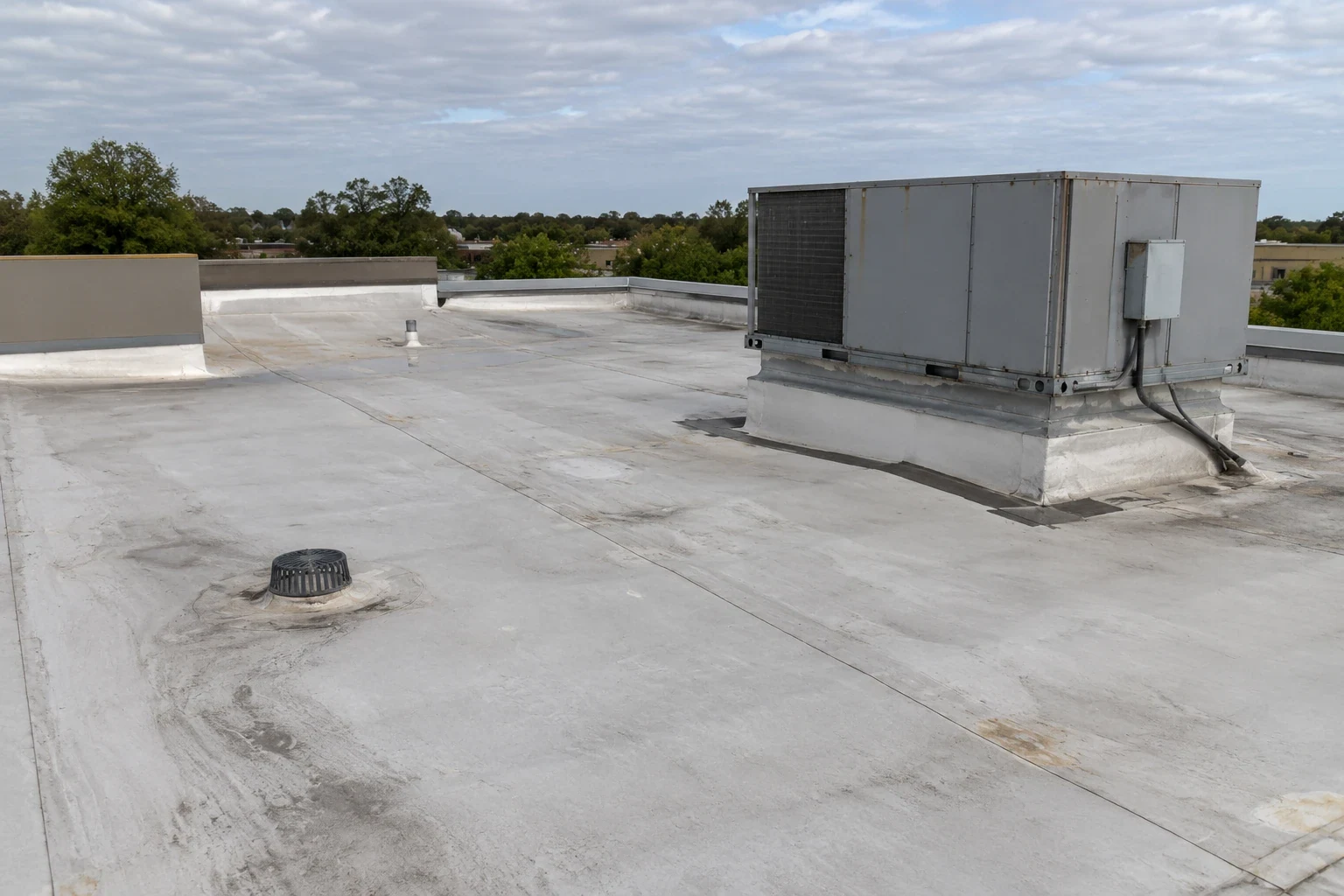
A spray polyurethane foam roof is a layered system, not foam alone. The owner needs a view of the substrate, foam profile, protective coating, drains, and repaired areas before choosing renewal or replacement. We inspect for exposed foam, cracks, blisters, ponding, coating wear, and loss of adhesion, then map the findings by section. Killeen heat and rainfall context can inform inspection timing, but the roof’s actual condition and maintenance record determine what work is appropriate.
What Should the Inspection Distinguish?
SPF is applied as a liquid that expands and cures into a continuous insulating layer. A protective coating shields the foam from ultraviolet exposure and weather, and its condition affects the system’s remaining service potential. We check coating wear, exposed foam, cracks, punctures, blisters, and areas where repairs create abrupt transitions. The profile also matters: low spots can hold water, while sharp changes can make the coating thin at a crest. The report marks observed areas without implying that every roof surface has the same thickness or bond.
Where records are incomplete, a test can confirm coating thickness, adhesion, or the condition of the foam below. We identify the sample location and repair it after testing. An image survey may help prioritize openings, but a moisture indication is not a substitute for a direct test. A moisture mapping visit can guide inspection priorities, while a silicone coating option should be compared only after adhesion and substrate conditions are understood.
How Do Drainage and Coating Work Together?
Water should reach the designed drains or scuppers without remaining in depressions. We inspect each outlet, slope transitions, penetrations, and any area that holds water after drainage should occur. A coating renewal does not correct an outlet obstruction or a foam profile that directs water away from the drain. The scope separates cleaning, drain repair, foam reshaping, and coating so the owner can see which condition each item addresses.
At curbs, pipes, and parapets, foam and coating need a durable transition that can tolerate movement and service access. We note cracked coating, exposed foam at corners, and repairs that have lifted around the perimeter. If equipment work is planned, the sequence should protect the finished system and avoid repeated punctures. A drainage inspection can define outlet work, and a curb and equipment detail review can coordinate roof-side flashing with mechanical service.
What Killeen Conditions Belong in the File?
For an SPF mobilization near the US 190 access area, Bacon Ranch Road and Cunningham Road are useful connector references when discussing rig access and delivery sequencing. We verify the property’s actual gate, hose path, lift position, and staging area with its contact before mobilization; a roadway reference alone cannot establish roof access. The East Trimmier Road corridor is another distinct geographic reference; we confirm roof access and staging with that property’s contact. We include the crew’s surface measurements and finish-time photographs.For the assembly itself, the survey record should map low spots, drains, coating wear, and any selected test opening. Those findings give the owner a property-level drainage picture that a regional precipitation normal cannot supply. We distinguish survey indications from a direct test before recommending renewal.
When Is Recoating a Reasonable Choice?
Recoating can fit when the foam remains bonded and sound, the surface can be prepared, and the system has no unresolved moisture or drainage problem. We inspect adhesion, coating thickness, repairs, and transitions before stating an area for renewal. The proposal identifies cleaning, patching, reinforcement, primer, coating passes, and specified thickness. It also records areas excluded because the foam or substrate needs correction first. A coating estimate should not treat exposed or wet foam as ready for a finish layer.
If the foam is deteriorated or wet, removing and rebuilding the affected area may be necessary before coating. When damage extends broadly, replacement should be compared with repeated renewal. The owner receives a repair boundary, test locations, and any assumption about concealed conditions. A different coating formulation may suit a roof with a defined use and drainage condition, but product choice must match the substrate and exposure. A localized repair scope can remain separate from the broader renewal area.
How Can Work Avoid Repeat Damage?
SPF surfaces can be damaged by service traffic, equipment moves, tools, or dropped hardware. Before mobilization, we agree on access routes, staging, rooftop equipment work, and protection for completed sections. The facility lead should identify how service technicians reach units and whether a walkway needs renewal. The contractor maps work zones and closes each one to weather before moving on. If another trade opens the coating, closeout should identify who restores the system and what material is compatible.
Before a spray rig arrives, the facility contact should confirm turning clearance, the delivery entrance, a protected hose path, and where equipment can be staged without crossing finished sections. We record those access decisions separately from the roof condition so a later crew can repeat the agreed route without relying on a street name as proof of roof access. A work sequence for an occupied property can document daily protection and access, while a maintenance check can re-evaluate coating and penetrations after the project.
What Should the SPF Roof Register Preserve?
Keep the foam and coating product information, application records, roof map, thickness checks, adhesion tests, repair photos, and drain observations together. Mark inaccessible areas and any sample opening restored after testing. The maintenance record should distinguish an inspection from a coating renewal and show what boundary was completed. A later owner can then locate a repair, compare coating wear, and budget the next application without treating all roof sections as one condition.
For a capital review, list remaining concerns and the evidence that would change the recommendation. A section with sound foam may remain on a maintenance track while a wet or deteriorated area moves to repair or replacement analysis. A condition report can preserve those boundaries, and a warranty review can identify inspection records or maintenance duties. The decision remains tied to the assembly on the roof, not the coating label alone.
Commercial Roofing Questions
Can a spray foam roof be recoated over the existing surface?
Renewal is appropriate only when the foam and coating remain suitable, adhesion is adequate, and moisture or drainage defects are addressed. We inspect representative areas and identify preparation, repair, and coating boundaries. Any excluded section should be called out before pricing the work.
How do you find water under SPF?
We review drainage and visible coating conditions, then use targeted survey or testing where indications warrant it. A moisture map helps select locations but does not confirm every layer. We record test openings, findings, and the repair needed to restore each sample area.
Does ponding mean the foam has failed?
Standing water calls for an inspection of slope, outlets, coating, and the foam profile. It does not by itself establish wet insulation. We identify how long the water remains and use testing when the decision requires confirmation beneath the surface.
Can other trades work on an SPF roof after renewal?
Access and equipment service should use agreed paths and protection. We coordinate with the facility lead so technicians do not puncture the coating or leave an opening at a curb. Any later disturbance needs a compatible repair and a note in the roof record.
What should be included in an SPF renewal bid?
The bid should show preparation, foam repairs, primer, coating passes and thickness, reinforcement, drains, penetrations, exclusions, and test assumptions. We map the included area and identify substrate findings that could change scope. That gives the owner a clear comparison with repair or replacement.
Check the Foam Before Renewing the Surface
Share application records, prior repairs, roof plans, drainage concerns, and access limits. We can inspect the foam and coating and return a renewal, repair, or replacement scope by roof section.