
Roof Planning for Real Estate Investors in Killeen, TX
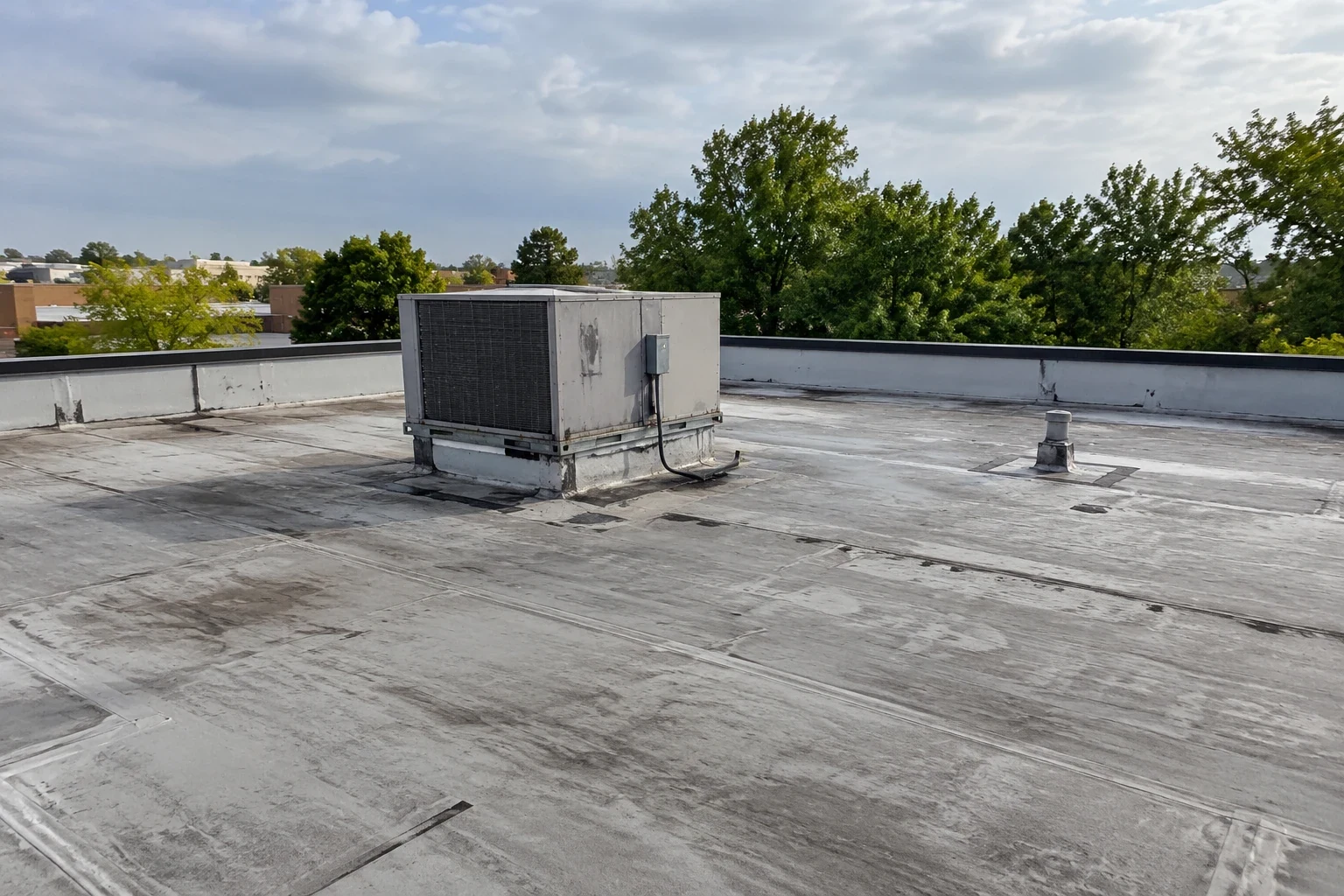
An acquisition or hold decision can turn on a roof finding that is still uncertain. We identify the assembly, visible condition, repair history, moisture evidence, and inspection limits so an investor can distinguish a current defect from a future study item. Finance, insurance, and real estate account for 3,247 local jobs; an investor's roof decision still depends on asset-level records and testing. That tells us the sector is part of the local economy, not whether a particular asset is occupied, maintained, or due for renewal. The roof file must establish those conditions building by building.
We map observations to roof sections and define what a repair, recovery, or replacement option includes. If drawings are incomplete, we state that limit and identify the test that could change the scope. A roof due-diligence survey can support a transaction review without turning a visual walk into a warranty or remaining-life promise. For ongoing holdings, the same records can feed property management and the owner’s capital plan.
What does the diligence file need to establish?
Start with a roof plan, available system documentation, age information supplied by the owner, prior proposals, invoices, leak reports, and closeout photographs. We do not infer an installation date from appearance. The inspection identifies membrane or panel type where visible, transitions, attachment clues, drainage, rooftop equipment, perimeter conditions, and areas with limited access. Findings should state whether they were observed, reported, or confirmed by a test. That distinction matters when an investor is comparing a priced correction with a contingent allowance.
For a flat roof, map seams, patches, drains, scuppers, curbs, and low points. For metal, note panel laps, fasteners, corrosion, movement, and edge details. If moisture is suspected, a survey can narrow the investigation but does not by itself establish the removal boundary. We can recommend a test opening where the result affects purchase assumptions. An infrared moisture survey or hands-on inspection should leave the investor with a section map, evidence record, and remaining questions. If the owner cannot open the roof during diligence, we list the surfaces viewed and keep concealed layers as an unresolved condition. A test opening may confirm insulation moisture or reveal a deck issue, but its location and limits need to be recorded. We identify who is responsible for restoring the opening and what closeout proof the buyer should retain. These steps keep the repair estimate tied to the area actually investigated and prevent an untested assumption from being treated as a fixed quantity.
How should local activity enter an underwriting memo?
Killeen issued 278 occupancy certificates during the year from April 2025 through March 2026, covering multiple commercial uses. The city’s North Killeen Revitalization Area accounted for 75 of those certificates. Those figures can help frame local development context, but they are not a measure of roof demand, property occupancy, or asset performance. For underwriting, use them as background only and rely on the specific building inspection for assembly and condition.
When a property is described as part of central Killeen, confirm its location against the mapped downtown boundary rather than relying on a neighborhood label. A TIRZ facade grant is a distinct public improvement mechanism and does not identify roof work on any individual asset. A roof finding in a commercial district still needs a property-specific scope; public investment plans do not establish work on an individual building. The Killeen-Temple MSA includes Bell, Coryell, and Lampasas counties, which may matter when organizing a regional portfolio. Owners comparing with nearby Harker Heights should confirm jurisdiction and property access there rather than carry assumptions across the city line. A downtown Killeen review or north-side asset visit remains limited to the real property and access that the owner authorizes.
How can repair and renewal assumptions be compared?
A repair allowance should specify the roof section, observed opening, adjacent details checked, material compatibility, and any concealed condition that could expand the work. A replacement budget needs removal assumptions, insulation, cover board, deck contingency, perimeter metal, penetrations, equipment supports, staging, and weather protection. We can price alternatives against a shared section boundary so the difference is visible. Where structural review, environmental testing, or owner approvals remain open, list them as dependencies rather than bury them in a general contingency.
Killeen's construction code list includes the amended 2024 International Building Code effective January 1, 2026. The project team confirms applicability for the actual jurisdiction and scope. Recovery or coating may be considered only after attachment, moisture, adhesion, drainage, and edge height are reviewed. A replacement option can be compared with recovery if the existing assembly qualifies. We can also separate immediate repair work from a capital recommendation, preserving the investor's choice about timing.
What does Killeen weather tell the roof reviewer?
Killeen averages 84.0°F in July and 84.6°F in August; an investor's assessment should still record the conditions observed on each roof. Killeen's hot-season conditions can affect work timing and exposed materials, but regional averages do not show the temperature or condition of a specific membrane. We note current conditions during inspection when they affect material selection or installation, and we avoid converting a regional average into a property-specific service-life estimate.
An F0 tornado crossed Killeen on March 25, 2003, when hail reached 1.75 inches. Keep that date separate from present portfolio findings. An old event is not proof of current impact. We look for present displacement, punctures, open seams, broken edge details, and interior water records, then keep the storm narrative separate from the observed condition. An investor can compare hail-related findings only when the evidence supports that classification. Any roof budget should distinguish historical context, current defect, and unverified assumption.
Which numbers belong in the capital schedule?
Use confirmed area, section condition, repair history, drainage, access, and open testing needs to define the capital item. A broad property label is not enough to forecast replacement timing. We can identify work that protects the asset now and work that needs a later decision, each with its own scope boundary. If a roof section has a stable assembly but a localized opening, the report should not quietly convert that repair into a complete replacement recommendation.
For multiple acquisitions, set common fields for system, observations, accessibility, moisture test, repair option, and estimated decision window. Keep the reasoning visible so an asset manager can update the record when new facts arrive. A management handoff file can carry site restrictions and service history into operations, while an industrial asset review may need additional detail about equipment and loading. Provide the target property’s plans and available records; we can return findings tied to what the inspection actually confirmed.
Commercial Roofing Questions
Can an inspection establish the remaining life of a roof?
A visual inspection records present condition and identifies repairs or tests. Remaining serviceability requires evidence about material, installation, maintenance, moisture, exposure, and other factors. We state what the record supports and what remains uncertain.
What is useful to review before closing on a property?
Request roof plans, system records, prior proposals, invoices, leak logs, warranties supplied by the owner, and closeout photos. We can inspect accessible areas and flag conditions that need testing or an allowance before the decision date.
Should a buyer budget for recover or full replacement?
Moisture, attachment, deck capacity, drainage, edge details, and existing membrane condition shape that comparison. We document those factors and price comparable boundaries where the evidence supports both options.
Do local storm records show that a Killeen property has hail damage?
No. They provide regional context only. We document present marks or failures and relate them to the inspected roof section before describing any damage or repair scope.
How should a roof reserve be updated after repair?
Record the completed section, repair material, date, photos, and any remaining condition. We can distinguish the closed work order from areas that still require inspection or capital planning.
Tie underwriting to observed roof conditions
Share the available roof plans, property records, access process, inspection deadline, and decision criteria. We can document conditions by section and return repair, recovery, or replacement options with assumptions stated plainly.