
Modified Bitumen Roofing in Killeen, TX
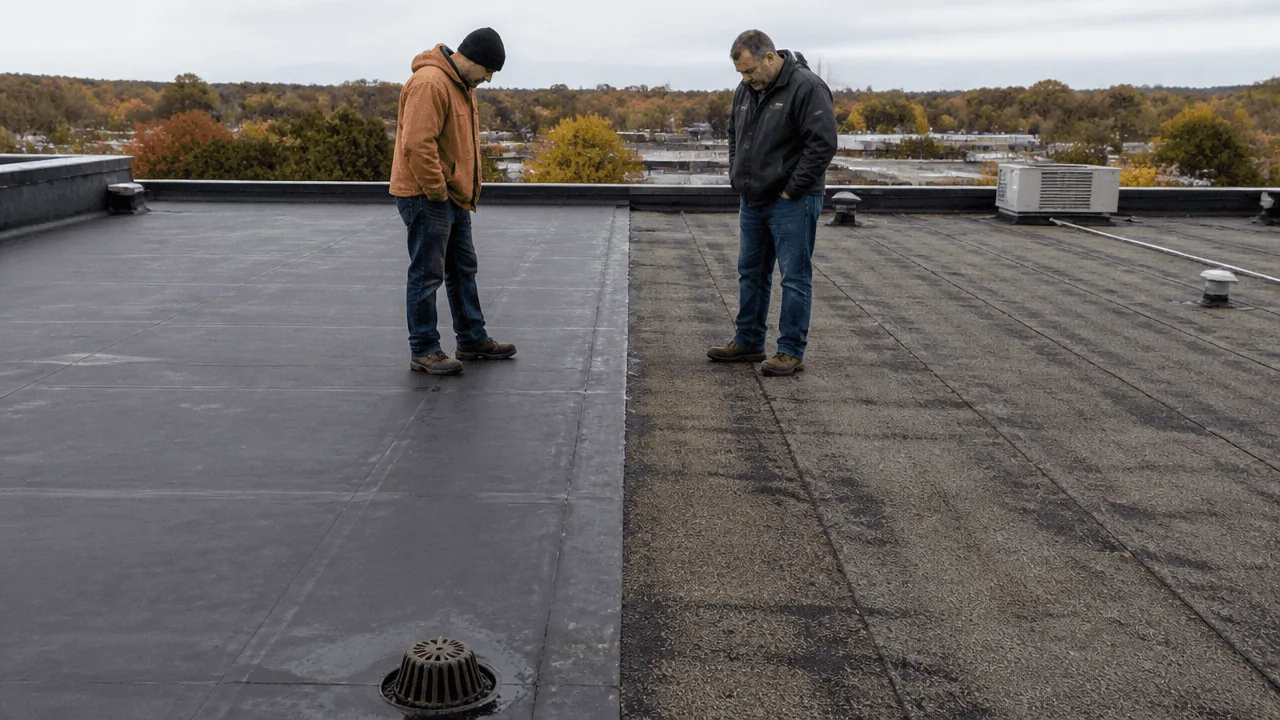
A modified bitumen roof is a layered assembly, so a surface split does not tell the owner how far a repair should go. We identify whether the membrane is SBS or APP, review the ply configuration and surfacing, and inspect seams, flashings, drains, and prior patches. The roof section and its substrate matter as much as the cap sheet. In Killeen, heat and storm context help set inspection timing; the building’s own condition record decides whether the scope is a repair, recover, or tear-off.
Which Layers Are Present?
Modified bitumen systems use asphalt-based sheets modified with polymers, commonly arranged in a base and cap configuration. SBS and APP products respond differently to heat and installation methods. Surfacing may be mineral granules, coating, or another specified finish. We check available submittals and field conditions to identify the assembly, then note exposed reinforcement, blistering, splits, displaced surfacing, or areas where a previous patch obscures the original sheet. An estimate should identify the product and layer work rather than call the roof a generic asphalt membrane.
At a test cut, the inspector can confirm the layers, attachment, and insulation condition at that location. One sample does not establish conditions across every roof section. We map each opening, record what it showed, and patch the test area with an approved detail. A moisture survey may help select test locations when the surface pattern is unclear, while an built-up roof comparison separates a multi-ply BUR assembly from a modified bitumen system.
Where Do Splits and Open Laps Begin?
We inspect end laps, side laps, ridges, penetrations, curbs, wall transitions, and drain bowls. A split may follow a seam, a crease, a movement point, or a prior patch edge. The scope records the observed condition and measures the repair area. If several defects occur in one zone, the owner needs to know whether they share a cause or represent separate local failures. Repairing each visible mark without checking the surrounding ply can leave a weak edge or miss wet insulation underneath.
Flashing details are often more demanding than the field sheet. At a curb, the membrane must turn up and terminate in a way that handles movement and water flow. Around a pipe or skylight, the installer needs compatible material and a complete corner. We photograph each transition and show any removal, reinforcement, or metal work in the estimate. The flashing repair scope can define a single opening, while drain and scupper work can address the water path beyond the membrane lap.
How Should Weather Context Be Used?
Killeen issued 278 occupancy certificates between April 2025 and March 2026 across several commercial uses. That count is useful when an owner is planning inspection resources across a portfolio, but it says nothing about the age or roof type of an individual property. For work near the West Trimmier Road corridor, we confirm the building’s access, staging, and tenant schedule directly with the facility contact. The roof condition and the actual operating calendar set the work sequence.Modified bitumen repairs also need a defined cure and protection plan. We check the product instructions and surface before applying materials, then record whether a temporary dry-in remains. A later visit can compare the repaired lap or flashing with the original photo rather than assume that a nearby tenant activity or road project changed the roof condition.
When Does a Local Repair Hold Up?
A repair can be limited when the surrounding sheet is sound, the substrate is appropriate, and the defect has a clear boundary. We remove loose or failed material, prepare a clean surface, install a compatible patch or flashing detail, and photograph the result. If moisture extends under the cap sheet, a surface patch will not correct the concealed condition. We identify test results and the area they represent. Where repeated splits or widespread loss of surfacing are present, the report compares a larger section repair with replacement instead of issuing a series of disconnected patches.
Modified bitumen may be surfaced or coated as part of a planned restoration, but the coating must suit the existing finish and condition. Preparation, adhesion, reinforcement at details, and drainage remain part of that scope. Coating is not a substitute for correcting wet insulation or open flashings. A silicone restoration comparison can help the owner examine a compatible coating approach, while a single-ply replacement option provides a different assembly for a roof nearing its replacement cycle.
What Should a Replacement Bid Show?
For replacement, compare tear-off extent, deck repairs, insulation, cover board, membrane type, attachment, flashing, perimeter metal, drains, and transitions to adjoining roofs. A low scope that omits substrate correction or drains cannot be compared fairly with a complete assembly. We list assumptions about test cuts, concealed conditions, and trade coordination so an owner can price those items deliberately. The work sequence should show how open areas will be protected between shifts and how access affects the building.
For an occupied property, agree on material staging, odor or noise constraints, equipment shutdowns, roof access, and daily cleanup before work begins. The selected system should be compared with the expected maintenance and warranty duties, not only installation method. A replacement plan can organize section phasing and scope boundaries, and a condition report can preserve the test evidence used for the capital decision. Keep repair and replacement options separate when the owner is deciding how much life remains.
Which Records Keep the System Legible?
Keep product data, approved details, roof maps, test-cut locations, photographs, repair materials, and any coating or surfacing work with the building’s service record. Note inaccessible zones and distinguish confirmed wet material from an area that was only surveyed. This evidence helps a future inspection determine whether an old patch is stable, whether a seam should be retested, and what the replacement design should address. Without the section map, even a well-written work order can be difficult to place on a large roof.
US 190/Business 190, Rancier Avenue/FM 439, and SH 195 are among Killeen’s major travel corridors. Those names orient a regional work plan but do not define a private property’s entrance or delivery window. We confirm access with the site contact and record any restrictions before mobilization. A maintenance program can carry forward open items, while warranty review can set the inspections and recordkeeping required after closeout.
Commercial Roofing Questions
How can I tell whether the roof is SBS or APP modified bitumen?
We review product records, visible surfacing, seams, repair materials, and a representative test opening when needed. Those observations should be recorded by roof section. If product identity remains uncertain, the repair specification should not assume compatibility with a particular torch or adhesive method.
Can a split cap sheet be patched?
A patch is reasonable when the surrounding layers are secure and the substrate is suitable. We remove failed material, define the boundary, and use a compatible detail. Moisture or repeated splits can require testing and a broader repair or replacement comparison.
Does coating solve a modified bitumen roof leak?
Only when the underlying system is a suitable candidate and the source is addressed. We inspect seams, flashings, drainage, and suspected wet areas first. The scope separates coating preparation and reinforcement from repairs or material replacement that must happen before application.
What should be included in a modified bitumen replacement estimate?
The estimate should identify tear-off, deck and insulation assumptions, new plies, surfacing, attachment, flashing, drains, edge metal, and daily protection. We show what is included and which concealed conditions need a unit price or test. That makes competing scopes comparable.
How do you handle active water entry during a roof project?
We protect the interior and stabilize the opening when safe conditions allow. Temporary dry-in and permanent work are recorded separately. The owner receives the remaining repair boundary, the next access needed, and any condition that has to be tested before closeout.
Define the Ply and Repair Boundary
Share the roof map, previous patch history, product records, and any known moisture reports. We can inspect the assembly and return a repair or replacement scope that identifies its layers, tests, and open assumptions.