
Commercial Roof Repair in Killeen, TX
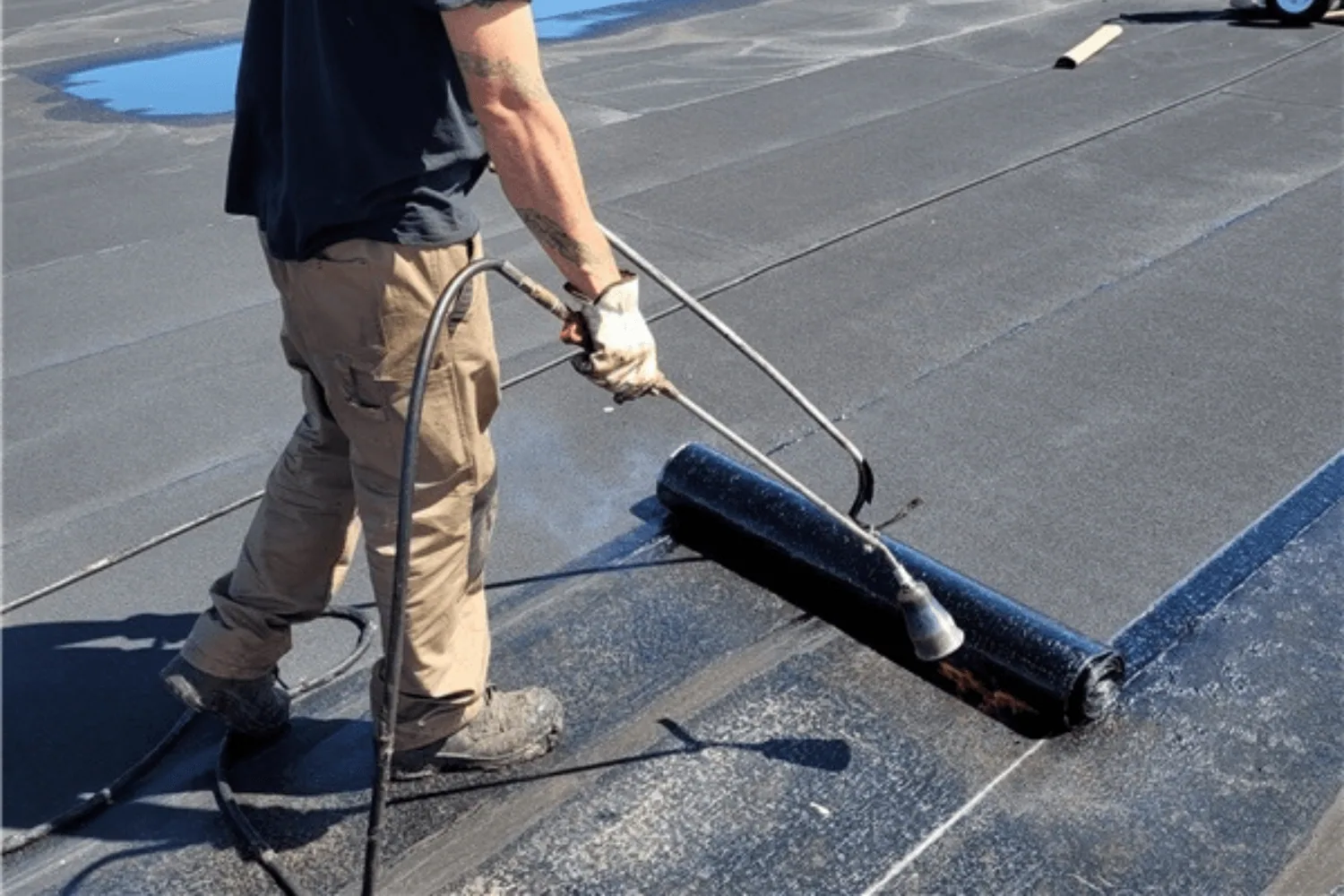
A repair request needs a location, a cause, and a boundary. We trace the condition across the roof section, inspect seams, flashing, drains, penetrations, and prior patches, then mark the work that addresses the entry point. A stain near a tenant suite may sit below a different roof detail, so the repair begins with roof evidence. The owner receives a scope that distinguishes the confirmed defect from a hidden condition.
What Can the Roof Show?
Open laps, displaced edge metal, split sealant, loose counterflashing, punctures, and obstructed drains each call for a different repair. We photograph the defect with a nearby reference point and identify the material around it. A patch applied across incompatible surfaces can loosen or trap water; a repair needs clean, sound material and a termination suited to the assembly. Where the roof has several previous patches, we note their edges and condition so the new work does not conceal a larger failure pattern.
A Killeen storm on March 25, 2003 brought hailstones measuring 1.75 inches and a tornado rated F0. Current roof observations still determine the repair scope. That history gives an inspection a reason to look at edge details, metal, penetrations, and membrane surfaces, but it does not establish damage at a specific property. We compare the reported date and location with what is physically present. A hail-related assessment can distinguish impact evidence from ordinary wear, while a hands-on roof walk checks seams and transitions beyond the reported leak area.
Which Repair Matches the Failure?
For a membrane seam, we identify the system and test whether the surface can accept a new weld or compatible detail. A loose lap may need cleaning, drying, and a continuous repair strip; a failed termination can require removal of the affected metal and reconstruction of the edge. On a metal roof, we check fasteners, laps, closures, and movement before sealing. The written scope names the repair material and the area it covers rather than describing every condition as a general seal-up.
Water can also enter at curbs, skylight frames, conduit supports, and pipe penetrations. We inspect the flashing height, corner transitions, sealant, and movement at each opening. If a curb is too low or the substrate is deteriorated, surface sealant will not correct the detail. The estimate separates a local flashing repair from curb modification or membrane replacement. Where rooftop units are involved, we coordinate the safe access window and identify the equipment that must remain protected. A curb and support detail is scoped to the measured transition, not a presumed equipment condition.
Drain repairs need the same precision. We remove debris that blocks a bowl, inspect clamping rings and surrounding membrane, and verify that the overflow remains open. A leak near a drain may come from the bowl, a seam uphill, or a displaced conductor head outside the roof plane. We map the drainage path and photograph the connection before choosing between a localized patch, a new drain flashing, or broader correction. When insulation slope is part of the problem, a drainage improvement scope can be shown separately from the immediate water-entry repair.
How Does Killeen Use Change the Plan?
Killeen issued 278 occupancy certificates from April 2025 through March 2026 across several commercial uses, including retail, restaurants, education, medical offices, and fitness. That activity is not a count of roofs, but it underscores why repair access should be set building by building. At a retail property near Veterans Memorial Boulevard, the site lead may need a protected storefront path and a delivery window. Around Rancier Avenue, a repair near occupied suites may require interior protection and a short, clearly marked work zone. We confirm those constraints at the property rather than assuming the same schedule fits the corridor.
Summer roof temperatures can affect safe work periods, adhesive handling, and the time available to complete an exposed repair. We plan material staging, surface preparation, and tie-ins around actual conditions on the day. A repair should not be left with an unprotected edge at shift end. When water is active, the immediate objective is a controlled dry-in; permanent work follows once the surface and substrate can be prepared correctly. A temporary stabilization visit may therefore precede the full repair scope.
What Belongs in the Work Order?
A useful repair record identifies the roof section, reported symptom, observed defect, repair detail, and material used. Photos show the close view and enough surrounding roof to find the spot again. We list inaccessible areas and unresolved questions separately. If moisture may extend beyond the visible damage, selected test cuts can resolve the scope before we expand the repair. A condition report with a roof map keeps follow-up findings tied to the same location.
For a portfolio, we separate recurring leak points from isolated damage and show which items fit routine maintenance. The owner can compare a repair-only option with section replacement when membrane, deck, or multiple details have failed together. We also identify work that depends on another trade, such as HVAC disconnection or structural review. This gives the facility contact a clear sequence for access, protection, and closeout.
Of 278 new or expanding commercial occupancies recorded in Killeen from April 2025 through March 2026, 75 were in the North Killeen Revitalization Area. Those figures do not describe an individual building, but tenant activity can make a small roof interruption consequential. We agree on noise, lift placement, pedestrian protection, and return-to-service timing before beginning. A work plan for an occupied property separates the repair area from customer and staff paths. A recurring problem can be tracked in the service record with its repair date, location, and next inspection trigger.
When Is the Repair Ready to Close?
At completion, we photograph the repaired seam, flashing, drain, or penetration and record what was tested. We remove loose material, confirm the repair ends on sound surfaces, and check nearby drainage. If the work was a temporary dry-in, we state that limit with the permanent-work recommendation and required access. The owner can then assign the next inspection without treating temporary protection as a finished repair.
Keep the closeout with the service record: date, roof section, materials, and remaining observation. A later leak at the same point should be compared with the repair boundary. Regional rain and storm conditions can guide a follow-up, but a repair decision still depends on the roof's present condition. A maintenance visit can recheck drains and exposed details, while a downtown Killeen roof section may need a business-hour access window. Request a roof walk when the source or repeat pattern is uncertain.
Commercial Roofing Questions
Can you repair one leak without replacing the whole roof?
A localized repair is appropriate when the entry point and surrounding material are sound. We trace the water path, inspect nearby seams and transitions, and mark any adjacent defects. If failures repeat across a section, the report compares a larger repair boundary with replacement rather than treating each call as unrelated.
What should be done while water is entering the building?
Protect people, equipment, and contents first, then report the interior location and roof access conditions. We inspect the roof and can stabilize an active opening with a temporary dry-in when conditions allow. Permanent repair follows after the surface is safe and suitable for preparation.
Do you repair a roof that another contractor patched?
We inspect the earlier repair and the surrounding assembly before adding material. The scope identifies loose edges, incompatible products, trapped moisture, or a separate failure nearby. We photograph what remains so the owner can compare the new work with the prior service record.
Can a roof repair happen while tenants remain open?
We set the roof work zone, lift path, interior protection, and expected noise with the facility lead. At an occupied property, the repair may be divided into smaller areas or timed around deliveries and customer access. The sequence depends on the actual building and defect.
How do you know whether a repair held?
Closeout photos and a recorded repair boundary provide the baseline for a follow-up check. We inspect the detail after the next suitable weather interval or sooner if water returns. If the entry point is still uncertain, we recommend a broader roof walk or selective testing instead of repeating sealant work.
Map the Repair Before Work Starts
Share the leak location, roof access limits, and any prior repair record. We will inspect the affected section, document the defect, and return a repair scope that separates immediate protection from permanent work.