
Commercial Roofing for School District Portfolios in Killeen, TX
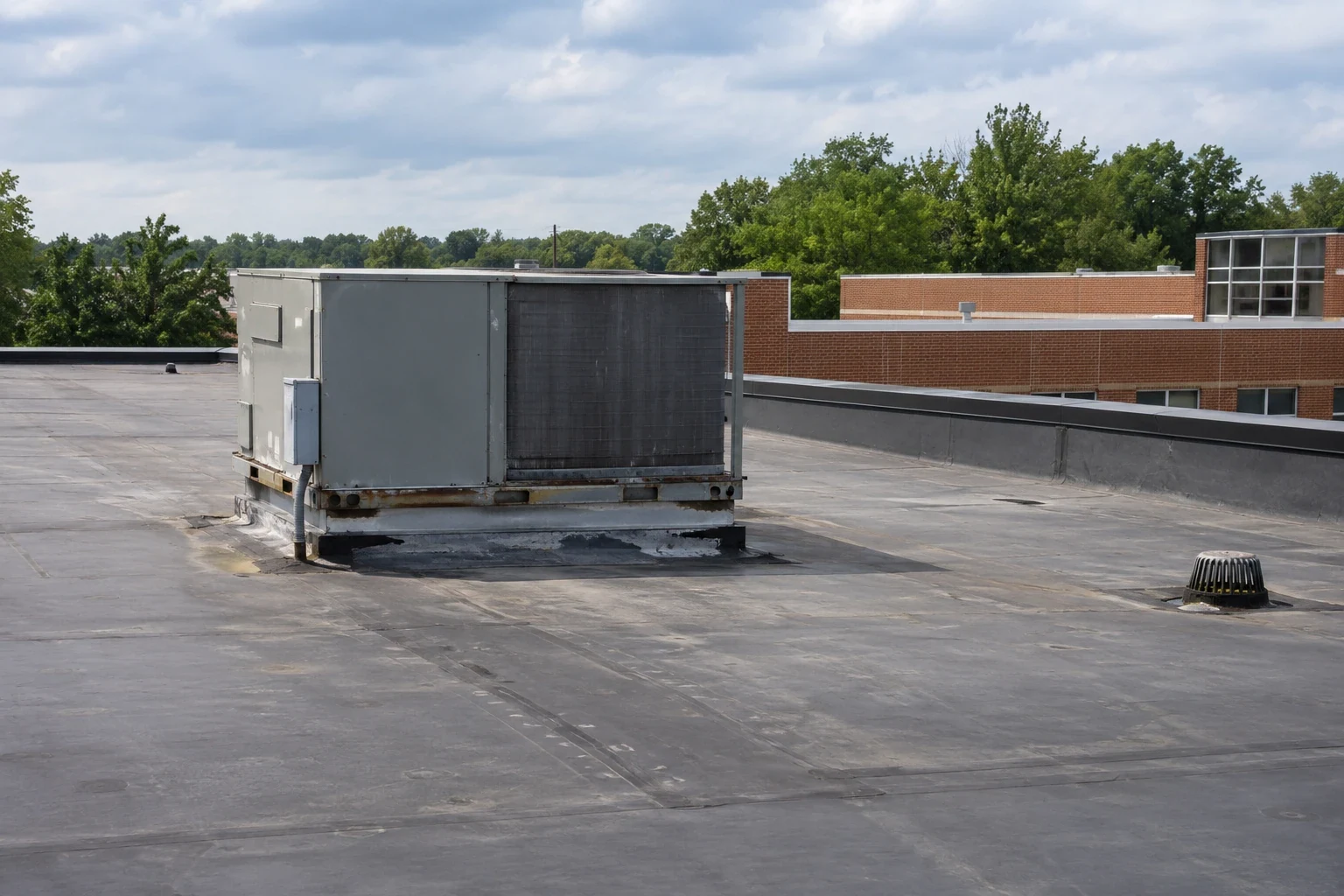
A school roof program balances building condition with a calendar that cannot be improvised after materials arrive. Summer work, holiday windows and occupied-day repairs all require different access, communication and protection plans. We begin by separating roof sections, building uses, system types and known leaks, then ask the owner to identify testing periods, public events, restricted areas and decision deadlines. The scope explains what is known and what needs opening or testing before final quantities are fixed.
Education and healthcare account for 2,791 combined jobs in Killeen. That figure describes two broad employment sectors, not a district's enrollment or roof inventory. A roof condition report gives the owner a consistent record, while a preventive maintenance visit can prioritize near-term maintenance. We keep the capital choice tied to each school's observed roof condition, access window, and use of the space below.
How should a district choose the work window?
Start with the dates when a roof area is actually available, not only the published school break. Custodial schedules, summer programs, meal service, testing, athletics and public meetings can keep portions of a campus active. The facilities lead can mark which entrances, walks and delivery areas must remain open and who may approve a temporary closure. We translate those constraints into work zones, material drops, noise planning and daily dry-in milestones.
Each bid should show the intended sequence and what happens if rain, concealed damage or a delayed delivery interrupts it. A roof may need a permanent termination at the end of a shift rather than a broad open area covered overnight. The district should identify one point of contact for access and a separate approver for added scope. Building staff can then communicate a useful schedule without promising that every condition is visible before removal.
What should be controlled around occupied school areas?
Work planning should separate contractor routes from student, staff and visitor circulation. Define check-in, roof access, staging, lift placement, delivery timing, barriers, fire access and emergency contacts before mobilization. If a work area is adjacent to an occupied room, the owner and contractor should review overhead risk, noise, odors and temporary protection. The contractor describes the task controls; authorized school staff decide whether an area can remain occupied.
Secure tools, loose materials and roof openings at the end of each work period. Do not leave a ladder, hatch, staging pile or debris path available to unauthorized people. If a building remains in use, identify who inspects barriers and confirms that rooms can reopen. Photograph the conditions and any approved change. A clear access plan reduces confusion when a crew must move between buildings or a delivery arrives during a busy school day.
Which findings should move a roof into the capital queue?
A condition report should distinguish active leaks, isolated flashing defects, recurring repairs, saturated insulation, attachment concerns, corrosion, and areas not inspected. Include a roof map and dated photos that let the reader locate each item. Surface observations are not a substitute for test cuts or design review where concealed assembly conditions control the recommendation. State the evidence needed to firm up a budget and identify any immediate protection required.
Prioritize using more than age. Consider extent of confirmed damage, impact on rooms or equipment, feasibility of a durable repair, access window, expected service life and the consequences of another failure. A small defect over a critical occupied area may need prompt action; a broad but dry and stable section may warrant additional monitoring. Present maintenance, targeted repair and replacement with comparable boundaries and explicit assumptions so the district can make an informed budget decision.
How should local climate context inform specifications?
Killeen averages 18.3 days annually with highs at or above 100°F, so district work plans should set heat safeguards and realistic daily openings. In that heat, confirm application limits, crew exposure, and material storage as part of the work window. The statistic frames scheduling, while actual weather and product requirements govern installation. Annual rainfall averages 34.75 inches in Killeen, making outlet capacity, overflow routes, and temporary drainage protection important before a membrane is opened.
Killeen's amended 2024 International Building Code took effect January 1, 2026. For a school project, confirm which permit reviews apply when edge details, penetrations, insulation, or structural conditions change. The project professional and owner should document the design basis, delegated responsibilities, and trade interfaces before bidding. On the roof, attachment, fire and wind requirements, existing layers, and water movement can affect the assembly comparison; a specification should describe the tested or designed system rather than rely on a membrane name alone. If properties extend into neighboring Harker Heights, Knight's Way/FM 2410 and Veterans Memorial Boulevard are identified commercial priority areas there. Confirm jurisdiction and access for each property separately so one city's requirements are not assumed for another.
How can a district avoid scope gaps between trades?
Identify who disconnects or protects rooftop units, alarms, conduits, solar equipment, and other services before roofing begins. Include curb height, flashing replacement, temporary disconnection, recommissioning, and inspection responsibilities where they apply. If another contractor owns equipment work, name the handoff and required lead time rather than leaving the interface implied. The roof plan should show penetrations and perimeter details that may need replacement even when the membrane field remains.
For each alternate, describe what changes: removal depth, insulation, cover board, membrane attachment, flashing, edge metal, or drainage. State whether testing, engineering, hazardous-material review, or owner-furnished work is excluded. A shared bid form makes proposals easier to compare and helps purchasing identify a missing item before award. A school roofing scope still needs property-specific access and assembly decisions; district procurement then sets its own project schedule and approvals.
What should the district keep after the work?
Retain the final roof plan, approved submittals, product data, daily logs, weather and closure notes, change orders, test results, photographs, warranty documents, and maintenance recommendations. Record the installation date and section boundary so future staff can relate a leak report to the right assembly. Note exclusions and unresolved conditions rather than letting them disappear in a closeout folder. If multiple schools are involved, use consistent field names but maintain a separate record for each building.
At handoff, review drain locations, inspection access, approved cleaning methods, warranty notice procedures, and the contact for service. Provide a short list of conditions that should prompt a call, such as a new interior leak, displaced edge metal, or blocked drainage. A well-organized record supports future maintenance and capital planning without promising a particular service life. Portfolio teams can use consistent field names across healthcare systems and public agency coordination, while keeping each school's roof condition, access approval, and repair history building-specific.
Facilities teams can compare local work windows for Killeen buildings and Downtown Killeen properties without treating them as the same campus. Tie the roof record to the district's occupied-building sequencing plan, including access approvals, daily closure, and handoff to school staff.
Commercial Roofing Questions
Can roofing be completed during a school break?
A break may provide a useful window, but the owner must account for summer programs, staff access, events, deliveries and weather. Confirm which areas are vacant and how each phase will be secured daily.
Should a district replace every roof of similar age at once?
Age alone is not enough. Compare documented condition, system type, repair history, room impact, access, and the tests needed to confirm concealed conditions before grouping projects.
How can an occupied building be protected during repairs?
Define the work zone, overhead controls, access limits, barriers, temporary weather protection and reopening approval. School staff determine whether occupancy can continue in adjacent areas.
What records matter for a school roof warranty?
Keep the final assembly and section map, accepted submittals, completion date, inspections, maintenance records and the warranty notice process. Follow the specific warranty terms and reporting deadlines.
Can roof bids use a common scope?
Yes. A common base scope and alternates improve comparison, provided each building’s assembly, access, penetrations and condition assumptions are recorded separately.
Turn roof findings into a usable facilities plan
Provide roof maps, repair history, known leaks, calendar constraints, and access requirements. We can document conditions and prepare repair or phased capital scopes for district review.