
Commercial Roof Leak Repair in Killeen, TX
A ceiling stain is a starting point, not a roof location. Water can travel along a deck, beam, conduit, or insulation before it appears inside. We compare the reported room with the roof above and inspect the likely paths, seams, curbs, drains, and wall transitions. The first decision is whether the building needs immediate dry-in, a targeted opening, or a permanent detail repair. We record what is visible and keep concealed conditions separate until testing confirms them.
Where Can Water Travel?
We begin with the time of the leak, the weather around it, and any change in roof or mechanical work. Those details help distinguish an active opening from condensation, plumbing, or a leak that appears only when wind drives rain against a wall. On the roof, we follow drainage uphill from the interior symptom and check laps, penetrations, edge metal, pitch pockets, and prior patches. Photographs and a roof sketch connect each observation to a place that another visit can find.
Killeen's average July and August temperatures are 84.0°F and 84.6°F, respectively; hot-weather conditions still need to be checked on the work date. Those warm-month baselines make seam movement and sealant condition worth checking, although only the roof itself can establish a leak cause. We inspect the actual bond, movement, and surface condition. If the entry point remains uncertain, a hands-on roof inspection can map the wider section, while an infrared survey can help select areas for physical testing.
What Needs Protection First?
Active water calls for a safe interior response and a roof-side check as soon as conditions permit. We identify affected equipment, stored goods, and occupied rooms, then set a temporary protection boundary. A tarp, seal, or emergency membrane can control entry for the short term, but it is not represented as a permanent repair. The record states where the temporary material begins and ends, what weather it is intended to address, and what access remains necessary.
Rainfall totals help explain why drainage deserves attention alongside the visible opening. Killeen averages 34.75 inches of precipitation each year, so keep roof drains and temporary water control in the leak scope. We check drain bowls, overflows, scuppers, and low areas so water is not simply directed toward another weak detail. Near Downtown Killeen, where commercial buildings and businesses sit between Rancier Avenue and Veterans Memorial Boulevard, access may need to be coordinated around open storefronts. A downtown roof visit can include a defined lift path and interior-protection plan.
How Is the Permanent Detail Chosen?
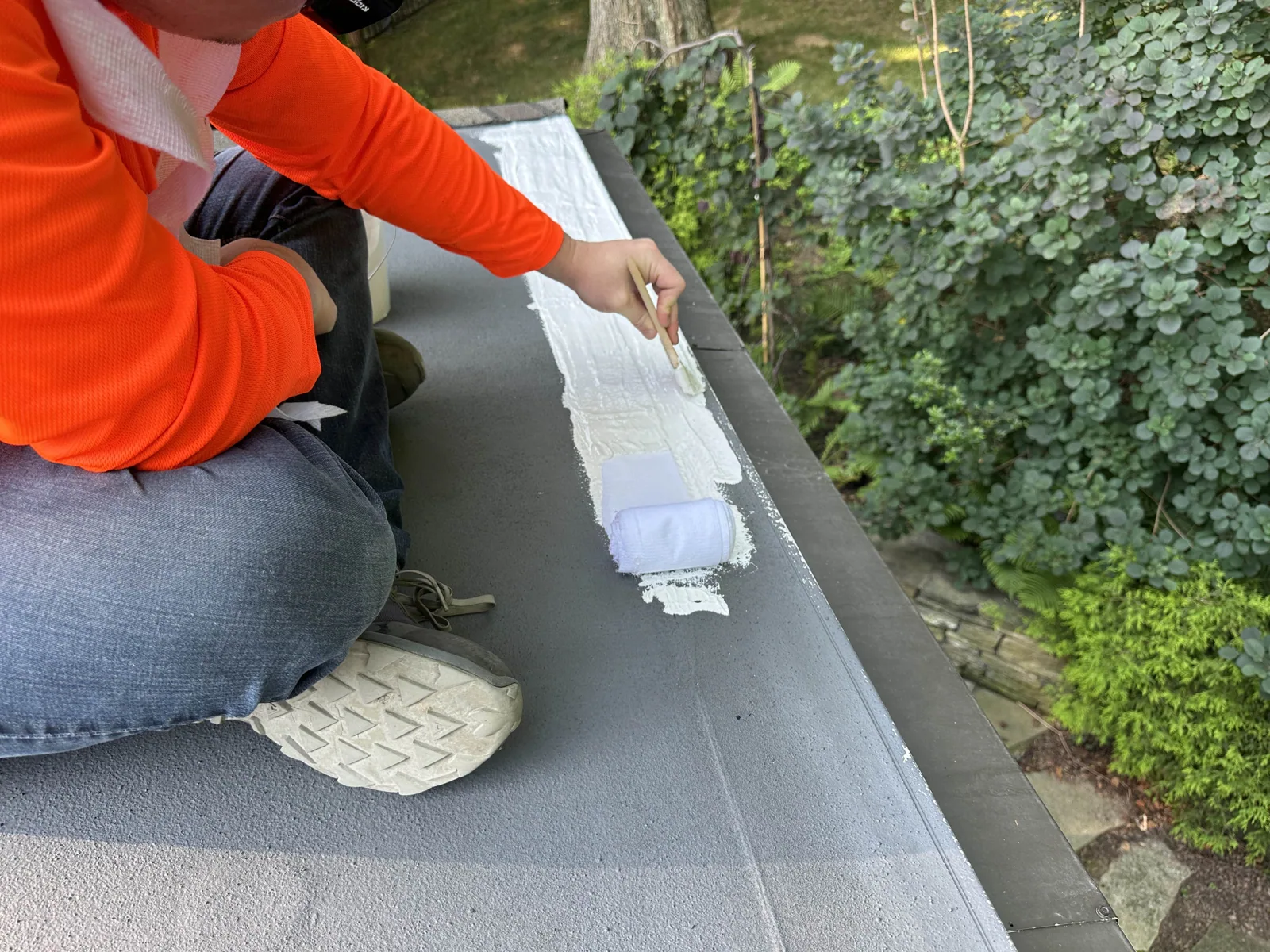
Once the surface is dry enough to prepare, we identify the membrane or metal system and select a compatible repair. A seam may need cleaning and a welded or adhered patch; a curb may need new flashing at its corners; a drain may require a new clamping detail. We remove loose or failed material until the repair can terminate on sound substrate. If the opening shows wet insulation or a deteriorated deck, we map the affected area and price that additional work separately rather than covering it with a surface patch.
Penetrations deserve close attention because sealant alone may not handle movement, water flow, and the height of the surrounding flashing. We inspect the base, corners, counterflashing, and nearby membrane. At rooftop equipment, we coordinate with the facility lead before disturbing any support or service connection. A penetration flashing repair or curb transition scope follows what the inspection can verify. The work order identifies any shutdown or trade coordination that remains outside the roofing scope.
Some leaks appear only under a narrow wind direction or after water accumulates at a low point. We note the conditions reported, test only where the method is appropriate, and avoid claiming that a dry visit disproves an intermittent leak. Where thermal imagery suggests retained moisture, selective cores or cuts establish the material condition. The condition record distinguishes an image pattern, an opened sample, and a confirmed defect, each with its own location and next action.
What Changes on an Operating Property?
Killeen had 278 new or expanding commercial occupancies between April 2025 and March 2026, across several building uses. That citywide activity does not describe any one tenant’s schedule. The categories include medical and education uses as well as food service, retail, childcare, and fitness. That range does not describe any particular building, but it is a reminder to plan around the use inside it. We confirm tenant hours, loading schedules, sensitive rooms, and the interior route for any protection. A repair beside an open customer area may need a smaller work zone and a check-in before tools or materials move through the building.
The thoroughfare map names US 190/Business 190 and Rancier Avenue/FM 439, with SH 195, SH 201, and FM 3470/Stan Schlueter Loop as other citywide orientation points. We use those routes to estimate arrival only; the property’s own entrance and staging area still need confirmation. Road access may shape arrival and staging, but it cannot tell us where a private roof hatch or loading door is. We verify that at the property. For a building along the Rancier Avenue corridor, we agree on the delivery and work window with the site contact. A phased access plan can keep leak repair separate from tenant movement.
What Should the Leak Record Preserve?
Closeout includes the interior symptom location, the roof-side source or remaining uncertainty, repair materials, photos, and any temporary measure still in place. We note whether the repair was observed after water testing or only inspected visually. If an area could not be reached, the report states that limitation and what access would resolve it. The owner can then compare a later event with the same roof map instead of opening a new investigation from memory.
Killeen experienced 1.75-inch hail and an F0 tornado on March 25, 2003, but an inspection must establish any present roof damage. That archive can frame what to inspect after a new weather report, but it does not show that this building leaked or was damaged. After any reported weather, we inspect the roof for fresh impacts, loose edge details, and displaced flashing. A follow-up maintenance check can recheck the repair and nearby drainage. If the leak returns, the recorded scope boundary helps us decide whether to extend the opening, test another layer, or revise the permanent repair.
Commercial Roofing Questions
Why is the stain far from the roof leak?
Water follows the deck, framing, insulation, and service penetrations before it becomes visible indoors. We compare the stain with those paths and inspect likely roof details rather than patching directly above the room. If the path is not clear, we record the remaining test needed to identify it.
Can a leak be repaired during rain?
The priority is protecting the interior and limiting water entry. We assess roof safety and weather before attempting temporary stabilization. A lasting membrane repair needs a surface that can be prepared and bonded or welded correctly, so that work may wait until conditions permit.
How do you separate a roof leak from an HVAC problem?
We inspect the roof and compare the symptom timing with equipment operation, condensate routes, and the reported weather. When evidence points to a mechanical source, we document the location and coordinate with the responsible trade rather than applying an unsupported roof patch.
Will you open the roof to check for wet insulation?
When moisture is suspected, we identify representative locations and explain the opening and patch plan before testing. A core or test cut can confirm what lies below the membrane. The report maps each sample and separates confirmed wet material from areas that remain untested.
What happens if the leak is still active after repair?
We compare the new symptom with the recorded repair boundary and weather conditions, then inspect adjacent details and drainage paths. If the first visit was temporary stabilization, permanent work may still be due. A repeat leak outside the repaired section can require a wider investigation.
Trace the Entry Point
Share the interior location, when water appears, and the access available for a roof walk. We will map the likely path, separate temporary protection from permanent work, and document what testing the repair decision needs.