
TPO Roofing in Killeen, TX
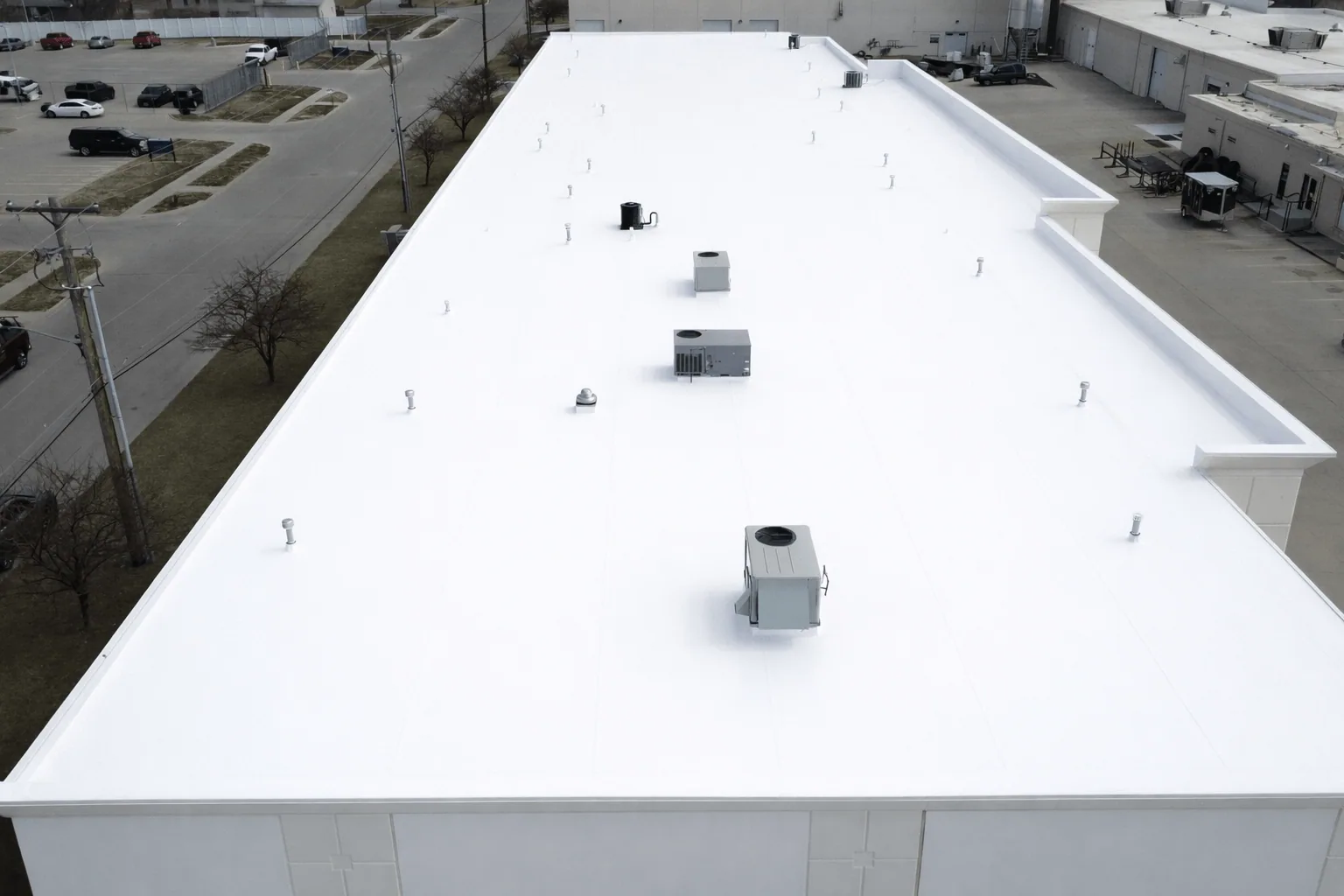
A TPO roof should be selected by assembly and condition, not by a color sample or a low square-foot number. We review deck, insulation, attachment, membrane thickness, seam layout, edges, drains, curbs, and existing repairs, then tie the recommendation to the owner’s budget window. Killeen’s July and August monthly mean temperatures are 84.0°F and 84.6°F. That local summer context is useful when reviewing exposed membrane and details, but the actual roof walk determines what should be repaired or replaced.
What Has to Be Known About the Existing Roof?
We begin with system records, repair history, warranty documents, and the roof register. A field walk checks visible seams, edge securement, fasteners, penetrations, membrane wear, and transitions to other materials. We record where the assembly is known and where a core or opening is needed to verify insulation and deck. If a recover is being considered, the report identifies moisture indications and attachment questions before a new layer hides the surface.
Roof sections may have different ages or repairs even when they look alike from the ground. The condition report separates what was observed from what remains concealed, so the owner can compare replacement, recover, and repair using the same map. A commercial inspection can establish that baseline. When the moisture pattern is uncertain, an organized condition record can carry test locations and limitations into the next decision.
How Should the Seams and Edges Be Evaluated?
Heat-welded seams need a consistent bond, clean laps, and details that can be reached with the correct tools. We inspect visible seam edges and terminations, then probe or test only where the method is appropriate for the membrane and project. A failed weld at a drain or curb is different from broad field wear. The proposal identifies the location, repair boundary, and compatible material instead of calling every discoloration a seam failure.
Perimeter securement deserves its own review. Wind exposure, parapet geometry, metal condition, and attachment details affect how the edge performs. Rancier Avenue/FM 439 is a named Killeen route; its location does not establish a roof’s wind exposure or attachment. We inspect the actual edge and document what can be confirmed. If metal work is included, the KEE and PVC system comparison helps keep membrane differences in view, while the Rancier Avenue area gives a local service reference.
What Happens Where TPO Meets a Drain or Curb?
At a drain, scupper, pipe, or equipment curb, the membrane has to terminate without blocking service or water flow. We inspect clamping rings, flashing height, corner welds, nearby insulation, and the path to the outlet. A patch should reach sound, compatible TPO and keep the detail accessible. If the drain body is loose, or a curb moves under load, a surface repair alone will not resolve the condition.
We trace water around rooftop equipment and look for low areas, ponding, debris, and overflow openings that need attention. On FM 3470/Stan Schlueter Loop, a corridor name can orient a visit, but roof access and staging are confirmed at each property. A drainage review can separate outlet work from slope correction. The insulation and cover-board scope may be relevant if the measured roof plane needs repair rather than a membrane-only patch.
When Does a TPO Recover Make Sense?
A recover may work when the existing assembly is dry enough, firmly attached, compatible with the new design, and able to support the added system. We confirm layer count, moisture, deck condition, edge height, drains, and warranty requirements before recommending that path. If testing shows wet insulation or widespread attachment failure, replacement may be more defensible. The proposal explains the evidence behind the choice and the areas that still need verification.
New installation also requires decisions about insulation, attachment, membrane thickness, substrate preparation, and perimeter details. The approved manufacturer system and project specifications govern those choices. We list staging, tear-off, disposal, temporary dry-in, and deck allowances so bids can be compared on equivalent scope. A recovery estimate that omits these items is not a fair comparison with a full replacement. If the roof has chemical or grease exposure, a PVC membrane review provides another assembly to compare against the project requirements.
How Is the Work Sequenced Around Operations?
Before mobilization, we confirm roof access, tenant hours, material delivery, equipment service paths, and the sections that can be closed at the end of a shift. The crew protects open edges, keeps drains available, and records the work boundary each day. Where rooftop units or solar equipment are present, the owner identifies the trade responsible for lifting, disconnecting, or resetting equipment. We do not assume those tasks are part of the membrane scope.
Work timing should account for surface conditions and the manufacturer’s installation limits. The property’s schedule, daily readings, and approved product requirements guide field decisions. We coordinate the crew plan with the facility contact and document any weather hold or temporary protection that changes the sequence. If a shift cannot close a section safely, the superintendent records the boundary and confirms the next action with the owner before leaving.
What Should the Owner Keep After Installation?
Closeout should include roof-section photographs, membrane and accessory identification, seam and edge observations, repair locations, test results, warranty documents, and maintenance instructions. We note where the inspection was limited and what should be checked at the next visit. If the proposal included a recover, the record shows which prior layers remain and what testing supported that decision. A clear service record helps the next manager distinguish a new issue from an older condition.
Before choosing TPO, compare the confirmed assembly, warranty path, access needs, drainage, and replacement cycle with other roof systems. We can inspect the roof, explain the scope boundary, and leave a map that supports a repair or capital decision. Share prior roof records, equipment plans, and access rules so the field review can answer the questions that matter to this property.
Commercial Roofing Questions
Can new TPO go over an existing commercial roof?
A recover can be considered after verifying moisture, layer count, attachment, deck, edge height, drainage, and compatibility. We document test results and unknown areas before recommending a new layer. If the assembly is wet or unstable, a recover may conceal a problem instead of resolving it.
What causes a TPO seam to need repair?
A seam can be affected by contamination, inconsistent welding, movement, or a detail that was difficult to reach. We locate and assess the condition, then repair to compatible material and verify the tie-in. The scope should distinguish an isolated seam from broader membrane or attachment concerns.
How is TPO different from PVC?
Both are thermoplastic single-ply systems with welded seams, but formulations, project specifications, and compatibility differ. We compare the selected product, substrate, accessories, warranty, and use conditions rather than treating the names as interchangeable. The approved system documents control the installation details.
What should be checked around rooftop units?
Review curb height, flashing corners, pipe supports, membrane termination, access clearance, and water flow to the nearest outlet. If equipment must move, assign that work to the mechanical contractor and coordinate protection before opening the roof. We record the roof-side boundary and any unresolved support question.
What records help with future TPO maintenance?
Keep a roof map, membrane and accessory details, installation and repair photographs, warranty terms, inspection notes, and locations where testing was performed. Record drain and edge conditions with the roof section. Those details help a later inspection compare changes instead of starting from an undocumented surface.
Put the TPO decision on a condition map
Share the roof plan, repair history, warranty documents, and equipment locations. We can inspect the assembly and return a scoped comparison of repair, recover, or replacement.