
Commercial Roof Drainage in Killeen, TX
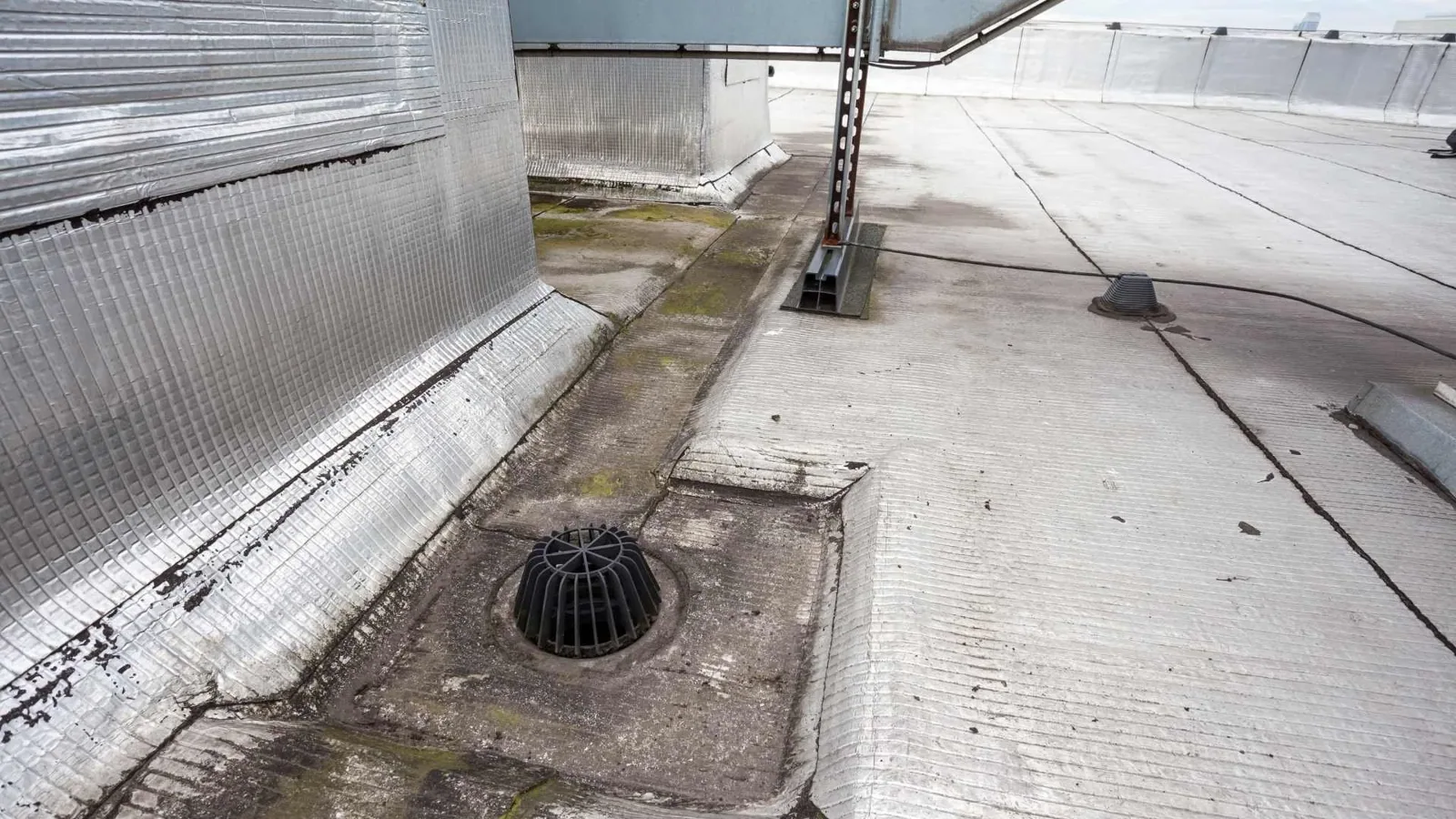
Standing water on a commercial roof needs a path check before a drain or membrane repair is priced. We inspect the outlet, nearby seams, low areas, overflow route, and the slope feeding each drain. Killeen averages 34.75 inches of annual precipitation over the 1991 to 2020 normal period, which is a reason to keep outlets and overflow paths in the service record. A citywide average does not measure a particular roof. The property's measured water route sets the work.
What Is Happening at the Outlet?
We clear accessible debris, inspect the bowl and clamping ring, check the membrane termination, and look for movement at the drain body. A clogged strainer is different from a loose flange or a split around the bowl. We photograph the condition before work and note whether a test is needed to confirm the tie-in. Scuppers get the same review for blockage, secure metal, open discharge, and evidence that water is crossing a parapet at the intended point.
Overflow openings must stay available as a secondary route. We check that debris, coating, or stored material has not restricted the opening and record any obstruction for the owner. If the primary drain is clear but water remains, we trace the roof plane toward crickets and low spots before deciding that the outlet is the cause. A roof inspection can map the wider assembly, while ponding-water repair can address a recurring low area. The walk also records drain spacing and any nearby equipment that complicates access, giving the maintenance team a clear route for the next check.
How Does Water Reach the Drain?
A drain that works cannot move water from a section that has no fall toward it. We inspect visible slope, crickets, saddles, insulation transitions, and deck movement along the route. A level survey may be needed to tell whether the low area is in the insulation or structure. We measure the affected area and keep any deck or structural question out of a surface-only repair until the condition is confirmed.
Killeen's plan maps Clear Creek Road as SH 201 and identifies an east-west collector planned toward Bridgewood Drive. Those locations help orient the service area; the roof's drainage path remains a field measurement. On a Clear Creek Road and SH 201 property, we begin at the outlet and work upslope through the section. A tapered insulation scope may be needed when the measured plane requires correction.
Crickets are small raised slopes that split flow around curbs and equipment. We check that they lead water to an outlet rather than create a pocket behind the obstruction. Where a cricket has separated or settled, the repair may involve insulation and membrane work together. The Diligence Notes identify its dimensions and connection to the main drainage path, which helps an owner compare a local rebuild with a wider roof correction.
Where Can Water Enter Around a Drain?
Membrane around the bowl can crack, pull away, or lose its bond as the assembly moves. We check the ring, flange, field lap, nearby curb, and any previous sealant. A patch must connect to sound, compatible material. If the drain body is loose or the deck is deteriorated, adding a surface layer will not correct the support. We identify the needed removal and replacement boundary in the proposal and document any limits below the surface.
At a scupper, the opening and exterior discharge need to work as one detail. We look for backed-up debris, split flashing corners, loose metal, and water staining below the outlet. A coping and gutter assessment can keep the wall edge, collector, and downspout in the same drainage review. Where the field membrane has a separate opening, leak repair remains a distinct scope from outlet correction.
How Is a Drainage Repair Sequenced?
We agree on access, locate the affected roof section, protect the interior below, and keep the primary water route clear during work. The repair sequence depends on whether the scope is cleaning, rebuilding a flashing, resetting a drain, or correcting slope. Before covering a detail, we photograph the substrate and tie-in. If an opening exposes wet insulation or a damaged deck, work stops at the authorized boundary while the owner reviews the added condition.
Staging and the work window are confirmed at the property. Routes such as Rancier Avenue/FM 439 and US 190 help orient travel, but they do not establish a lift location, loading route, or roof access point. We confirm those details with the facility contact. A Business 190 roof walk can record site-specific access before a drainage crew is scheduled. Temporary protection may be needed first when water is actively entering the building.
Work near a drain should leave the bowl accessible and the roof safe for the next rain. We coordinate other trades if they must move equipment or piping above the affected section, then verify that new supports do not obstruct the outlet. Daily photos record any open seam or temporary boundary. The owner receives the remaining-item list before the crew leaves so no one assumes that a surface correction also resolved an unmeasured deck condition.
What Should the Follow-Up Confirm?
After work, we check that the bowl, scupper, overflow, and discharge are open and that the membrane tie-in is complete. Closeout photos show the repaired detail and the direction of flow. The record states whether standing water remained during the visit, which areas were inaccessible, and when a follow-up check makes sense. That gives a later inspector a baseline rather than a vague note that the drain was serviced.
Repeated debris, recurring ponding, or movement around an outlet should stay visible in the roof register. Routine maintenance can recheck strainers and overflow openings, while a condition report can connect drainage findings to replacement timing. For a roof in Downtown Killeen, the work plan also needs to respect the building's operating and loading window. Send the roof plan, reported ponding location, and access contact for a drainage evaluation. We also note who will clear strainers during routine service, so the next visit can distinguish a fresh debris blockage from a failed flashing.
Commercial Roofing Questions
Why does water remain when a roof drain is open?
We trace the slope and inspect crickets, low areas, insulation transitions, and deck movement. If the roof plane does not direct water to the outlet, clearing the bowl will not solve the ponding. A measurement helps define whether tapered insulation or another correction is appropriate.
Can a clogged drain be repaired during a maintenance visit?
Routine debris removal can be completed when the bowl and surrounding membrane are sound. We document any loose ring, split flashing, or deterioration as a separate repair so cleaning does not conceal a defect at the outlet.
What is the difference between a drain and an overflow scupper?
The primary drain carries normal roof flow through the system. An overflow scupper provides a secondary route when water rises above its opening. We inspect that both remain open and that the surrounding flashing and discharge are intact.
How do you find the source of a leak near a drain?
We inspect the bowl, flange, surrounding membrane, seams upslope, and nearby penetrations. Water can travel before it appears below, so we map the path and test a suspected connection when the surface check is not conclusive.
Will a new drain fix a sagging roof section?
A drain replacement corrects an outlet only. If the deck or insulation has settled, we measure the low area and determine whether structure, tapered insulation, or another scope is needed before selecting a repair.
Trace the Water Path
Share a roof plan, photos of the outlet or standing-water area, recent leak notes, and access requirements. We will inspect the drain, overflow, and surrounding roof plane, then separate outlet repairs from slope or deck work.