
EPDM Roofing in Killeen, TX
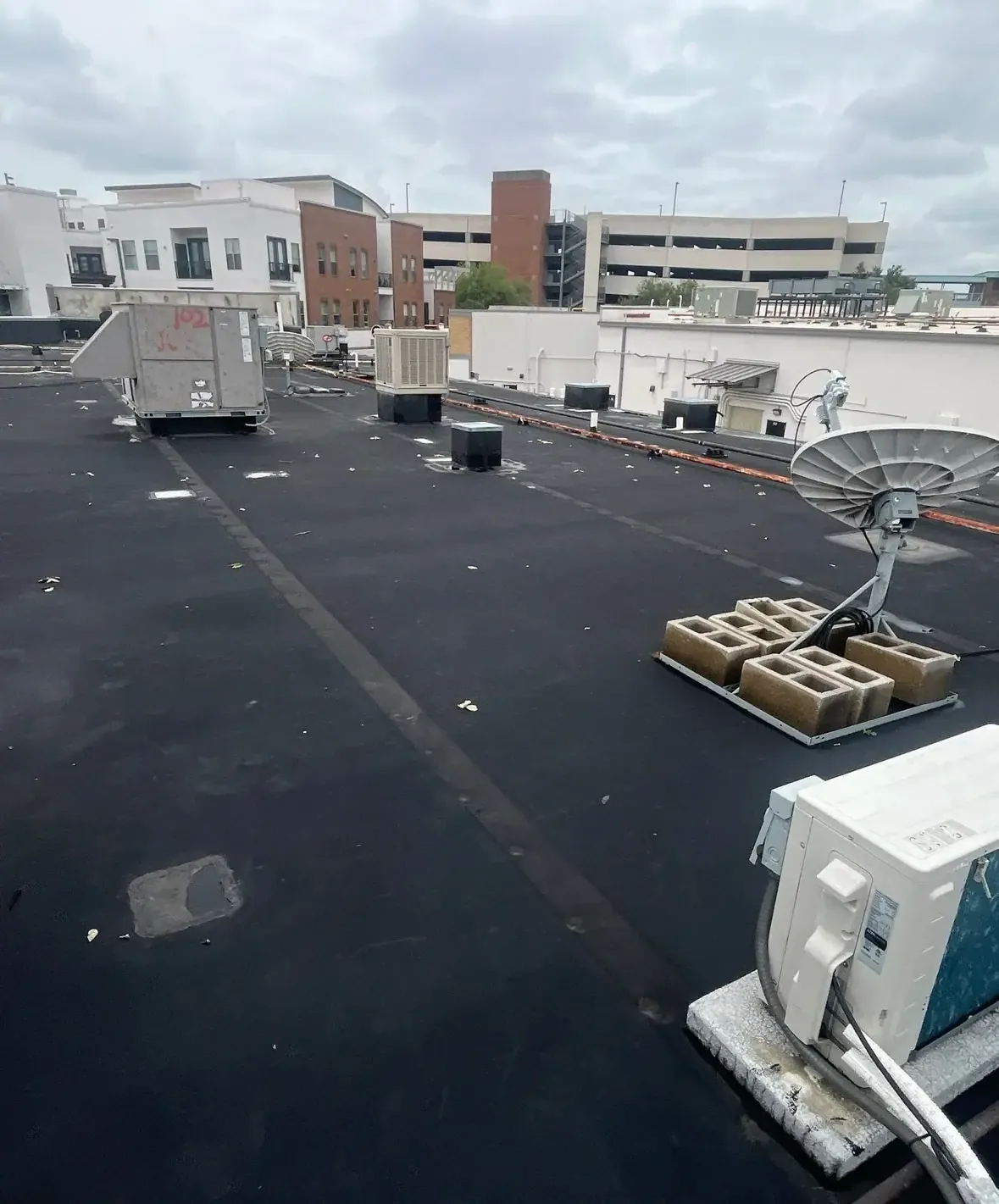
An EPDM roof can remain serviceable while its seams, edge details, or penetrations start to demand more attention. The useful decision is not simply whether the membrane is rubber. We identify the assembly, roof section, attachment, repair history, drainage, and areas exposed to routine service traffic. In Killeen, summer heat and weather observations provide inspection context, but the condition record must come from the building itself. The owner needs a map that separates isolated repair from a section approaching capital work.
What Is Actually Installed?
EPDM is a synthetic rubber membrane available in different thicknesses and installation configurations. Sheets may be mechanically attached, adhered, or ballasted, and seams are joined with tape or approved bonding methods. The perimeter, corners, curbs, drains, and transitions often control the repair scope more than the broad field membrane. We look for open seam edges, adhesive failure, shrinkage, punctures, trapped moisture, and patches that no longer hold at their perimeter. The roof register should identify each section and the assembly confirmed by records or field observation.
Older repair products can complicate a new bond. A clean-looking surface does not prove that a patch will adhere, and an old service ticket may not record the membrane or primer used. We document the tested area, identify unknowns, and choose a compatible repair detail before extending the work. A hands-on commercial roof walk can tie observed conditions to a section map; a thermoplastic alternative provides a useful comparison when repeated seams or broad deterioration affect replacement timing.
Which Seam and Flashing Failures Matter?
Field seams should be checked for separation, contamination, fishmouths, and loss of adhesion. At a curb or pipe, the membrane must transition without a gap and remain secure as the detail moves. We inspect corners, terminations, pitch pans, and drain bowls rather than relying on a visual scan from the access hatch. When moisture is suspected, a selected test can confirm whether insulation or a lower layer is wet. The report identifies what was seen and what remains untested, then sets a repair boundary that can be priced and revisited.
A seam defect near equipment service may reflect traffic damage rather than a system-wide problem. We record the route, surface protection, and nearby detail, then separate a local patch from a repeated pattern. At penetrations, flashing height and corner geometry matter; adding sealant over a loose termination does not restore a sound transition. The penetration flashing scope can address a defined opening, while a curb and support inspection can keep mechanical access issues out of a general membrane allowance.
How Does Killeen Weather Change Inspection Timing?
US 190 connections toward Stan Schlueter Loop include the Bacon Ranch Road and Cunningham Road projects. For an EPDM repair schedule, that network can help orient which roof sections fit one mobilization, but it cannot set the private-property entrance or rooftop access. We confirm those points with the site contact. The West Trimmier Road corridor is another distinct reference for planning a visit; each building still needs its own staging and weather-protection boundary. Record which seam or patch can be completed before leaving the section exposed.
Heat remains a field condition to verify, not a calendar assumption. We check the membrane and substrate before cleaning, priming, or bonding. The end-of-shift plan names any temporary dry-in and the permanent repair still due. That separation lets the owner track emergency protection without recording it as a completed EPDM repair.
When Is a Patch Enough?
A localized repair is supportable when the membrane around the defect is sound, the underlying assembly is dry enough for the specified detail, and water has not traveled beyond the mapped boundary. We remove failed material, prepare the surface, use compatible products, and record the finished repair. If seams have separated in multiple locations or the membrane has become brittle and cracked, repeated patches can consume budget without resolving the larger condition. The owner should see both the targeted repair and the broader alternative, with access and testing assumptions stated.
EPDM can be repaired, but a repair is not a blanket statement about the rest of the roof. We mark accessible and inaccessible areas, record known prior patches, and identify any sample needed to confirm moisture. Drainage should be considered at the same time. Standing water may expose weaknesses or reflect a slope issue that a seam patch will not correct. A separate drainage correction scope keeps water-management work visible, while replacement planning can compare tear-off, recover, and attachment decisions.
What Belongs in a Replacement Comparison?
For replacement, compare the full assembly: deck condition, insulation, attachment, membrane thickness, perimeter details, drains, penetrations, and transitions to walls or adjacent roofs. A bid that names EPDM but omits these items is not yet a comparable scope. Confirm whether existing layers remain, whether moisture testing is required, and how the design handles edge securement. Warranty terms and inspection duties should be reviewed against the actual assembly rather than assumed from the membrane label.
Roof work can affect tenants and equipment service even when the membrane area is clear. We agree on access routes, lift locations, protected areas, and any interruption to rooftop units. The property record should note each section, repair date, test location, and follow-up item. A mapped condition report can support the budget window, and a PVC membrane comparison can show how another thermoplastic assembly would address the same roof use. Keep capital assumptions separate from findings that require opening the assembly.
How Should the EPDM Record Be Kept?
Closeout should include the product and repair materials, approved detail, roof section, seam and penetration photographs, moisture test locations, and any limitation on access. We mark whether the work was permanent or a temporary weather measure. If an area could not be inspected, the report says so and names the next test or access needed. This record lets a later visit compare the same seam or curb rather than start from a vague description of a leak.
For a portfolio, track repairs by section and distinguish repeated entry points from unrelated damage. A maintenance visit can recheck exposed seams, drains, and traffic routes before small defects spread. In central Killeen, movement between properties may follow US 190 or Rancier Avenue/FM 439, but the road network does not define an individual site’s access rules. The property contact confirms delivery and roof access. We can return a repair scope, a replacement comparison, or both, so the owner can align immediate work with the longer capital plan.
Commercial Roofing Questions
Can a damaged EPDM seam be repaired without replacing the roof?
A repair may fit when the surrounding membrane and substrate are sound and testing supports a limited boundary. We inspect the seam, nearby flashing, and moisture conditions, then document the prepared area and compatible detail. Repeated failures or widespread deterioration call for a comparison with section replacement.
How do you check an EPDM roof when the leak is inside?
We compare the interior location and timing with roof seams, penetrations, drains, and the known water path. If visual evidence does not locate the entry point, selected testing can reduce uncertainty. The condition report marks the tested area and keeps untested roof sections distinct.
Does Killeen’s hail history mean my roof needs a claim?
No. A local weather record is not property evidence. We inspect the actual membrane and edge details, compare current photos with earlier records, and document any observed impact or opening. Claim decisions should use the building’s condition and the applicable policy process.
Can EPDM be installed over an existing roof?
A recover depends on layer count, moisture, deck capacity, attachment, and the approved design. We identify the assembly and recommend testing where those conditions are unknown. The comparison should show what remains in place and how the new system is secured.
What records should the asset team keep after repair?
Keep the roof map, product information, repair detail, photographs, moisture test locations, and any area that could not be reached. Record whether the work was temporary or permanent. Those notes give the next inspector a defined boundary to revisit and help the owner compare repair history with replacement timing.
Put the EPDM Finding on the Roof Map
Share the leak history, prior repair records, roof plan, and access limits. We can inspect the affected section and return a documented repair boundary with the tests or replacement comparison the decision requires.