
Emergency Commercial Roof Repair in Killeen, TX
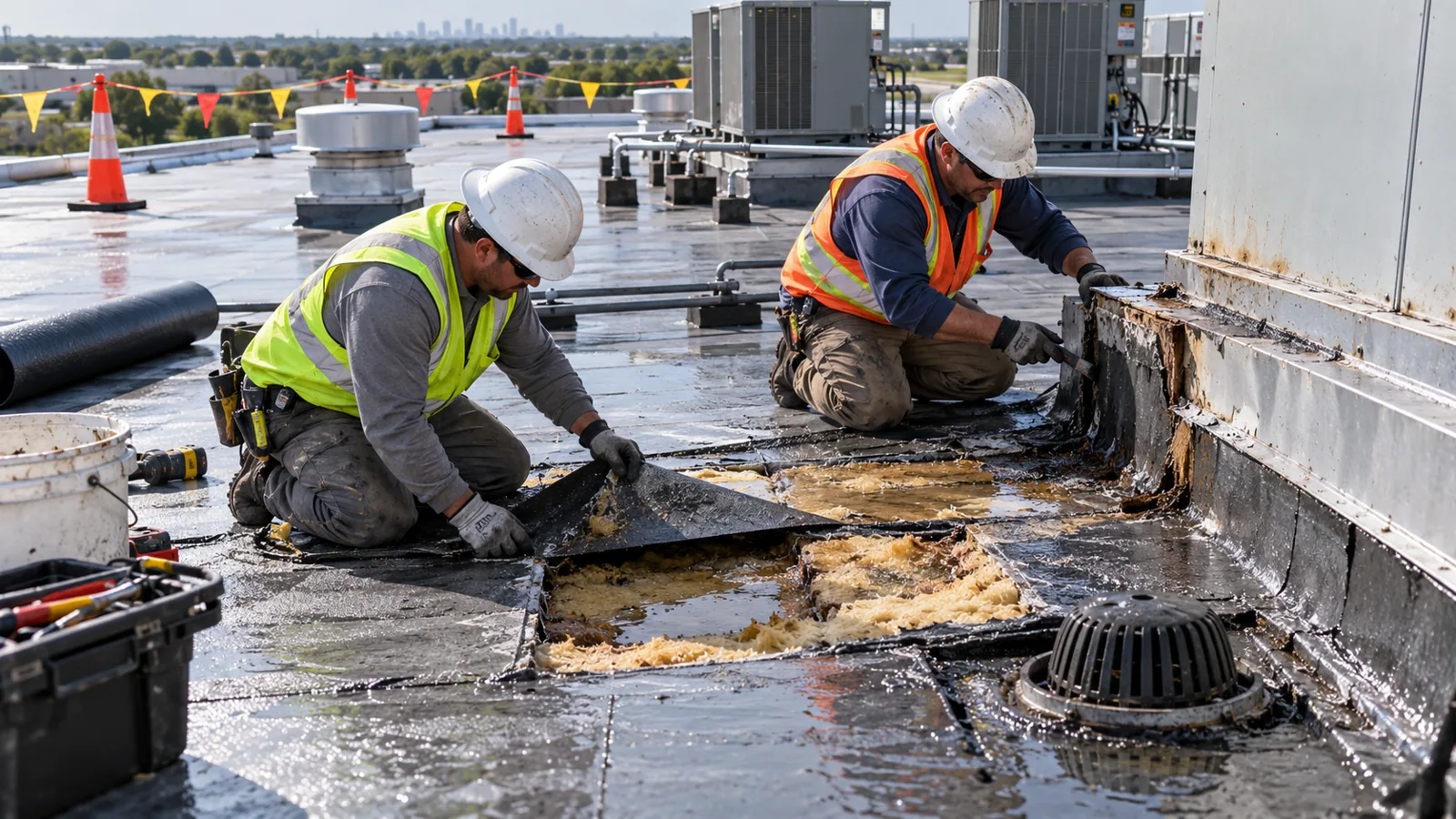
An active roof opening puts people, equipment, and operating plans on the same clock. The first decision is how to protect the building while the roof can be reached safely. For an active leak, the owner can request an emergency assessment and confirm current availability, site access, and temporary-protection options. We confirm affected rooms, roof access, and immediate hazards, then identify whether a temporary dry-in can reduce entry. The visit records what was stabilized and what permanent work still needs a prepared surface, testing, or a separate trade.
What Needs Attention Before the Roof?
Move people away from active water, protect electrical equipment, and avoid placing a ladder or container under a ceiling that is sagging. The facility contact should identify shutoffs, restricted rooms, and any mechanical area that cannot be disturbed. We ask where water appears, when it began, and whether it changes with wind or equipment operation. Those details guide the roof inspection without assuming the interior stain marks the entry point.
We then inspect the safest accessible route to the roof, look for displaced membrane, open seams, damaged metal, blocked drains, and detached flashing, and photograph the condition. Killeen averages 18.3 days a year with highs at or above 100°F; use the forecast and roof-surface conditions to set the emergency work window. That heat can affect access and material handling, so the crew checks the actual roof conditions before opening or securing an area. A leak-tracing visit can continue the investigation once immediate exposure is controlled.
What Can Stabilization Accomplish?
Emergency work aims to limit the immediate damage, not conceal the next decision. Depending on the roof and weather, we may secure loose material, cover an opening, divert water away from sensitive equipment, or patch a detail as a temporary measure. We mark the location, boundary, and known limitation. A temporary cover is not priced or described as a completed membrane repair unless the underlying surface can be prepared and the repair can be finished correctly.
On a low-slope roof, water can travel beneath the membrane or along a deck before it reaches the occupied space. We check the drainage path and nearby penetrations as well as the visible opening. Annual precipitation in Killeen averages 34.75 inches; note outlets, overflows, and low areas that could hold water near the emergency detail. If a drain is part of the event, a drain and overflow repair may need to accompany the dry-in. We keep any added scope separate from immediate protection.
How Is the Permanent Scope Set?
After the building is protected, we identify the roof assembly and inspect the edge, seam, curb, penetration, or drain that could have failed. A field patch may be appropriate when the membrane and substrate are sound. Wet insulation, a loose attachment pattern, or a deteriorated deck can require a larger opening and removal. We explain the finding, photograph the boundary, and price confirmed repair work separately from areas that need further testing.
For a Killeen dispatch, confirm the live approach, usable gate, and lift location directly with the property contact before sending equipment. For an emergency visit, the site contact must identify the usable gate and roof access; a public road route cannot establish either one. For a property along the SH 195 and Fort Hood Street corridor, we verify the loading approach and any restrictions with the site contact. A roof section near Downtown Killeen may also require a protected storefront route or after-hours access.
March 25, 2003 brought a Killeen tornado rated F0 and hail measuring 1.75 inches. Inspect present roof details before assigning any storm scope. That record supports keeping an inspection baseline, not assuming current damage or assigning a storm cause without evidence. We document punctures, impact marks, loosened metal, and torn seams as found. A hail-damage review or wind and tornado assessment can help separate fresh impact evidence from older wear.
What Must Keep Running?
A roof emergency does not stop the rest of the building’s schedule. We identify occupied rooms, customer entries, loading zones, kitchen or medical equipment, and any system that requires a shutdown before roofing work begins. The facility lead receives a short work boundary and a description of the temporary protection so staff know which spaces or routes are affected. If the leak is in a tenant area, interior containment and cleanup responsibility should be clear before permanent work is authorized.
Killeen’s occupancy reporting covered new or expanding restaurant, retail, childcare and education, medical office, and fitness uses. It does not tell us the layout or operating hours of an individual property. We confirm those on arrival and stage materials away from public movement. For an occupied roof, a phased work sequence can preserve access while the permanent repair proceeds. We also coordinate with HVAC or electrical trades when equipment must be isolated.
What Should the Emergency File Include?
The record should state the call time, reported interior condition, roof access available, observed source, temporary work completed, and remaining risk. We attach close photographs and a wider roof reference, then identify any concealed area that was not tested. The owner can authorize permanent repair from a defined scope instead of an emergency description that leaves the boundary unclear. If access or weather prevented a complete repair, the report names the next safe work window.
Keep the temporary dry-in date visible in the service record and assign a follow-up inspection. We verify the repair material is still secure, check adjacent drainage and edge details, and confirm whether water reappeared indoors. A condition report can preserve the emergency finding with the roof map, while planned maintenance can track nearby seams and outlets before another event. That follow-up does not assume the temporary work became permanent. It closes only when the authorized repair and its remaining items are documented.
For a larger facility, the same file should show which roof section was accessed and whether other buildings remain exposed. We identify a contact for each follow-up area and note access or equipment restrictions that could delay permanent work. If the next inspection requires a lift, interior escort, or shutdown, recording that dependency now makes the return visit easier to schedule and prevents a temporary measure from disappearing into the work-order queue.
Commercial Roofing Questions
What if a leak starts outside normal business hours?
Protect people and equipment from active water, then share the building location, access limits, and conditions. Response timing depends on current availability and safe access; we confirm what temporary protection can be arranged before dispatch.
Will a tarp solve the leak permanently?
A tarp is temporary protection. The permanent repair needs the entry point, roof material, and substrate to be inspected and prepared. We document the cover boundary and state what remains before describing the roof as repaired.
What information helps dispatch a roof response?
Give us the property location, the room or equipment affected, when the leak began, roof access details, and any hazards or restricted areas. Photos from inside can help locate the symptom, but the roof inspection determines the repair boundary.
Can emergency work happen during severe weather?
Crew safety and roof conditions control what can be done. We may need to protect the interior first and return when wind, lightning, standing water, or surface conditions allow safe access. The visit record distinguishes completed stabilization from deferred permanent work.
How do you document a storm-related roof problem?
We photograph observed damage, map each affected section, and keep the event report separate from roof evidence. The record notes what was inspected and any area that could not be reached. That gives the owner a factual basis for repair planning and any claim documentation.
Stabilize the Active Roof Condition
Call with the building location, affected interior area, access limits, and immediate safety concerns. We will assess the roof, document temporary protection, and identify the permanent repair or testing needed next.