
Commercial Roofing in West Trimmier Road, Killeen, TX
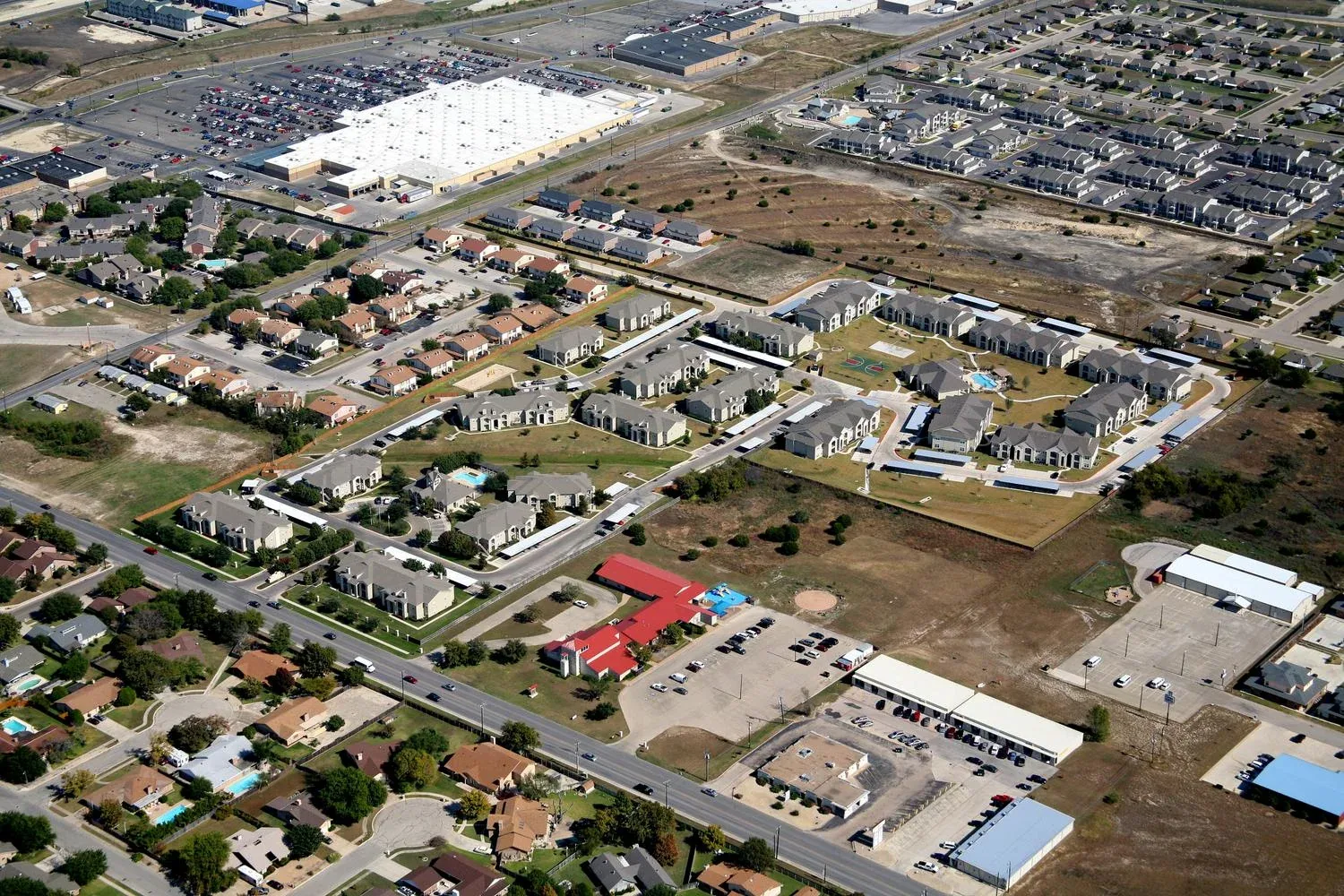
A capital review near West Trimmier Road should begin with a roof map and a condition that can be located again. The Stagecoach Road to Chaparral Road segment is a priority roadway project proposed to expand from two lanes to four with a center turn lane. That future work does not establish current access or any property's roof condition. We assess the actual assembly, drainage path, and repairs, then separate the work that can be priced now from questions needing further testing.
Which conditions change the scope?
Loose edge metal, a failed seam, open flashing, and moisture below the membrane can share a leak ticket but require different work. We record each item by roof section, photograph the surrounding detail, and note whether it is active, previously patched, or only suspected. The scope should include preparation and tie-in limits, not just a line that says repair leak. Where concealed material could change the quantity, identify a test area and the result that would change the proposal before opening the assembly.
A roof walk near West Trimmier may use Stagecoach Road, Chaparral Road, or W.S. Young Drive as route references. A roundabout is planned at Stagecoach and West Trimmier, along with proposed intersections at W.S. Young, Featherline, Cunningham, and East Trimmier. Those names describe planned projects, not current traffic or access conditions. A separate East Trimmier roof review needs its own access contact and building map. We can start with a commercial roof inspection at the property itself.
How should drainage be traced?
Water at a ceiling can enter at a roof detail and travel before it shows. We follow the slope toward drains and scuppers, inspect curbs and penetrations along the path, and note low areas where ponding or debris may matter. A photograph needs a roof-section label and context, so the next visit does not confuse one parapet or drain with another. If water remains after a storm, record when it was seen and whether the roof was safe and accessible at inspection.
Annual rainfall in Killeen averages 34.75 inches, so the roof walk should map drains, scuppers, and overflow paths before setting a repair boundary. That gives an area-level planning baseline, not a statement about a particular roof or storm. We use observed ponding, blocked drainage, and interior symptoms to decide what to clear, repair, or test. A drainage detail inspection can document the outlets and transitions, while ponding-water repair addresses the condition actually measured at the property.
Can the roof wait for another budget cycle?
Timing depends on whether water is active, how much insulation is affected, whether the deck can carry the assembly, and how repeated patches compare with a broader project. We do not set the replacement cycle from a corridor map or one roof's apparent age. We show the owner the condition evidence, identify immediate protection, and list what remains to be tested. A budget line can then distinguish a defined repair from an allowance whose quantity is still uncertain.
For sections that may support restoration, we inspect adhesion, coating compatibility, moisture, and the details that a new surface would leave in place. If those checks support it, a coating restoration review can be compared with recovery or replacement. A capital schedule can carry each roof section, priority, and next review date. Properties closer to the Chaparral Road corridor remain separate assets even when a portfolio manager coordinates the same approval.
What should the work window protect?
Before mobilization, we check how the building receives deliveries, where occupants enter, and whether a lift can reach the roof without crossing an active queue. The site contact identifies rooms, equipment, or tenant operations that need covering or a temporary boundary. We sequence tear-off or repair in roof sections small enough to close and dry in safely. The proposal notes staging, daily closeout, and any period when access below the roof changes, so operations can plan around a defined task.
Where the property has more than one tenant, we coordinate notices and any interior protection with the owner rather than treating the roof as a vacant work area. If an urgent leak needs a temporary stop, that stabilization remains distinct from permanent repair. A rapid-response roof assessment can document immediate exposure, then return with the measured long-term scope. For nearby properties on W.S. Young Drive, the same decision process still begins with their own access, roof sections, and operating limits.
For a phased project, the roof plan should show the boundary of every day's work and the condition that must be met before the crew moves to the next area. We identify tie-in points that need temporary sealing, protect equipment and interior finishes below, and note whether a tenant needs a clear route at a set hour. If the weather window changes, the supervisor needs a defined stop point and a documented dry-in, not a vague instruction to make the roof safe. That level of detail lets ownership judge whether the proposed sequence fits its operations and budget authority.
What evidence belongs in closeout?
Retain the roof plan with completed areas marked, before-and-after photographs, material information, approved changes, and any test result. If an area was not inspected or remains under observation, keep that item open in the record with a next review date. A future manager can see whether a patch solved the original path or whether the condition moved to another detail. This is more useful than a broad condition grade because it ties the service record to work ownership can verify.
The owner receives the scope, assumptions, and next decision in language that can travel from maintenance to finance without losing the condition that started the work.
After the roof is closed, a useful handoff names the repaired section, material, date, and any approved change from the original scope. Include photos that show the work boundary before and after, plus a short list of items that were not part of the authorization. If a later leak appears near the same area, the record can distinguish a new symptom from a return at the prior detail. That comparison is valuable for maintenance planning and for testing whether a larger restoration should move into the next capital cycle.
Commercial Roofing Questions
Does the roadway project mean access is restricted now?
A high-priority designation is not a live construction update or traffic report. We confirm the property's approach and staging with its contact before scheduling a roof walk. The site contact and crew lead confirm whether the approach is clear at arrival, where a lift can stand, and which drives must stay open. Keep that confirmation with the daily work schedule.
How do you decide whether a ponding area needs repair?
We record where water remains, inspect the drainage path and adjacent details, and compare the condition with the roof assembly. The measured finding determines whether clearing, correction, testing, or a broader scope is warranted.
Can a roof be divided into separate repair phases?
Yes, when each boundary can be protected and closed safely. We label the sections, show what is included in each phase, and state how temporary protection or access changes affect the next work window.
What if the estimate changes after opening the roof?
The scope should identify the concealed conditions that could change quantities. We document what the opening shows, stop at the approved boundary, and price added work for review before proceeding beyond it.
What records help with next year's capital review?
Keep the marked plan, dated photos, repair materials, approved changes, and remaining test or inspection items. A section-level record makes it easier to compare the next observation with the condition that drove today's budget request.
Compare West Trimmier roof options
Provide the roof plan, leak history, access contact, and budget window. We can map current conditions and return a repair, restoration, or replacement scope tied to the same roof boundary.