
Commercial Roof Capital Planning in Killeen, TX
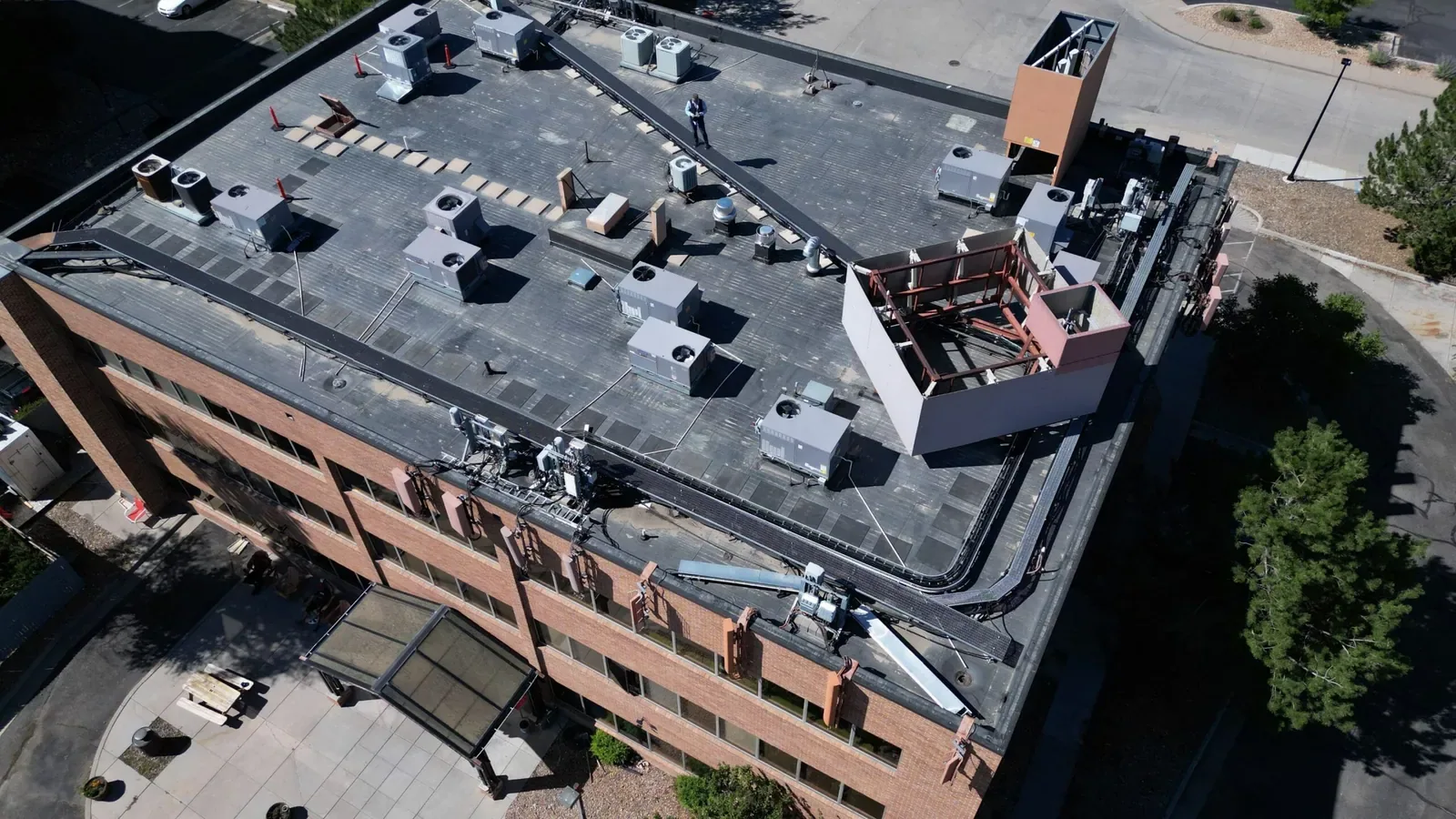
A capital plan should show which roof decision needs money, when the decision is due, and what evidence supports the amount. We begin with current conditions, repair history, access, and the operating impact of each option. Killeen's annual precipitation normal is 34.75 inches, a local planning baseline for drainage and maintenance timing, not a prediction for a particular season or proof of a defect. Killeen's TIRZ #2 includes approved downtown facade and corridor improvement projects with participation from city, county, and Central Texas College. Broader property investment does not tell us what a roof needs; each roof section still needs its own scope and condition record.
What evidence belongs behind a budget request?
Attach a dated condition report with a roof plan, photographs, assembly details when confirmed, repair locations, and access limits. Separate an observed opening or failed flashing from a suspected moisture condition that still needs testing. A ceiling stain, an old patch, and a wet insulation indication are not interchangeable findings. Each one can lead to a different scope, and the estimate should say which observation drives its work. If a site visit could not reach a roof section, keep that limitation visible instead of assigning an assumed condition to the whole building.
A roof condition report should give finance and facilities the same reference points. Label the area, describe the repair boundary, note any protection required below, and state what would change the recommendation. Where a moisture map affects whether recovery is feasible, identify test locations and the decision that depends on the result. A roof register can retain the report beside prior repairs, making a later capital review traceable rather than dependent on an old email or a verbal summary.
How should repair, recovery, and replacement compare?
Compare alternatives against the same roof area and assumptions. A repair may address a bounded leak or detail failure when the surrounding assembly remains serviceable. Recovery can limit tear-off but depends on the existing layers, moisture, deck capacity, edge height, and code. Replacement provides access to the underlying assembly and allows broader correction, with removal, disposal, and interruption affecting the schedule. A coating is a different option when the substrate and details support it. Do not place a low repair figure beside a full replacement allowance without explaining the different work each includes.
We state quantities, preparation, material assumptions, exclusions, allowances, sequencing, and concealed-condition triggers. If further testing is needed before choosing a system, carry it as a defined decision point rather than hiding it inside a broad contingency. A replacement scope can be compared with a recovery review when both remain viable. For coating work, a restoration evaluation should address adhesion, surface preparation, drainage, and detail condition before the budget treats it as an alternative.
Which roofs belong in the earlier budget window?
Set priority using exposure, consequence, recurrence, and the time required to make a decision. Active water entry above occupied space or inventory may need immediate stabilization. A recurring seam or drain issue may justify a measured repair before the next budget cycle. A roof with broad deterioration, repeated work orders, or unresolved moisture may need testing and a replacement comparison. Explain the operational effect of waiting, the temporary measure available, and the point when delay would narrow the choices.
A Killeen property near Downtown or the Rancier Avenue corridor may have a different loading entrance and work window from a site near Stan Schlueter Loop. Road work near those districts can affect travel and coordination, but each project calendar still depends on the building owner, tenants, and roof access. A Downtown Killeen roof review or a Rancier Avenue condition visit starts with the actual property boundary. The due-diligence survey can document condition before a purchase or major allocation is approved.
How does the plan account for operating time?
Roof access, tenant notices, deliveries, weather protection, equipment shutdowns, and inspection hold points can change a project's cost and calendar. The plan should identify the usable work window and who can approve a shift when an occupied area changes. Break a large project into phases that can be opened, protected, inspected, and secured without leaving an exposed edge overnight. If operations require a temporary route or a cleared interior zone, include it before comparing bids. A schedule that omits those constraints can understate both disruption and field time.
For rooftop units, identify which party handles disconnect, lift, reset, and functional checks. Put that boundary in the scope and carry any required mechanical work separately. Record delivery and laydown constraints by property, not by a broad city assumption. A phased occupied-building plan can keep room access and roof sequence aligned. For work that affects equipment, a curb and support scope identifies the flashing interface and trade handoff before mobilization.
What makes estimates easier to compare?
Give every bidder the same roof areas, quantities, access notes, photos, and scope boundary. Ask each proposal to separate base work from optional testing, deck allowances, and items that depend on concealed conditions. Compare the repair history and service record alongside the initial amount, because repeated access and recurring mobilization can change the longer view. Keep exclusions visible. A clean comparison does not force one choice; it shows which option addresses the documented condition and which risk remains with ownership.
For portfolios, use common fields but keep one budget line per roof section or building. Killeen's downtown grants and corridor projects are community improvements, not evidence of private roof funding or roof condition. On a project in Downtown Killeen, the district's north edge follows Rancier Avenue/FM 439 and its south edge follows Veterans Memorial Boulevard/Business 190. That orientation can help identify a property, while a roof walk confirms its actual assembly. Link the capital line to the approved scope, condition report, and warranty record so later reviewers can see what was funded and what remains open.
When should the capital plan change?
Revisit the allocation when an inspection changes the known condition, a test confirms or rules out moisture, a repair reveals a larger scope, or an operating calendar shifts. Update the estimate against the new information and keep the prior version for comparison. If the recommendation changes from repair to replacement, state which finding drove that change. This record protects the budget decision from becoming a mystery six months later and makes it easier to explain a deferral when ownership chooses to wait.
We can assemble a roof-by-roof recommendation from site observations, existing plans, repair records, and approved testing. The result should distinguish urgent protection, near-term repair, and future replacement timing without presenting the sequence as fixed before conditions are confirmed. For buildings with different uses, a commercial office roof review and a warehouse roof review preserve separate access and operational constraints. A multi-building owner can use a multi-site roof program to keep the comparison consistent while each site's capital decision remains tied to its own condition.
Commercial Roofing Questions
Can a roof capital plan assign an exact replacement year?
It can show a planning window based on observed condition and available evidence, but the timing should be revisited after inspection, repair, or testing changes the picture. We keep assumptions beside the estimate so ownership can see what would move the date.
How should a repair compete with a replacement request?
Compare the same roof area, access, preparation, and protection requirements. We identify what the repair addresses, what remains, and whether testing or repeat mobilization changes the longer-term decision.
Should concealed conditions be included in the base scope?
No. We identify a defined allowance or decision point for conditions that cannot be confirmed before opening. The estimate should state how approval works and which costs are excluded until the condition is observed.
What does finance need to compare proposals?
Provide matching quantities, materials, access assumptions, schedule, exclusions, and allowances. We can return options using the same roof boundary so the difference reflects the work rather than different assumptions.
When should a portfolio budget be updated?
Update it after a material change in condition, a completed repair, a test result, or a new operating constraint. Keep the earlier version beside the revised scope so the decision trail remains clear.
Put the roof decision in the budget window
Send current roof plans, inspection records, repair history, and any access dates ownership must protect. We can compare scoped options and identify the evidence that still needs field confirmation.