
Commercial Roof Coating in Killeen, TX
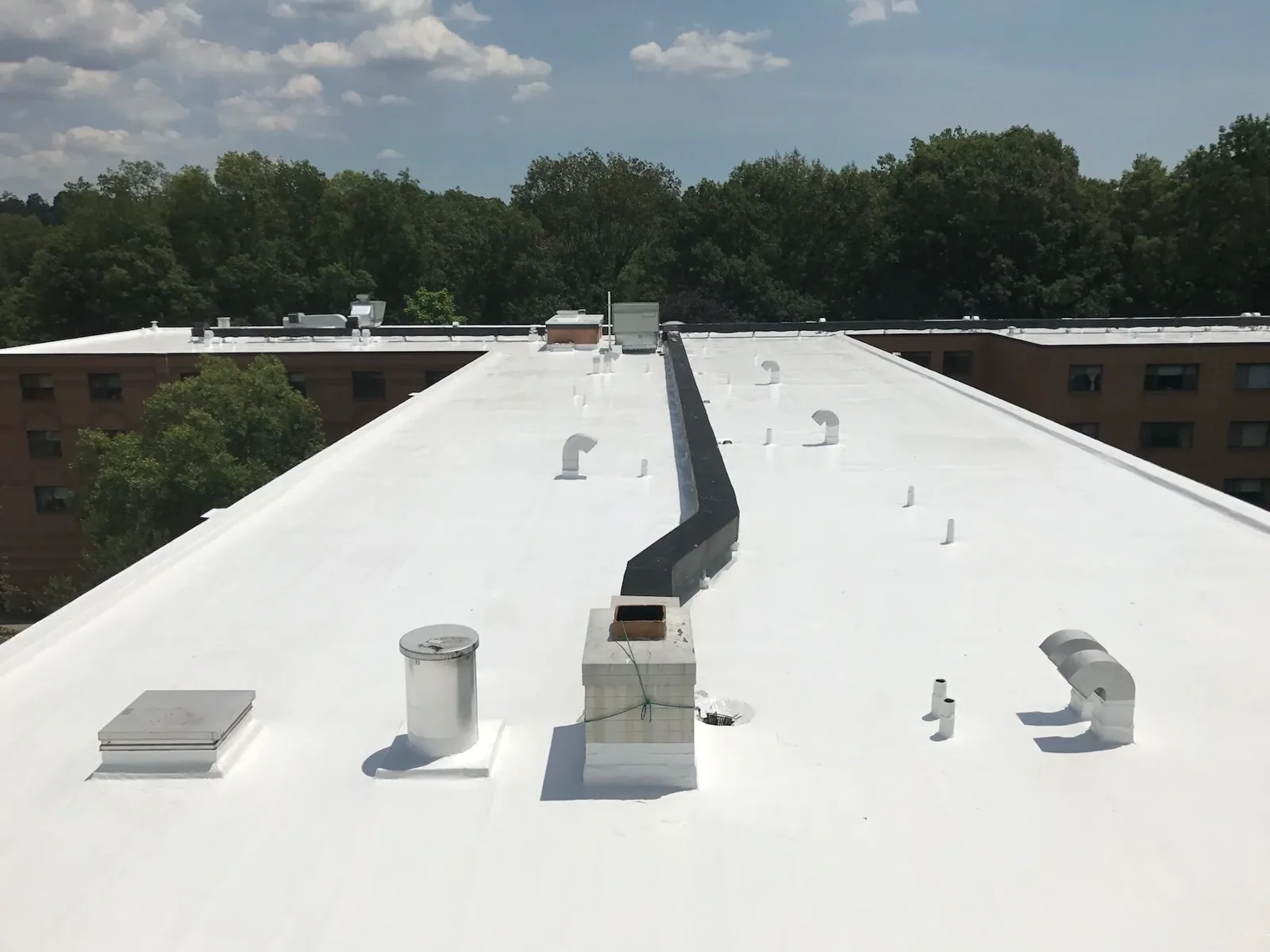
A coating is a restoration option only when the existing roof can hold it. We inspect the membrane, seams, flashing, drains, and substrate before discussing material or coverage. The first walk separates a surface that needs preparation from a roof with wet insulation, failed attachment, or deck trouble that calls for another scope. In Killeen, heat exposure informs the inspection, while the roof itself decides whether a coating can be considered.
What Can Stay Under a New Surface?
We check whether the existing membrane is secure, the substrate is dry enough for the proposed system, and the surface can be cleaned without exposing a broader failure. Loose seams, open flashings, punctures, and failed terminations must be repaired first. Where moisture is suspected, a selective cut or core can confirm whether the insulation and deck are suitable. The written recommendation identifies the areas tested, the limits of the walk, and any finding that could change the coating decision.
With the base exposed, we verify that the surface can accept the proposed restoration system and that seams, flashings, and terminations can be repaired before application. Killeen's hot summer climate makes the roof surface and work window important checks, but neither climate nor coating eligibility can be assumed from a citywide statistic. We inspect the material in front of us and confirm system requirements before scheduling. A moisture survey can help select test locations when the condition below the membrane is uncertain.
How Much Preparation Is Required?
Preparation can include washing, removing loose material, treating isolated surface defects, reinforcing seams, and rebuilding selected flashings. The coating must meet the existing roof at a stable, clean transition. We verify compatibility with the substrate and identify the primer, reinforcement, and finish layers required by the selected system. A sample area can expose adhesion or surface issues before the full field is treated. The proposal states the preparation boundary instead of treating every roof as a uniform surface.
Drain bowls, scuppers, overflow routes, curbs, and wall terminations need separate attention because a coating does not correct poor slope or a failed metal edge by itself. We check whether drains can remain open through application and whether water can reach them without crossing an untreated break. On a roof with persistent ponding or an unstable seam, we show correction work as a separate line. The drainage review and edge metal work can be scoped before the coating area is measured.
What Sets the Work Window?
Temperature, surface moisture, dew, wind, and the time available for each layer to cure all affect the day plan. We check the roof surface rather than relying only on the forecast, then divide the application into areas that can be completed and protected. Equipment curbs and penetrations receive careful masking or detail work, and drains remain clear. If conditions change before a layer is ready, the crew stops at a prepared boundary and records what remains.
Killeen's July and August average temperatures are 84.0°F and 84.6°F. Those summer conditions help frame the work window, while actual surface temperature and product requirements govern application. We confirm the entrance, lift position, and delivery window with the site contact. Near Rancier Avenue, the property still controls its traffic and access limits; a Rancier Avenue roof walk can map work zones before material arrives.
The work sequence also has to protect transitions where a finished area meets untreated roof. We mark each stopping edge, keep temporary weather protection available, and avoid leaving open details at the end of a shift. A site contact should know which drains, walk paths, and equipment clearances are affected before material arrives. Those Diligence Notes help the owner understand why a weather hold or a staged mobilization changes schedule without changing the approved roof area.
Which Restoration System Fits?
Elastomeric coatings differ in chemistry, reinforcement needs, and compatibility. We compare the existing membrane, the roof's exposure, and the details that must remain serviceable before specifying a system. A coating may renew a prepared, sound surface; it is not a substitute for replacing wet insulation, correcting structural movement, or rebuilding a failed curb. We state expected coverage by area and keep exclusions visible so an owner can compare restoration with a recover or replacement using the same field record.
Cost and schedule depend on cleaning, repairs, primer, reinforcement, coating quantity, access, and weather holds. A roof with many curbs or edge transitions requires more detail labor than an open field. The owner receives those drivers with the tested areas and proposed limits. If the existing system is not a suitable base, a silicone roof system or another assembly can be compared as a new scope, not presented as a coating over conditions that remain unresolved. A replacement comparison helps make that boundary clear.
Budget review is easier when the estimate keeps optional work separate. We identify the measured coating area, repairs that must precede application, and allowances that remain subject to test results. The owner can then compare a prepared restoration against a replacement scope with the same access assumptions and drainage corrections. If a hidden deck condition appears after opening, we stop at the agreed boundary, document the change, and return a separate price for approval.
How Is the Finished Area Checked?
Before application, we photograph repairs and confirm the prepared surface. During the work, the foreman tracks completed areas, detail treatment, and any interruption at a seam, curb, or drain. At closeout, the record identifies the system installed, application area, repaired conditions, and any location excluded from the scope. These notes give the owner a baseline for future inspection and make it easier to distinguish a later puncture from a coating concern.
Downtown Killeen is a commercial district bounded by Rancier Avenue/FM 439 and Veterans Memorial Boulevard/Business 190. That is useful orientation for service scheduling, but the roof's access and assembly remain property-specific. A downtown roof walk can document the work area and loading restrictions before mobilization. Request a coating evaluation with repair history, roof plans, and access details. We will return a condition-based recommendation, including the tests or repairs needed before a restoration scope is ready for approval.
Commercial Roofing Questions
How do you decide whether a roof is a coating candidate?
We inspect attachment, moisture, seams, flashing, drainage, and substrate condition. If the base is dry and stable after required repairs, we can compare a compatible coating. Wet insulation, poor attachment, or a failing deck points to a different scope.
Can a coating stop leaks before repairs are made?
No. We locate and repair active openings and unstable details before application. A coating is measured over a prepared system, not used to hide an unresolved leak path or defective drain flashing.
What does the coating estimate include?
The estimate identifies cleaning, repairs, primer, reinforcement, material coverage, detail work, access, and weather assumptions. It also marks excluded areas and any test needed to confirm the substrate before the work can proceed.
Will the Killeen summer change the application schedule?
Surface temperature, moisture, wind, and cure conditions control the daily plan. We check actual roof conditions and the product requirements, then break the work into protected areas that can be completed within the available window.
What if testing finds wet insulation?
We map the test location and affected boundary, then price removal or replacement separately from the coating work. The owner can review that evidence before approving a revised restoration area or comparing a larger replacement scope.
Compare Restoration With Replacement
Provide the roof assembly, prior leak and repair notes, access requirements, and any existing coating records. We will inspect the substrate, identify required preparation, and return a defined restoration option with the conditions that could change it.