
Ponding Water Roof Repair in Killeen, TX
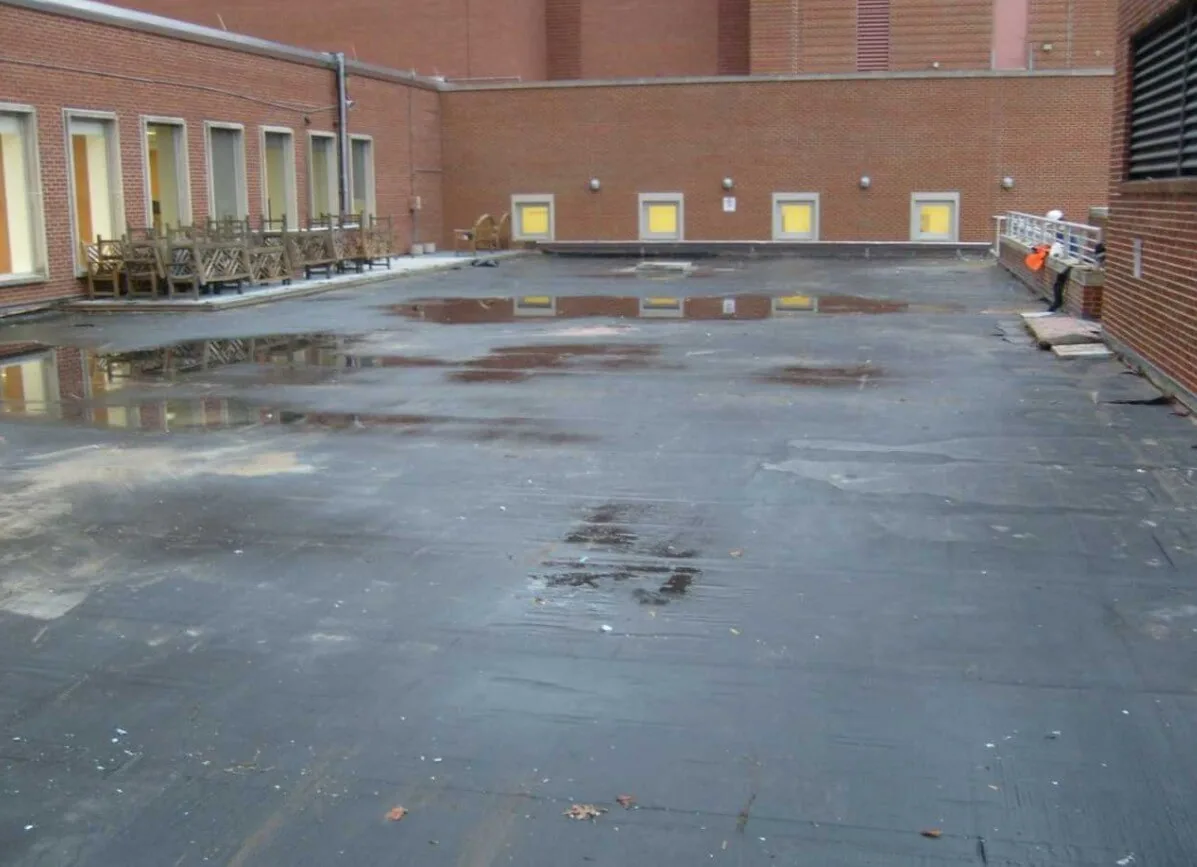
A shallow pool after rain can point to a blocked drain, a settled deck, a compressed insulation area or a roof that was built with insufficient slope. Killeen's annual precipitation normal is 34.75 inches. The figure gives regional context; it does not show whether a particular drain, slope, or membrane is performing. We map each pond, its depth and how long it remains, then compare it with drains, scuppers, seams and the shape of the roof section.
The first question is whether water has a clear route off the membrane. We check strainers, drain bowls, leaders, overflow paths and parapet scuppers, then note any debris or access issue that keeps maintenance from reaching them. A drain can be clear and still sit above the actual low point. The map needs to show where water gathers and whether the slope, substrate or insulation is keeping it from moving. A seam failure repair may be needed where water stresses a lap.
What does the water pattern reveal?
We look at pond edges for dirt rings, algae, membrane discoloration, seam stress and soft spots. Those observations help set the next test; they do not establish the condition below the sheet. If moisture could change the repair boundary, infrared scanning or a controlled test opening may help confirm the extent. A repair proposal should explain what was observed, what was tested, and which assumptions remain before any new layer covers the area.
Drainage work and membrane work solve different problems. Clearing a blocked inlet may restore flow without opening the roof, while a cracked drain flange or split seam needs a compatible detail repair. If the deck has settled or insulation has compressed, a patch alone leaves the low point in place. We compare a tapered insulation correction, drain adjustment or section replacement with the cost and disruption of treating only the visible symptom. Consider flashing repair when water tracks toward a wall or curb.
How should drains and low points be checked?
Repeated wetting can load a seam and keep debris or contaminants against the membrane. Killeen's July and August normal mean temperatures are 84.0°F and 84.6°F, respectively; hot surfaces can change work timing and expose weak bond areas during inspection. Before specifying adhesive or heat-weld work, we check surface dryness and temperature at the actual roof rather than rely on the calendar or a forecast alone.
Where the roof sits over active rooms, we identify interior contents, ceiling conditions and equipment before opening a low point. The crew can phase removal into smaller zones, protect the interior and close the section the same shift when weather and assembly permit. If a larger correction requires staged work, the plan should name each temporary drainage path so water is not directed toward a doorway, loading area or vulnerable mechanical space. A drainage inspection maps inlets, overflow and low points.
When is membrane repair part of the fix?
Local business uses range from retail and restaurants to medical offices, fitness, education and other commercial occupancy. Across Killeen, 278 occupancy certificates were issued for new or expanding uses from April 2025 through March 2026, including 75 in the North Killeen Revitalization Area. For a property in that district or near Veterans Memorial Boulevard, the roof plan should pair drainage work with delivery, tenant and equipment access rather than assume an empty site.
After correction, the owner should track the water line after meaningful rain, inspect drains and photograph any return ponding from consistent roof locations. The service record should note the repaired slope or inlet, membrane details and any area that still holds water. A follow-up review can determine whether the change improved drainage or whether another test is needed before a broader replacement cycle is set. A roof condition report keeps test results with the water map.
What can heat and repeated wetting change?
A roof walk also checks whether overflow protection is lower than the primary drain and clear of sealant or debris. When both paths are obstructed, water can rise beyond the area seen from the hatch. We trace each outlet to its discharge and identify whether the blockage sits at the roof, leader or ground connection before selecting a repair.
The duration of ponding matters because a shallow area that drains by the next inspection can present a different maintenance issue from water that remains after the roof should be dry. We ask the facility lead to note timing after a rain and compare photographs from the same view. The record should also note whether HVAC condensate or cleaning water enters the area. A roof replacement scope can compare section renewal with a slope correction.
How should occupied areas be protected?
A low spot may sit above compressed insulation or a deflected deck. If a test opening confirms wet or damaged layers, removal needs a dry-in plan and a transition to sound material. We identify how far new insulation and membrane should extend, how drains will be reset to the finished elevation, and what sheet-metal details must be adjusted so the correction drains as designed.
Maintenance can reduce avoidable blockage if the roof register names each drain and access point. We can group cleaning, seasonal checks and post-trade observations by roof section. This is useful for buildings around Downtown Killeen or the Veterans Memorial Boulevard / Business 190 corridor where active tenants and deliveries can make roof access a scheduled task rather than an informal visit. A scheduled maintenance visit checks drains after the correction.
What should the owner monitor next?
The repair option should state whether it restores flow, removes wet materials, changes the slope or replaces a failed drain connection. These are distinct scopes, and combining them without a roof map can hide what the owner is buying. We list the work sequence and any conditions that would require additional approval once the existing layers are exposed. Commercial activity in the North Killeen Revitalization Area calls for property-specific access planning.
For a multi-building owner, repeat ponding at different properties calls for separate records rather than one blanket conclusion. Roof area, assembly, drain layout and recent repairs vary by site. A consistent report format can compare urgency and budget timing while keeping each recommendation tied to its own roof section and test results. The Veterans Memorial Boulevard / Business 190 Corridor remains a broad access reference, not a roof diagnosis.
Commercial Roofing Questions
How long can standing water remain before it becomes a repair issue?
The duration matters alongside depth, membrane condition and the roof design. We record the water after rain and review the drainage path, then recommend a correction tied to what is keeping the area wet.
Will adding a drain solve every ponding area?
No. A new drain needs a suitable discharge path and structural or code review where applicable. We first establish whether the low point comes from blockage, slope, compression, movement or a failed detail.
Can a roof coating correct a low area?
A coating may renew a compatible surface, but it will not create slope or repair a settled deck by itself. We verify the substrate, moisture condition and drainage correction before considering a coating system.
How do you know whether insulation is wet below a pond?
The visible surface cannot confirm hidden moisture. We use a suitable survey and, where warranted, a controlled opening to identify the repair boundary before replacement material is specified.
What belongs in the drainage closeout?
A useful closeout lists the inlet or slope work, photographs, repaired membrane details, any remaining low point and a rain-based follow-up check. The owner can compare the result with the original pond map.
Review the ponding water roof repair scope
Request a Killeen roof walk and written options tied to the affected section, operating needs, and follow-up record.