
Restaurant Roof Repair and Replacement in Killeen
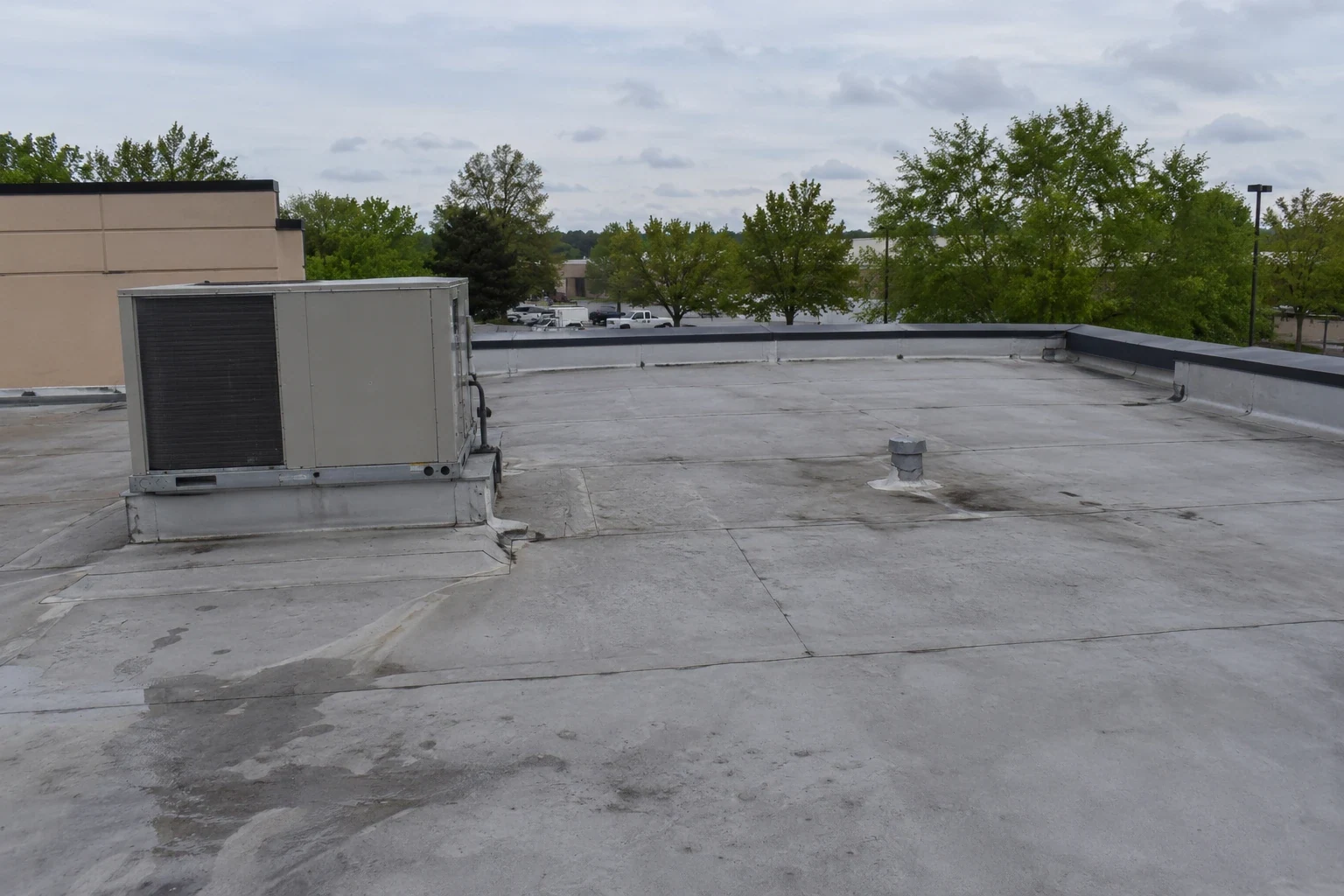
Restaurant roof work has to account for more than the membrane. Exhaust hoods, make-up air, refrigeration lines, grease-related maintenance, guest areas, deliveries, and food preparation all affect access and protection. A reported ceiling stain may be urgent for operations, but it does not by itself identify the roof opening. If the restaurant sits within a larger retail property, coordinate the kitchen-specific sequence with the big-box retail roof plan so receiving, public entrances, and shared staging stay in view. We map the affected room to a roof section, review nearby penetrations and drainage, and record what is confirmed before presenting a repair or replacement scope.
Rancier Avenue is a useful Killeen reference when a restaurant team is coordinating deliveries and crew access. A property in Downtown Killeen still needs its own loading entrance, grease-waste path, and safe staging area confirmed. We set the roof phase around those operating details and the systems that must stay available inside.
Where do hood and exhaust penetrations need attention?
List roof-mounted exhaust fans, hood discharge, make-up air, refrigeration lines, conduit, and other penetrations before pricing work. Identify the curb or support, flashing type, access path, and party responsible for disconnecting or resetting equipment. A roofing crew can scope membrane and flashing, while restaurant equipment and electrical work may require separate qualified trades. Write that boundary down so an estimate does not leave a shutdown, reset, or functional check to assumption.
Inspect curb corners, counterflashing, pitch pockets, fasteners, and visible sealant condition. Record any residue or surface condition that may require a cleaning or specialty procedure before repair. Do not treat every dark mark as a leak source. A roof curb and support review can make the interface list clear. When working around kitchen exhaust, confirm the restaurant’s cleaning and access procedures; the roofing scope should not imply that a roofer performs hood or duct service.
How can work fit prep, service, and deliveries?
Before mobilizing, ask the operator to identify food preparation periods, opening and closing routines, receiving windows, guest entrances, and any area that must remain clear. Set the roof phase, staging location, pedestrian boundary, and daily weatherproof stop point. A delivery window may be more important than the posted business hours. Confirm who can approve access changes or temporarily redirect a vendor.
Choose a sequence that avoids exposing more roof area than the crew can close and protect during the planned shift. Coordinate noise or vibration near occupied dining areas and use a clear contact for field updates. If an interior area is affected, the restaurant team handles its food-safety and inventory decisions; the roofing crew documents roof conditions and the limits of its protection. A phased roofing approach can specify how each work zone is turned over.
How do you trace an interior symptom to a roof detail?
Record the room, ceiling or wall symptom, first noticed date, and any temporary measure. Then inspect the related roof section and nearby transitions. Water may move along a deck or system interface, so do not assume the stain is centered under the opening. Check drains, scuppers, seams, curb flashing, wall terminations, edge conditions, and prior patches. Mark findings as observed, suspected, or requiring further testing.
A regional climate baseline can support routine drainage attention, but it does not diagnose a particular restaurant roof. Evaluate the actual slope, drain path, overflow, and condition during the visit. The drain and scupper inspection can document the water-management components, while flashing-failure repair addresses transitions where evidence points to a detail problem.
What separates prior weather from present findings?
Rancier Avenue is a major Killeen route; work near it still needs a property-level plan for delivery, parking, and service access. For a restaurant nearby, delivery timing and crew staging still depend on the property’s actual service entrance, loading pattern, and kitchen schedule. We confirm those conditions with the operator before planning a roof phase. Downtown Killeen has its own service-area context, but district membership alone does not identify a building’s roof assembly or equipment layout.
Keep a dated roof plan with photographs and repair notes. A maintenance record is more useful when it shows whether a previous patch was temporary, what section it covered, and whether a follow-up inspection was completed. A wind-damage assessment can organize observed effects without promising an insurance outcome. For the restaurant owner, a concise record supports an operational decision: protect a room now, schedule a repair window, or evaluate a broader project.
When is focused repair a better fit than broader work?
Set alternatives against the same kitchen and dining areas. A repair can address a localized leak or failed flashing when the surrounding roof remains serviceable. If penetrations, insulation, or edge details show wider deterioration, compare that repair with a defined recovery or replacement scope. Each option should list fan curbs, grease-exposed areas, drain work, equipment resets, cleanup, and interior protection separately. Keep allowances for concealed conditions distinct from measured work, and name who can approve a change after the roof is opened. That lets the operator weigh downtime and scope without treating the membrane price as the whole job.
Restaurant proposals should put the kitchen boundary first. Mark which exhaust curbs and penetrations are included, where refrigeration or electrical work belongs to another trade, and how cooking operations are protected during each shift. A localized repair is easier to evaluate when the bid names the affected roof area and the interior symptom it addresses. Broader work should identify the additional membrane, insulation, and edge quantities rather than relying on a general allowance. State how a concealed condition will be photographed, priced, and approved before the crew proceeds.
What roof information should the operator hand off?
Close out with the marked roof plan, dated photos, repair locations, materials, approved changes, and any maintenance or follow-up item. Note which exhaust curb or drain was serviced. Retain open questions and inaccessible areas instead of implying that every roof section was inspected. The next manager should be able to locate the work without relying on the installer’s memory.
For a downtown property, use the actual street and service-yard access when planning a return visit; the district boundary alone does not identify a loading point. For facilities along Killeen’s named thoroughfares, include the correct entrance and contact instructions in the work order. A roof condition report can preserve inspection findings and future priorities. If a restaurant roof shares a broader retail property, coordinate the restaurant-specific access plan with the shopping center roof program.
Commercial Roofing Questions
Can roof repairs be scheduled between restaurant service periods?
The workable window depends on roof access, delivery timing, weather protection, equipment interfaces, and how much area can be secured during a shift. Confirm prep, receiving, guest access, and the operator’s contact before scheduling. Do not assume a quiet period means all building systems are available for shutdown.
Who handles an exhaust fan or hood during roof work?
Define the roofing and equipment boundaries in writing. The contractor should identify curb and flashing work, while the restaurant assigns qualified parties for any hood, duct, electrical, or mechanical disconnect and reset. Confirm who verifies equipment function before the area returns to normal use.
What should be documented when a dining room has a leak?
Record the affected room, timing, visible interior condition, temporary protection, roof section, nearby penetrations and drains, photographs, and access limits. Trace the likely path rather than relying on the ceiling location. Keep any unconfirmed cause identified as a question for further inspection.
What should be recorded after a storm-related roof call?
Record current surface marks, displaced components, open seams, interior symptoms, and any earlier patching. Compare dated photographs with maintenance records and identify areas that were not safely accessible. The inspection can describe visible conditions, while an owner’s separate claim review addresses coverage and causation.
When should a restaurant consider full roof replacement?
Compare the condition across defined roof sections, the repair history, moisture evidence, deck and edge details, and the cost and disruption of repeated work. A single leak does not establish that the full roof needs replacement. Ask for comparable alternatives and clearly stated assumptions.
Review the restaurant roof and operating window
Share the roof plan, leak locations, equipment list, service hours, delivery windows, and access rules. We can document the visible condition and outline a repair or replacement sequence with clear trade boundaries.