
Commercial Roof Flashing Repair in Killeen, TX
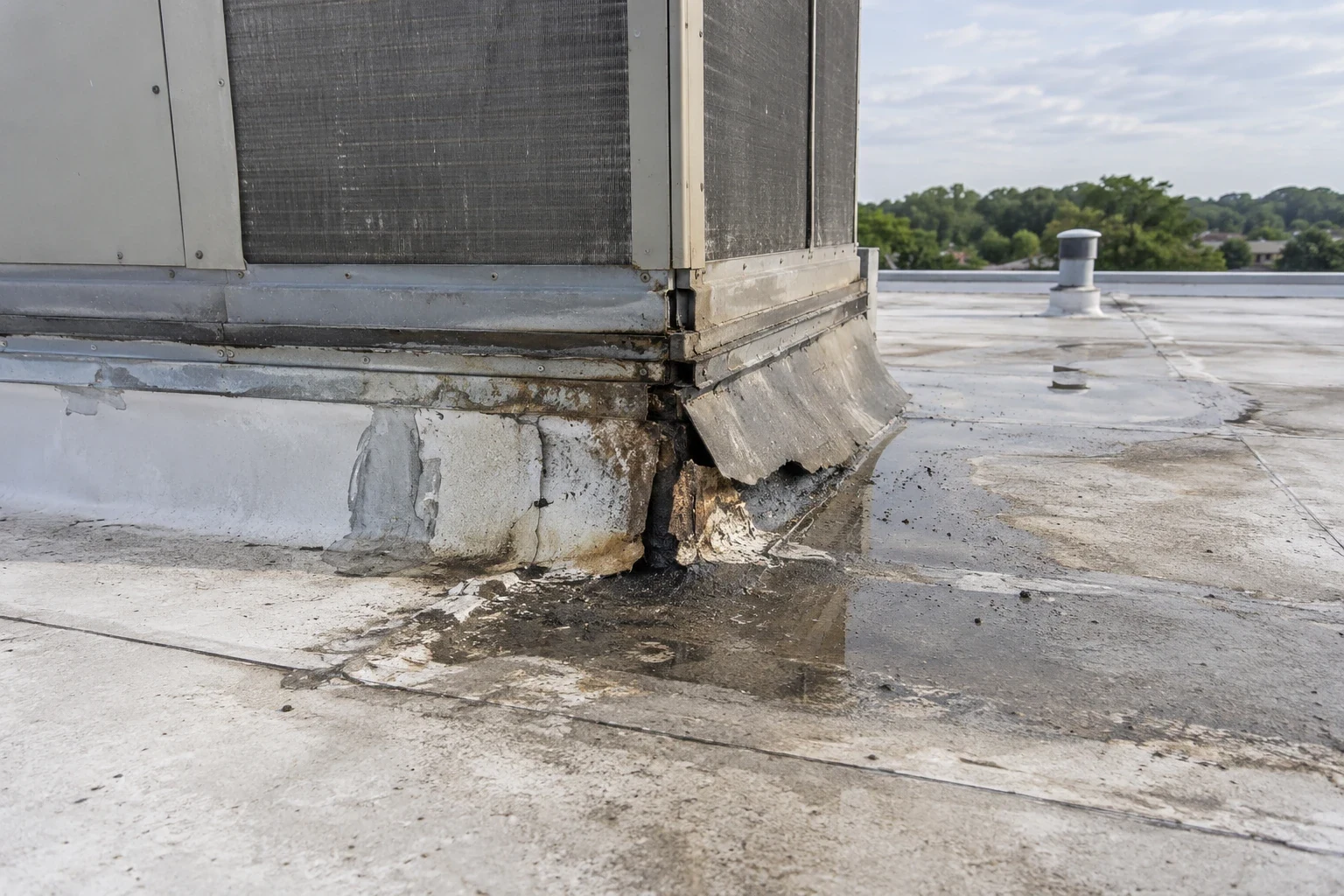
A flashing leak is often at a change in plane, material or movement, so the roof walk follows the water path from the wall, curb or edge back to the membrane. We photograph loose counterflashing, separated sealant, open corners, cracked pitch pockets and prior patches. In Killeen, the mix of recent retail, restaurant, medical office, education and fitness occupancy means rooftop equipment and tenant schedules can vary from one building to the next.
A Killeen commercial occupancy review covered 278 new or expanding uses from April 2025 to March 2026; a property walk still establishes roof scope. That is useful context for a changing commercial building base, not proof of any particular roof assembly. Before writing the scope, we identify the installed membrane where possible, the substrate at the transition and whether the existing detail has room for a compatible termination. A patch that bridges incompatible materials can fail even when the leak path looks small. A seam repair may be separate from the wall transition.
Which transition is allowing water through?
We inspect the flashing height, attachment, laps, fastener condition and movement joint. At a wall, water may travel behind coping or counterflashing before reaching an interior finish. At a curb, the connection can be stressed by equipment vibration, service access or repeated roof traffic. We mark each transition separately so the proposal names which parts can be retained, which need removal, and what must be rebuilt to form a continuous water-shedding detail.
The correction depends on the assembly. Thermoplastic membrane may need heat-welded flashing, while EPDM or modified bitumen uses different compatible components and preparation. If the membrane is unknown, we record what markings or records establish and confirm compatibility before installation. We do not prescribe a generic sealant bead as a substitute for restoring the system's intended lap, termination and drainage path. If a cut crosses the field sheet, a membrane puncture repair needs its own boundary.
How should the existing flashing be opened?
Killeen has a recorded 2003 event with 1.75-inch hail and an F0 tornado, but that event does not show that a roof transition today is storm-damaged. We inspect current impact marks, displaced metal, fractured sealant and interior moisture separately. When the evidence indicates a recent opening, stabilization comes first. The permanent detail follows once the area is dry, the existing material is identified and the work window is agreed.
A busy roof may have several trades using the same curb or walkway. We identify the equipment that needs to remain live, set a safe route, and phase work so a mechanical crew can reach the unit without crossing an uncured repair. Along the Rancier Avenue and Veterans Memorial Boulevard corridors, access still belongs to each property manager: we confirm gate, staging and tenant instructions before material delivery. A commercial roof inspection can follow water from curb to interior.
What changes the repair detail?
The closeout should include a roof-plan location, photos before and after, the flashing materials, and any limitations at concealed or inaccessible conditions. A service record also names who may disturb the detail during later equipment work. That documentation makes the next leak investigation more direct and gives a capital planner evidence to compare isolated transition repairs with a larger roof-section renewal.
When water reappears after a repair, we compare the new stain with the mapped transition rather than assuming the same detail failed. Roof drainage, an adjacent penetration and interior piping can create a similar symptom. A follow-up inspection checks the original repair, nearby joints and moisture path, then records what changed. The next decision should be based on that comparison, not an automatic expansion of the work boundary. The roof condition report identifies concealed areas still to test.
How do penetrations affect the scope?
A wall transition can involve the roof membrane, base flashing, counterflashing, termination bar and wall surface. We identify which layer is loose and which remains sound before removal. If a masonry joint or wall cap contributes to entry, the scope notes that interface for the right trade; roofing work should not be presented as a fix for an unexamined wall condition.
At a curb, we check the full perimeter and corners instead of stopping at the damp side. Water can move under the flashing and appear at the far edge. We photograph the curb height, fasteners, membrane turn-up and nearby equipment connections, then decide whether a patch, new curb wrap or equipment lift is needed to form a reliable detail. A roof replacement scope explains when surrounding layers change the repair.
How can work fit building operations?
Killeen averages 34.75 inches of annual precipitation, so opened flashing details need a defined dry-in boundary and a workable return window. Regional heat context can inform scheduling, but only current conditions at the work area determine whether a repair can proceed safely. It is a reminder to keep a defined dry-in limit, test materials before installation and plan how the repair will be protected if conditions change during the shift.
Building movement, thermal expansion and vibration can stress a rigid sealant bead at a transition. A durable repair follows the assembly's movement joint and uses compatible flexible components where the system calls for them. We record whether the detail is fixed, moving or connected to equipment so that replacement flashing is not installed across a joint that still needs to move. A maintenance plan can recheck the transition after trade access.
What evidence should remain on file?
The facility lead can help identify when mechanical access, cleaning or tenant activity overlaps the repair zone. We coordinate a short closure if a unit must be moved or if a walkway crosses the work. For active medical and educational spaces, we agree on interior protection and notify the contact before loud removal or a temporary equipment shutdown. Near the Rancier Avenue Corridor, delivery and roof access still follow each site contact. Before sign-off, the facility contact can compare the final photographs with the original water path and identify any interior finish that needs a separate restoration trade. We record whether the roof transition is complete and whether a wall or equipment condition remains outside the roofing scope. That handoff prevents the same area from reopening as an undefined work order.
The roof register should distinguish each flashing type and note its location relative to drains, parapets and equipment. On a later inspection, that detail helps a technician compare the repaired corner with adjacent original flashing. If the same transition opens again, the record shows whether movement, materials or a separate water path deserves further testing. The Veterans Memorial Boulevard / Business 190 Corridor provides regional context for scheduling.
Commercial Roofing Questions
Can sealant stop a flashing leak?
It can be part of a compatible detail, but a bead alone may not restore attachment, lap direction or membrane continuity. We inspect the transition and specify the full repair that the assembly requires.
Does a leak below a wall mean the wall flashing failed?
Not by itself. Water can travel from an upslope penetration, seam or drain before appearing inside. We trace the roof path and compare exterior findings with the interior moisture location.
Can rooftop equipment stay in service during flashing work?
Often the equipment can remain operational, but access and shutdown needs depend on the unit and the repair location. We coordinate the work zone and protect the service route before opening the flashing.
What if the membrane type is not known?
We review markings, records and field characteristics, then confirm a compatible repair material before installation. If uncertainty remains, the scope should show the test or opening needed to resolve it.
What should the repair record identify?
Record the transition, materials, photographs, observed conditions and any concealed area that was not opened. Include a follow-up trigger if nearby movement or moisture could affect the detail.
Review the flashing failure repair scope
Request a Killeen roof walk and written options tied to the affected section, operating needs, and follow-up record.