
Fitness Center Roofing in Killeen, TX
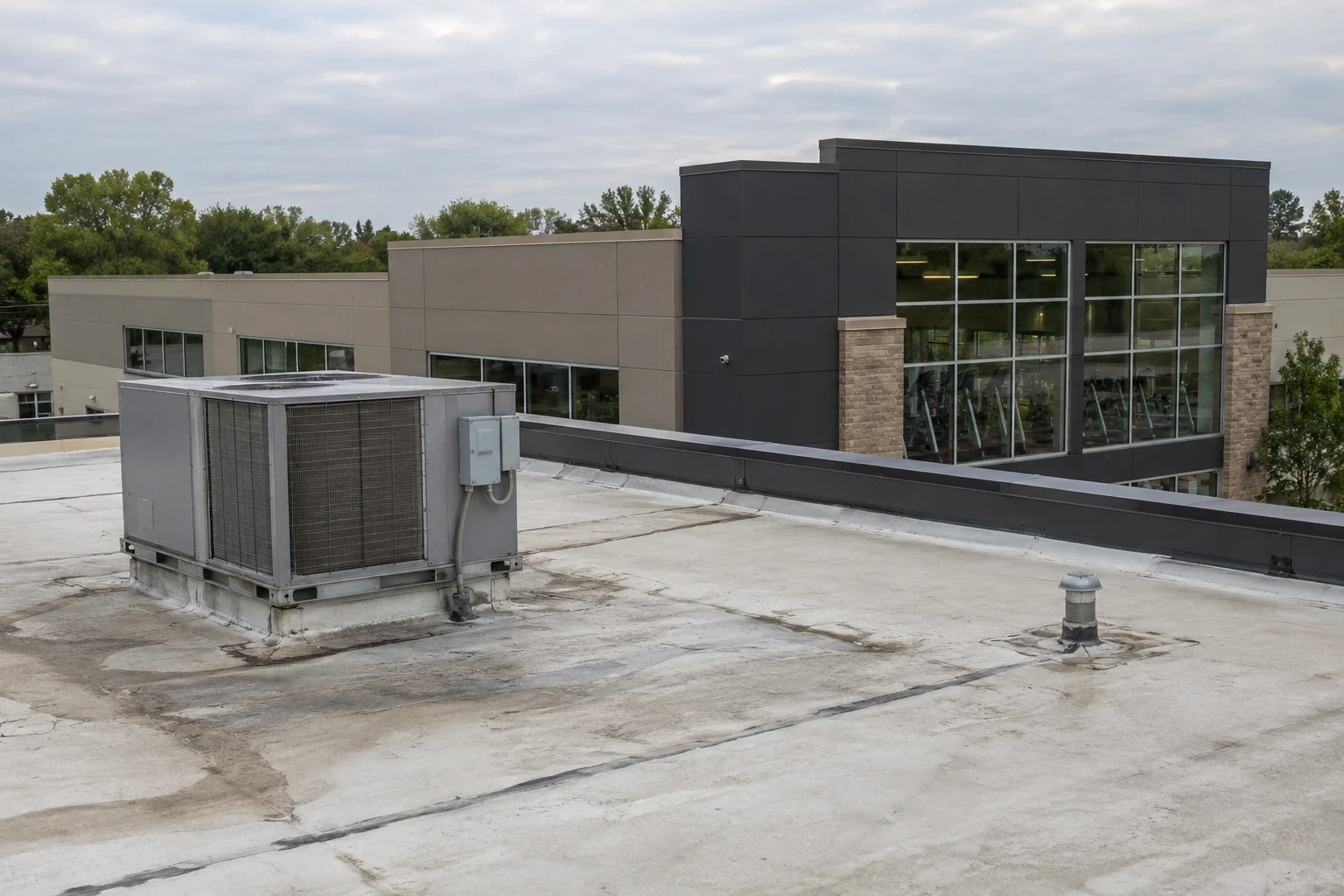
A fitness center roof protects spaces that may be occupied from early classes through evening training, with HVAC, showers, and equipment below. We map the reported condition to its roof section and the room or studio affected before proposing work. Commercial fitness was among the uses covered in Killeen’s 278 occupancy certificates issued between April 2025 and March 2026. This is market context, not a condition report. We set scope from the gym’s roof plan, service history, and current field observations. We document what is visible, what cannot be reached, and what testing would change the decision.
Class schedules, member access, equipment delivery, and noise windows should be confirmed with the manager. A roof condition inspection can relate findings to the floor plan, while a phased work plan can preserve agreed entrances and protect each opened roof section before the crew moves.
Which roof details sit above the busiest rooms?
Studios, weight areas, locker rooms, pools, and offices may occupy different sections of the same building. We record roof type, transitions, seams, curbs, penetrations, drains, and previous patches above each use. An HVAC unit may hide membrane at its curb; an exhaust fan may have a flashing detail that needs separate attention. We note the equipment access path and any clearance needed for service before recommending a repair. If a ceiling mark appears below a mechanical room, the inspection should trace water before assigning the source to the nearest unit.
Fitness equipment and class activity also affect how a work area is protected. The manager identifies hours when a studio can be cleared and where members should enter during a phase. We show any temporary noise, lift, or parking restriction in the work sequence. A curb and equipment review can define the roof-side portion of HVAC work while the mechanical provider handles equipment tasks outside the roofing assignment.
How should wet areas and roof leaks be traced?
Showers and locker rooms create interior moisture, but that does not identify a roof leak. We compare the complaint with roof observations, plumbing or mechanical conditions, wall transitions, and drainage above the area. If there is active water, the immediate response may protect equipment or finishes; permanent repair still requires a confirmed roof path. A moisture survey may help choose a test location, while a direct opening is used when the assembly below the membrane must be checked. The report distinguishes a surface indication from verified wet material.
We inspect drains, scuppers, overflow paths, and low areas where standing water remains. A drain correction can be priced separately from a membrane patch when both conditions exist. For a low-slope assembly that may be renewed, a coating assessment should first review adhesion, moisture, preparation, edge details, and exclusions. Coating does not resolve a blocked drain or a leak that has not been located.
What does heat change about a fitness center roof?
Killeen averages 18.3 days a year with highs reaching 100°F, so select an inspection window that allows the crew to work safely on exposed surfaces. A gym may need its cooling equipment during hot periods, so we coordinate roof access and any planned interruption with the manager. The annual count is regional context only; the work plan records the actual operating conditions at the property. We record current observations and coordinate any planned shutdown with the facility manager before opening a curb or changing a flashing detail.
Of the 278 certificates recorded across Killeen between April 2025 and March 2026, 75 were in North Killeen Revitalization Area. For the gym manager, the district name helps route a facility visit but does not describe that property’s roof. Downtown Killeen’s commercial center runs from Rancier Avenue/FM 439 to Veterans Memorial Boulevard/Business 190; we confirm the exact delivery and member paths at each site. For a North Killeen roof visit or a Downtown Killeen inspection, we confirm loading, member routes, and work windows with the specific property contact.
When does the repair scope need a larger comparison?
A single failed curb or seam can often be isolated when surrounding material is attached and dry. Repeat leaks, broad wet insulation, failing edge details, or deck concerns may require a wider repair or replacement comparison. We map each affected room to the roof area, identify where testing is needed, and list the boundary for each option. Any cost comparison should show access, interior protection, mechanical coordination, material removal, and concealed-condition allowances rather than compressing them into one unclear number.
Restoration may be suitable when the assembly is compatible, the surface can be prepared, and moisture and drainage issues are resolved. If replacement is needed, we set phases around classes and operating hours, with clear daily dry-in and member access routes. A TPO assembly can be evaluated against the existing roof, while a hotel roof schedule may offer a comparison for occupied spaces without assuming the same operating pattern as a gym. The school roof planning approach likewise differs where sports or instructional schedules control access.
What should the manager review between projects?
A preventive visit should record seams, curbs, drains, roof hatch conditions, edge metal, prior repair areas, and any penetrations added since the last inspection. The manager can keep an equipment list and maintenance dates beside the roof map so a curb leak is not confused with a surface failure. We identify leaves or debris that need authorized removal and note conditions that warrant immediate attention. A maintenance schedule can carry open observations forward and show which repair was completed.
For Killeen fitness properties, a dated condition report can support the annual operating budget and avoid assigning a replacement year without an inspection. Keep photos tied to locations, add the work order and approved boundary, and mark any area that remained inaccessible. The next visit can compare the same roof section and confirm whether the repair held. Records should also identify an open recommendation so it is not mistaken for a completed project when the management team changes.
What belongs in the closeout file?
Retain the roof plan, equipment and curb list, dated photographs, repair materials, test results, work boundaries, and any schedule restrictions. Note the entrance used, where the crew staged, which classes or rooms were affected, and what protection was removed at closeout. If an HVAC contractor needs later access, identify the path and the limits on roof traffic. These details let a facility manager connect a future report with the right part of the assembly rather than reopen a completed scope without evidence.
We can walk the roof with the manager, compare interior reports, and return a defined repair, restoration, or replacement option. Provide class calendars, equipment service windows, leak records, and the latest roof plan. The recommendation should state what is confirmed, what remains unknown, and which follow-up will reduce uncertainty, giving the owner a practical basis for scheduling work and preserving member access.
Commercial Roofing Questions
Can roof work be scheduled between classes?
We identify the studios, member entrances, and equipment access that must remain available, then build phases around approved operating windows. The plan states what noise, staging, or temporary restriction each phase requires.
Does moisture in a locker room mean the roof is leaking?
Not by itself. We compare the report with plumbing, HVAC, wall, and roof conditions, then document whether a roof entry point is confirmed or further testing is needed.
What should be checked around rooftop HVAC?
We inspect curbs, flashing, service clearance, adjacent seams, conduit, and the path technicians use. The scope separates roofing detail from mechanical disconnects or equipment work assigned to another trade.
When is coating considered for a gym roof?
We review adhesion, moisture, drainage, edges, surface preparation, and the existing material. If the assembly cannot support a finish, the report identifies repair or replacement options instead.
What should a maintenance visit document?
Keep a dated map of seams, curbs, drains, penetrations, repair locations, inaccessible areas, and actions due. We note what was corrected and what still needs authorization or testing.
Schedule a fitness center roof review
Share the roof plan, leak reports, class calendar, equipment service windows, and member-access rules. We can inspect the roof sections and return options that keep the work boundary and operating impact clear.