
Hotel Roof Inspection, Repair, and Replacement in Killeen
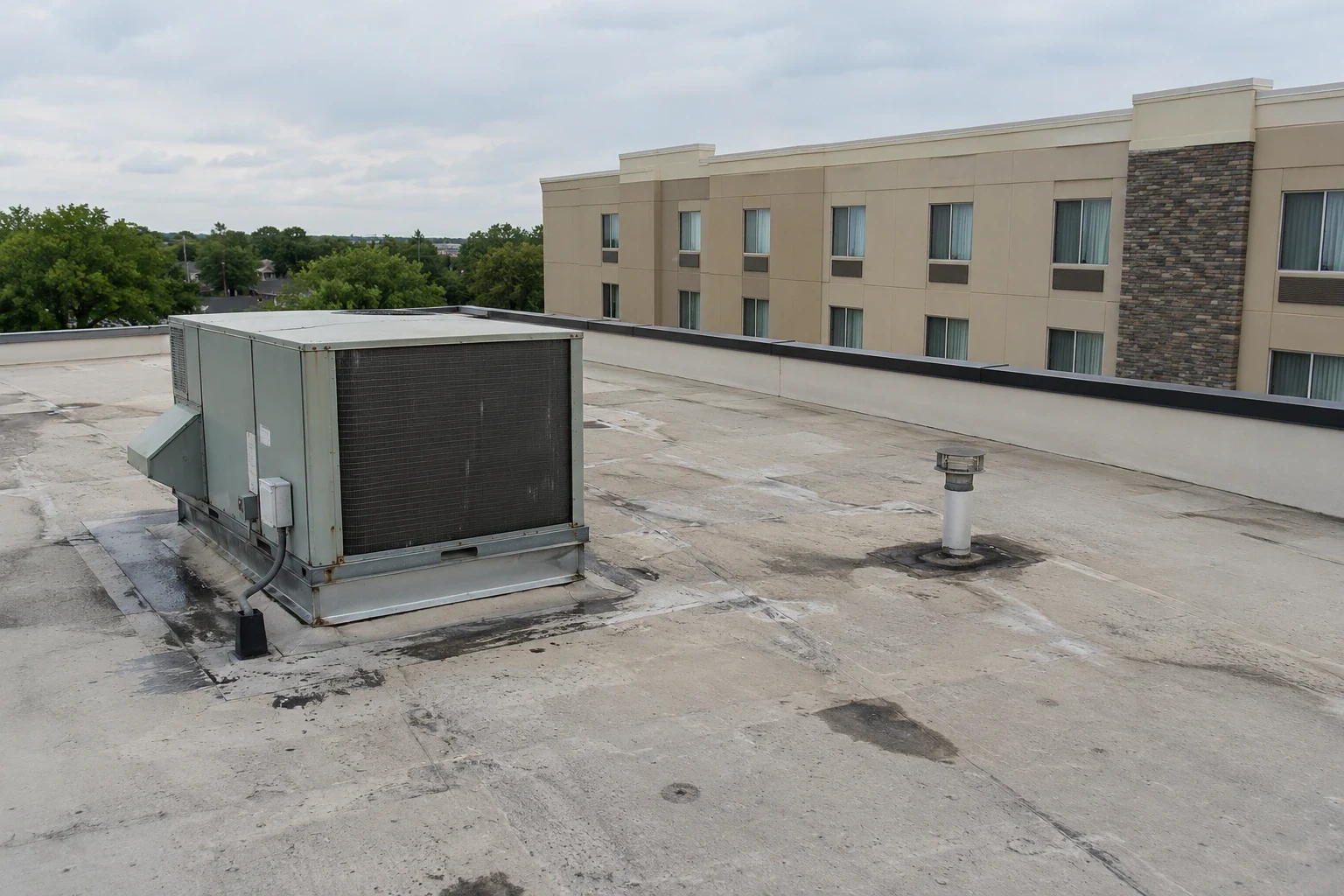
A hotel roof supports guest rooms, corridors, kitchens, meeting areas, back-of-house functions, and rooftop equipment. A leak near an occupied room needs prompt attention, while the roof source still must be established through inspection. We connect the reported interior location to a roof section, record accessible conditions, and note the operational areas that need protection. That gives the property team a basis to decide whether to stabilize a single detail, plan a phased repair, or compare a broader replacement.
Hotels in and near Downtown Killeen can have guest entrances, loading paths, and service roofs that need separate access instructions. Confirm the property’s layout and quiet-hour requirements before assigning a phase. Other Killeen properties may have different entry patterns, so map the rooms and back-of-house areas below the work instead of assuming one site’s plan applies.
How do roof zones relate to guest and staff movement?
Guest comfort depends on a roof plan that keeps rooms, corridors, kitchens, and event areas in service wherever practical. We begin by matching reported leaks with the roof section and room use, then identify the quiet hours, access limits, and staff contact for each phase. Arts, entertainment, and accommodation businesses account for 5,094 local jobs, making guest access and quiet work windows practical roof-planning concerns. That describes a local work sector, not a hotel’s occupancy or roof condition, but it underlines why uninterrupted building use matters when maintenance is scheduled.
Separate confirmed observations from suspected causes. A stained ceiling might relate to a penetration, seam, drain, wall transition, or another path. If access is limited, note what was not seen and identify the next inspection step. A roof condition report can show the evidence, the affected section, and the limits of the review without presenting uncertainty as a conclusion.
Which work plan limits disruption to guest circulation?
For a hotel, the phase map should pair each roof section with the function below it and the staff contact who can coordinate access. A meeting room may have a booked event, a guest wing may need quiet hours, and a kitchen may require uninterrupted exhaust. Those constraints belong beside the daily work boundary, not in a general note at the end of the bid. We identify delivery timing, lift location, temporary closures, and the protected stopping point for each shift. If the project spans several buildings, assign separate sequence and closeout records instead of treating the site as one roof.
Noise, vibration, odor, and deliveries need to be considered alongside the roofing task itself. Sequence the most disruptive work where the property can manage it, then keep the notice focused on the area and dates affected. The roofing team should report a change in conditions before extending a work boundary. A phased occupied-building roof plan can identify zones, protection measures, and turnover responsibilities for each shift. Name a hotel contact for morning access and an alternate for evenings so field questions reach someone authorized to respond.
What mechanical and drainage transitions need review?
Inventory rooftop units, kitchen exhaust, fans, conduit, skylights, antennas, and service supports. For each curb or penetration, show who handles disconnect, lift, reset, flashing, and equipment verification. A roofer’s work boundary should be clear where mechanical and electrical trades meet the roof assembly. Check visible flashing, fasteners, counterflashing, sealant condition, and any prior repair; do not assume a sealant bead alone is the durable solution.
Trace the roof’s drainage path through strainers, drain bowls, scuppers, and overflow points. Record debris, damage, and observed water while avoiding a diagnosis based solely on temporary ponding. A curb and support review organizes equipment interfaces, and a drainage inspection can focus on water-management components. Killeen averages 34.75 inches of rain each year; the hotel roof still needs a property-level drainage inspection and leak history.
How should project options reflect hotel priorities?
Compare a repair, recovery, and replacement using the same guest and back-of-house areas. A repair may be enough for a localized detail when adjacent material is sound; broader moisture, repeated leaks, or weak edges can change the decision. A recovery adds questions about existing layers and deck capacity, while replacement brings removal, debris control, and longer room coordination. Separate confirmed quantities from concealed-condition allowances and show what happens if an opened section differs from the record. Identify each trade boundary around exhaust, refrigerant lines, electrical feeds, and rooftop units before the property approves a schedule.
List each proposed roof area, guest impact, equipment interface, protection step, and exclusion in the same order for every option. Separate measured work from allowances for hidden conditions, and identify who can approve a change after opening the assembly. A room closure, exhaust shutdown, or lift near a guest entrance should have an owner and a time window. The property can compare cost and disruption only when those effects appear beside the roofing quantities.
What record will help the next property manager?
Provide a marked roof plan, dated photos, completed repair areas, material details, approved changes, and any follow-up inspection. If a building is near Rancier Avenue, verify the address, loading path, and roof access with site staff rather than relying on a corridor name. A restaurant roof plan handles kitchen exhaust and service windows; a multifamily roof plan addresses resident coordination.
A hotel roof register also benefits from recording the system and equipment by section. Keep roof access instructions current, identify service contacts, and note whether a prior repair needs observation after weather exposure. For food-service areas, coordinate the roof record with the property’s kitchen contact without adding private guest or employee details. Restaurant roof coordination covers the separate access needs around kitchen exhaust and meal periods.
When managers change, the roof file should still identify the exact section, repair date, approved work, and any inspection due. Keep guest-room identifiers within the property’s controlled system and use a roof-zone label in the contractor record. That lets a later facilities lead coordinate work without exposing guest information or confusing one wing’s history with another.
Commercial Roofing Questions
How should a hotel respond to a leak in an occupied room?
Follow the property’s guest and room procedures, record the reported location and time, and arrange a roof review of the related section and nearby details. Protect the interior under hotel policy, then distinguish observed roof evidence from a suspected water path. Keep any access limit or follow-up test in the work record.
Can a hotel reroof without closing the property?
A phased approach may allow the building to remain in operation if access, weather protection, noise, deliveries, and guest routes can be managed. The hotel team must approve room or event impacts. Set daily secure stopping points and a contact for changing conditions before the first section is opened.
What equipment should be included in a hotel roof scope?
List rooftop units, exhaust, fans, conduit, skylights, antennas, and supports, then assign disconnect, reset, flashing, and verification responsibilities. Confirm that the price includes the actual equipment interfaces and that trade exclusions are explicit.
Does Downtown Killeen location affect roofing logistics?
It can affect the approach and staging plan, but the property layout controls the work. Confirm which entrance handles guests, where deliveries can wait, and how roof access is reached. We can build those details into a phased schedule without assuming the same route for every hotel.
What should an owner compare in hotel roof bids?
Compare the same roof sections, assembly assumptions, protection, equipment interfaces, drains, disposal, allowances, and exclusions. Ask how each proposal handles guest access and daily weatherproofing. Separate any concealed-condition allowance from confirmed work.
Scope hotel roof work around operations
Share the roof plan, leak history, room or event constraints, equipment list, access rules, and maintenance records. We can document observable conditions and define phased repair or replacement options.