
Church Roofing in Killeen, TX
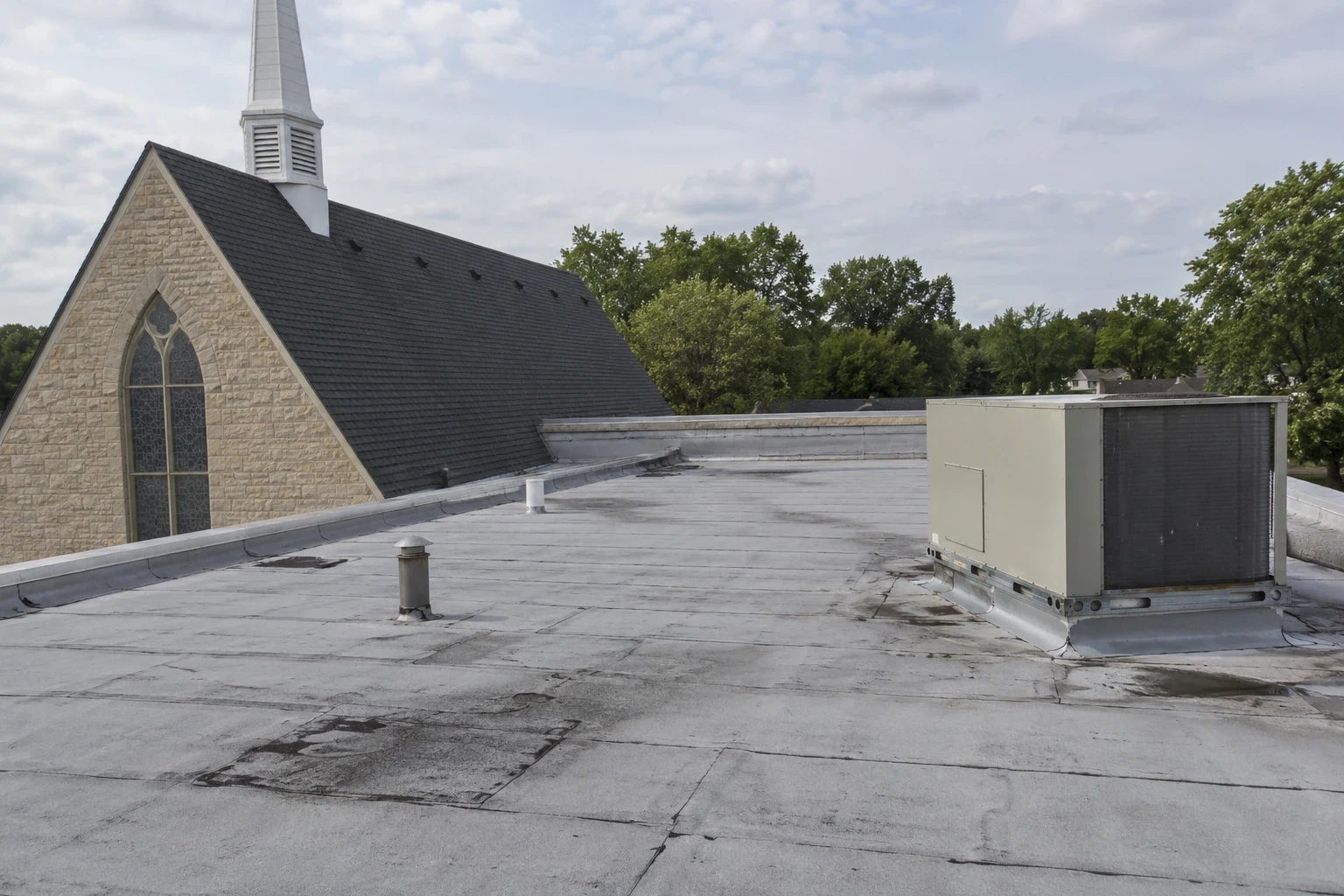
A congregation may use one building for worship, classrooms, meals, administration, and community events, so a roof leak can disrupt more than one calendar. We identify the roof section above the reported condition, what activity occurs below it, and when the space can be protected or entered. Killeen experienced an F0 tornado and 1.75-inch hail on March 25, 2003; only current roof observations can establish whether a building was affected. After a new weather event, we inspect the actual seams, edges, and repairs at a congregation’s building; an old report cannot establish present damage. We document what is visible, separate temporary covering from permanent repair, and price the defined work.
For a first visit, share roof plans, service times, classroom schedules, and any areas that cannot be closed. A roof condition inspection can map observations to the building, while an occupied-building sequence can plan noisy work and daily protection around the congregation.
Which roof sections serve different uses?
A sanctuary, education wing, kitchen, office, and fellowship hall may have different additions, roof systems, and repair histories. We label each section, confirm the assembly where possible, and show where a leak report aligns with a seam, drain, penetration, or wall transition. If plans are incomplete, we record what remains uncertain rather than assume every wing was installed at the same time. This is important when a patch compound, flashing, or coating has to bond to an existing surface.
Kitchen exhaust, heating equipment, steeple transitions, and rooftop conduit all need a roof-side detail and, in some cases, coordination with another trade. We inspect curb height, counterflashing, fasteners, and service clearance. A curb and support review can clarify the roofing portion of an equipment change. A church that shares multipurpose rooms with a school building or a public assembly facility still needs a scope tied to its own assembly and calendar.
How can work fit the congregation’s calendar?
We plan access around services, funerals, classes, food programs, deliveries, and the times when visitors arrive. The facility lead identifies entrances to keep open, routes that can take a lift or material cart, and spaces where noise would interfere with scheduled use. A roof phase should have a clear start and stop boundary, weather protection at the close of each shift, and a contact for a schedule change. A written notice can identify which door, room, or parking area is affected without promising that construction will be invisible.
When a leak is active before a service or community event, the immediate goal may be protecting the interior and limiting water entry. We note the temporary measure and return for a permanent repair after the roof is dry and accessible. The estimate lists any interior protection, temporary dry-in, and final detail as separate items. That lets the board approve the urgent step and retain a clear record of what still needs authorization.
What local context belongs in the inspection?
North Killeen Revitalization Area accounted for 75 of 278 occupancy certificates issued from April 2025 through March 2026. This indicates activity in a broad district; it does not establish the roof age, use, or condition of a church there. We use current drawings, prior work orders, and an on-site review to decide what should be repaired. A North Killeen service visit can be scheduled to the property’s actual access and event calendar.
Downtown Killeen’s historic core is bounded by Rancier Avenue/FM 439 to the north and Veterans Memorial Boulevard/Business 190 to the south. Those district limits may help orient a work plan for a congregation nearby, while deliveries, parking, and roof access must be confirmed at the building. In either setting, we record the entrance and staging point instead of treating a corridor as a property location. A Downtown Killeen roof walk can include pedestrian routes and protected gathering areas in its access notes.
What should be checked after a storm?
Start with the area where water entered, then trace the path above it. Check the field membrane, seams, flashing, edge metal, drains, scuppers, and any previous patch. Hail can mark metal or damage a coating, but a mark alone does not identify a leak source. We photograph the observed condition and compare it with nearby details. If moisture below the membrane would change the repair choice, an infrared survey may help select test locations; a direct opening is used when the next decision needs confirmation.
Drainage issues can be independent from storm damage. We remove debris only where authorized, check the outlet and overflow, and note any low area that retains water. A drain and scupper repair should be scoped separately when a blocked or damaged component is part of the problem. For a broader condition review, a storm inspection can document roof and edge conditions without treating an event record as proof that every section needs work.
Which repair belongs in the budget?
A single failed boot or open lap may support a local repair when the surrounding roof remains sound. Multiple leaks, wet insulation, deteriorated decking, or recurring failures call for testing and a larger comparison. We explain the repair boundary, material, access method, and what was not inspected. For a board or finance committee, the proposal can show the cost drivers qualitatively: tear-off area, substrate work, interior safeguards, staging, and hours when the building can be closed.
Coating is considered only when the existing roof is a suitable base and the surface can be prepared. It will not fix a failed drain, wet assembly, or open flashing by itself. A metal retrofit alternative or membrane replacement may be compared where it suits the deck, slope, and planned service life. The capital plan can place a confirmed repair beside future roof needs without treating the entire church as one condition.
What should the trustees retain?
Keep the roof plan, section labels, dated photographs, inspection findings, test locations, repair materials, and a list of remaining items together. Note which rooms were protected, whether a temporary cover remains, and when it should be checked. If volunteers or another trade will access the roof later, give them the approved path and identify details that should not be disturbed. The record should distinguish a completed permanent repair from weather protection that still needs follow-up.
A roof walk is most useful when the decision-makers can provide prior invoices, leak dates, event schedules, and access rules. We can document what the roof shows and return separate repair, restoration, or replacement options. A scoped report gives the board an observable boundary, a set of photographs, and the next action to authorize, rather than a recommendation that cannot be tied to a roof section.
Commercial Roofing Questions
Can roof repairs happen during worship or classes?
We set the work window with the facility contact and identify entrances, rooms, and sound-sensitive periods before mobilization. The approved sequence should show daily protection and any area that must remain available to visitors.
Does hail mean the church roof must be replaced?
No. We inspect the material, seams, edges, and interior reports, then document damage that is actually observed. Testing can be added if moisture or attachment findings would change the repair-versus-replacement decision.
Should the church board approve temporary covering and permanent repair together?
The proposal can separate both decisions. We identify the urgent protection needed now, then price permanent work after the affected assembly is accessible and the repair boundary is confirmed.
What belongs in a roof inspection for a building with several wings?
We label each section and record its roof type, visible condition, access limits, leak reports, and follow-up tests. That keeps findings from one wing from being applied to another without inspection.
How should a church compare coating and replacement?
We first check the existing assembly, moisture, drainage, adhesion, and edges. The report identifies any excluded areas and compares restoration only where preparation can produce a suitable base with repair or replacement alternatives.
Set the church roof scope
Share building plans, leak dates, event schedules, repair records, and access rules. We can inspect the roof sections, document conditions, and return options with temporary protection and permanent work separated.