
Apartment and Multifamily Roofing in Killeen
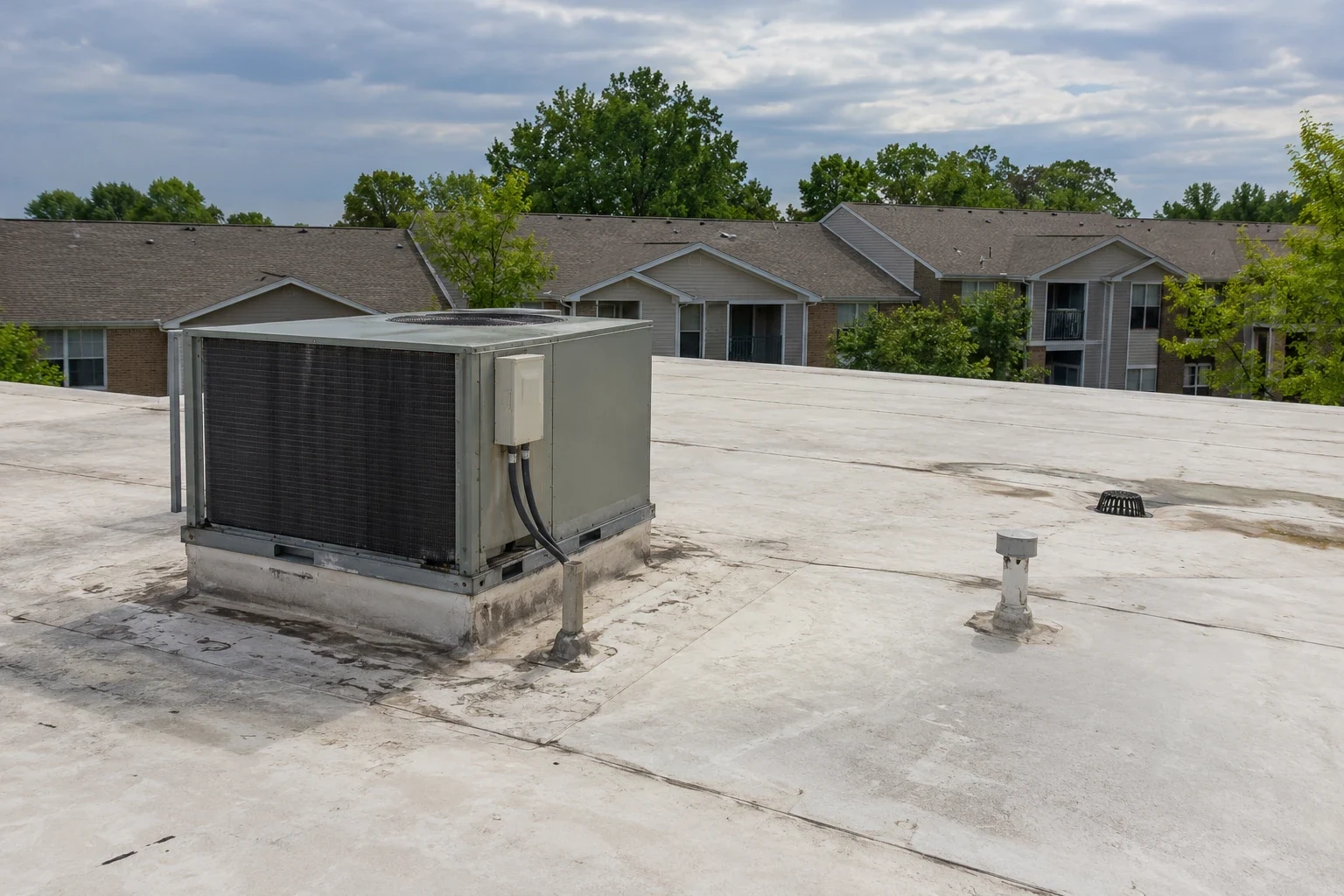
A leak in one apartment can become a scheduling problem for a whole building when residents, maintenance staff, and roof access have to line up. We first connect the reported room with a roof section, then note which observations are confirmed and which still need a closer look. That distinction helps a manager protect the resident now while keeping a reliable record for ownership. A building-by-building scope also prevents a repair on one wing from being mistaken for work completed across the community.
West Trimmier, East Trimmier, W.S. Young Drive, and Chaparral Road are among Killeen’s high-priority thoroughfare projects, useful context when planning material movement and crew access. The property’s own gate, parking, and roof entry still determine setup. For an apartment community in Downtown Killeen, confirm the service yard and resident routes before assigning a phase. Start with a commercial roof inspection organized by building.
How should each roof area enter the building register?
Assign a consistent label to every building and roof section. Keep unit numbers in the property’s secure work-order process, then connect each report to the correct building, roof area, and date. The roof register should note known assembly, drainage, penetrations, mechanical equipment, past repairs, access restrictions, and any area not inspected. Avoid combining several buildings into one record simply because they share a community name.
For a leak, document the interior symptom, weather as reported, photographs, and any temporary measure. Trace the likely water path across the roof and adjacent details; do not assume the stain is directly below an opening. Separate visible roof conditions from an unconfirmed cause. A condition report by building can help ownership sort urgent work from items that need another visit or test.
Which entry notices help residents and crews stay coordinated?
Before a crew mobilizes, confirm property access, gate procedures, parking, dumpster locations, fire lanes, and resident routes. Identify the community manager or alternate who can coordinate unit entry and answer schedule questions. Notices should state the buildings and dates affected, expected noise or access changes, and where residents can report an active leak. The roofing team should not enter an occupied unit without the property’s approved access process.
Set a daily start and stop boundary for each roof section. The crew should close and protect opened work before leaving, while the manager confirms any temporary restriction below. For occupied communities, the plan needs to account for children, pets, deliveries, and residents who may need an accessible path. A phased occupied-building plan can describe each area, notice responsibility, weather response, and handoff.
What shared equipment could change the roof scope?
Walk the roof areas that can be reached safely and note seams, wall transitions, edge metal, curbs, plumbing vents, drains, and previous patches. Shared rooftop equipment may serve several units or common areas, so identify the mechanical party responsible for disconnect and reset before pricing work. A curb and support review can document flashing and equipment interfaces.
Follow water toward drains, scuppers, and overflow paths. Record debris or visible component damage, but do not equate a wet area by itself with a structural problem. Killeen’s annual precipitation normal is 34.75 inches, a useful local climate baseline for maintenance planning but not proof of a specific roof defect. A drain and scupper review can focus on those components; recurring interior reports may also call for an inspection of seams and penetrations.
How should condition and resident impact set the priority?
Rank a reported leak by current water entry, interior use, electrical or life-safety concerns, and the property’s response rules. A local repair can fit a discrete failure if nearby membrane, flashing, and insulation remain serviceable. When the same detail has failed across several buildings, compare a coordinated repair program with replacement by roof section. Record what is measured, what remains concealed, and who can approve added work after opening. That gives ownership a resident-aware decision without treating every building as if it shares the same age, assembly, or failure pattern. Keep a separate allowance for concealed deck or insulation conditions and attach each change decision to its building identifier.
Include drains, edge metal, insulation, and equipment curbs only when they are part of the measured scope. Separate observed quantities from concealed-condition allowances, and state who can approve added work after opening. A commercial roof repair should name the building and section, the detail being addressed, and the expected result. Ownership can compare that limited work with a building-level replacement plan without mixing the costs or resident disruption across the community.
What records should the next owner inherit?
Maintain a marked roof plan for each building with dated photos, repair locations, material information, approvals, and follow-up items. Keep warranties and maintenance instructions with the areas they cover. A future manager should be able to tell what was repaired, which condition remains open, and what was not observed. For a multi-building community, this record prevents a repair on one roof from being mistaken for work completed across the property. Include the release date for each repaired area, the person who accepted the handoff, and any temporary protection left in place. If a condition needs monitoring, identify the roof section, observation period, and condition that should trigger a return visit. Keep unit details within controlled property records; use building and section labels on the shared roof plan so maintenance staff can locate the work without exposing resident information. Add a reminder for the next inspection after equipment changes or a completed repair program.
Killeen’s TIRZ #2 includes city, county, and Central Texas College participation, with approved corridor redevelopment and downtown facade projects. That planning activity does not establish a multifamily roof need, but owners may coordinate building work with other site improvements when timing overlaps. Keep roofing scope, quantities, and exclusions distinct. A roof capital plan can organize the next inspections and budget decisions by building, while hotel roof coordination covers another occupied-property setting. A shopping center roof register addresses multiple tenant suites and shared retail access.
Commercial Roofing Questions
How should a property manager handle several apartment leak reports?
Log each report by building, unit through the secure work-order process, date, and affected room. Compare reports with roof sections, drain locations, and repair history. Protect the interior under property procedures and arrange an inspection that distinguishes observed evidence from the suspected water path.
Can an apartment community remain occupied during roofing work?
A phased sequence can reduce disruption when roof access, weather protection, notices, parking, and resident routes are planned. Confirm entry rules and a property contact before mobilization. Each shift should end with opened work secured and any temporary restrictions communicated to management.
Should unit numbers be included in a public roof report?
Use the property’s controlled work-order process for unit details. A roof condition report can identify the building and roof section while limiting resident information to the people who need it to coordinate access and repair.
When is replacement preferable to another apartment roof repair?
Compare the roof’s condition by building, repeated repair history, moisture evidence, edge and penetration details, and the disruption and cost of continued work. A single interior leak does not establish that every roof needs replacement. Ask for comparable alternatives and clear assumptions.
What should be retained after a multifamily roof repair?
Keep a building-level plan, dated photographs, repair location, material information, approved changes, warranty terms when applicable, and follow-up needs. Mark areas that could not be inspected and file the record so future staff can locate the work.
Review apartment roofs by building
Share the roof plan, leak log, property access procedures, repair history, and known equipment details. We can document observable conditions and organize repair or replacement priorities by building.