
Commercial Roof Edge Metal in Killeen, TX
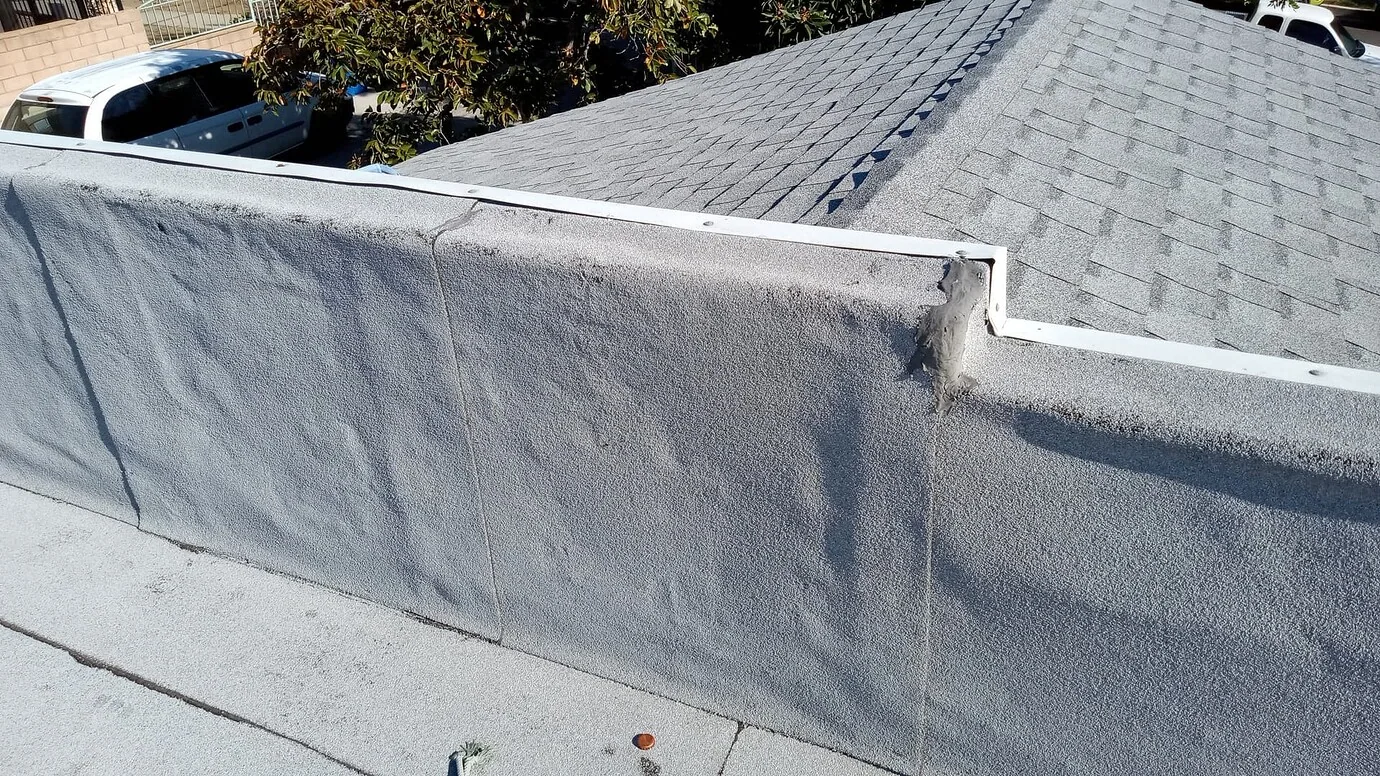
A loose coping cap, open edge, or leaking gutter can send water into a roof assembly long before the field membrane shows a problem. We inspect the edge from the roof and the building side, then trace how metal, membrane, fasteners, and drainage connect. For coping, gutters, and edge metal in Killeen, scope follows measured condition, attachment, and the water path at the property. The repair scope identifies the detail, the attachment, and the water path it must serve.
What Holds the Perimeter in Place?
We inspect coping joints, cleats, face metal, gravel stops, fascia, and termination bars for loose fasteners, open laps, corrosion, movement, or failed sealant. At a membrane edge, the sheet must terminate against a secure, compatible detail. We check how far the metal covers the assembly, whether water can pass behind it, and whether the attachment reaches sound substrate. Photos show each corner and transition so the repair boundary does not stop at the easiest visible length.
Wind can stress exposed edges, but only an inspection can show whether a particular cap moved or lost attachment. We look for physical evidence, compare nearby sections, and test attachment where the scope allows. If membrane separation is involved, a wind-detail review can help separate perimeter repair from a broader roof assessment. A roof walk records the adjacent seams, curbs, and roof sections before metal is replaced.
Where Does Runoff Leave the Roof?
A gutter system has to collect flow without backing water onto the deck or spilling across an entry. We check gutter pitch, hangers, joints, end caps, outlets, downspouts, and discharge points. At a scupper, we inspect the opening, flashing, and exterior path. Debris removal may solve a blockage, but a sagging run, separated seam, or restricted outlet needs a repair scope. We note any overflow condition so the owner knows where water can travel during the next rain.
Annual precipitation averages 34.75 inches in Killeen, so check the gutter outlet and discharge as part of an edge-metal repair. For maintenance, that climate context keeps the runoff route on the checklist; the actual discharge still has to be checked at the building. The downtown district reaches Veterans Memorial Boulevard and Business 190 at its southern boundary. At a Business 190 property, we inspect the actual downspout discharge and confirm that water leaves the building perimeter.
How Does Metal Meet the Wall?
At parapets and roof-to-wall transitions, the metal cap, counterflashing, base flashing, and membrane must work as a continuous detail. We look for open joints, short laps, loose corners, unsealed fasteners, and a termination that has pulled away. If water has entered behind the cap, we inspect the wall and roof-side layers before sealing the visible edge. A surface bead may hide the path without restoring the assembly.
Temperature movement can loosen a long metal run when joints lack room to move or fasteners are placed through the wrong surface. We compare the detail with the roof system and determine whether a splice, cleat, or replacement section is needed. The scope identifies removal and reinstallation boundaries, corner pieces, and any membrane tie-in. If a wall transition also has a membrane defect, flashing detail work can be considered separately from the metal cap. The metal roof assembly itself may require a different repair method than low-slope edge metal.
We review whether the existing metal can be removed and reset or whether a replacement profile will better cover the termination. That decision depends on corrosion, dimensions, cleat condition, and the new membrane's finished height. The proposal shows transitions at corners and end walls, where an incomplete return can leave a path behind the face. We record the chosen connection before covering it, then check the finished cap for secure joints and a continuous water-shedding edge.
How Is Perimeter Work Staged?
Replacing coping or gutter can affect entrances, loading paths, and areas below the roof edge. We mark where material will be lifted, where a crew can work safely, and whether a sidewalk or drive aisle needs temporary control. Downspouts may need to be disconnected while a section is rebuilt, so the site contact should identify sensitive equipment or walkways below. We sequence short sections and secure exposed edges before moving the work boundary.
From April 2025 through March 2026, 278 Killeen occupancy certificates covered new or expanding commercial uses. The count does not describe an individual roof, but it makes a building-specific notice and access plan useful. The Rancier Avenue corridor and Downtown Killeen are real service-area reference points; the facility lead confirms delivery and lift locations. A Downtown Killeen roof edge is handled according to the property's entry and loading constraints. We keep the work plan tied to the actual roof and access point.
What Should the Edge Repair Record Show?
Closeout photos show the fastener line, laps, corners, membrane tie-in, and gutter outlet after work. We record the metal profile and material installed when identified, along with any adjacent section that remains out of scope. If the substrate was soft or corroded, the record notes what was removed and what still needs review. This makes a future leak call easier to compare with the repaired perimeter instead of repeating the same edge inspection from zero.
Drainage findings can connect the edge scope to roof-level outlets. A drain and scupper check can document the upstream water path, while leak repair can address a separate opening behind the wall flashing. If the roof is under recurring maintenance, a scheduled detail check can revisit joints and discharge points after cleaning. Request an edge walk with photos of the inside leak, exterior runoff, and roof access so we can measure the right connection.
Keep the before-and-after images with the roof section, date, and work authorization. A later inspection can then tell whether a stain follows the same gutter joint or a different roof-side detail. We also note temporary disconnections and confirm that every downspout has been reconnected and discharges where intended. That final check closes the water path from the field membrane to grade. The record also identifies any adjacent transition left for a later phase, so a future call starts at the correct connection instead of assuming the entire perimeter was rebuilt.
Commercial Roofing Questions
Can new coping be installed without replacing the whole roof?
Yes, when the membrane and substrate at the termination remain suitable. We inspect the edge layers, attachment, and tie-in first. If wet insulation or deck damage extends beyond the cap, we map that area and price it separately.
Why does a gutter overflow during rain?
We check debris, pitch, hanger spacing, joints, outlet size, and the downspout path. An overflow may come from blockage or a failed connection, but the roof slope and discharge route also matter. We photograph the full water path before choosing the repair.
How do you repair a loose metal edge?
We identify the profile, cleat or fastener arrangement, and condition of the substrate. The scope removes loose metal, restores secure attachment to sound material, and rebuilds the membrane termination or joint as required.
Will sealant close an open coping joint?
Sealant may be part of a detail, but it cannot correct a cap that moves, a missing cleat, or a failed membrane termination. We determine whether a splice, fastener, or replacement section is needed before selecting a surface treatment.
Can perimeter work proceed while the property remains open?
We coordinate lifts, sidewalk or drive controls, material staging, and notice with the site lead. The crew works in secure sections and protects the area below. The actual sequence depends on access and the length of metal being replaced.
Measure the Edge and Water Route
Share photos of the roof edge, gutter discharge, and any interior leak, plus the access contact and operating limits. We will inspect the metal, membrane termination, and runoff path, then price the repair boundary and any separate roof condition.