
Standing Seam Metal Roofing in Killeen, TX
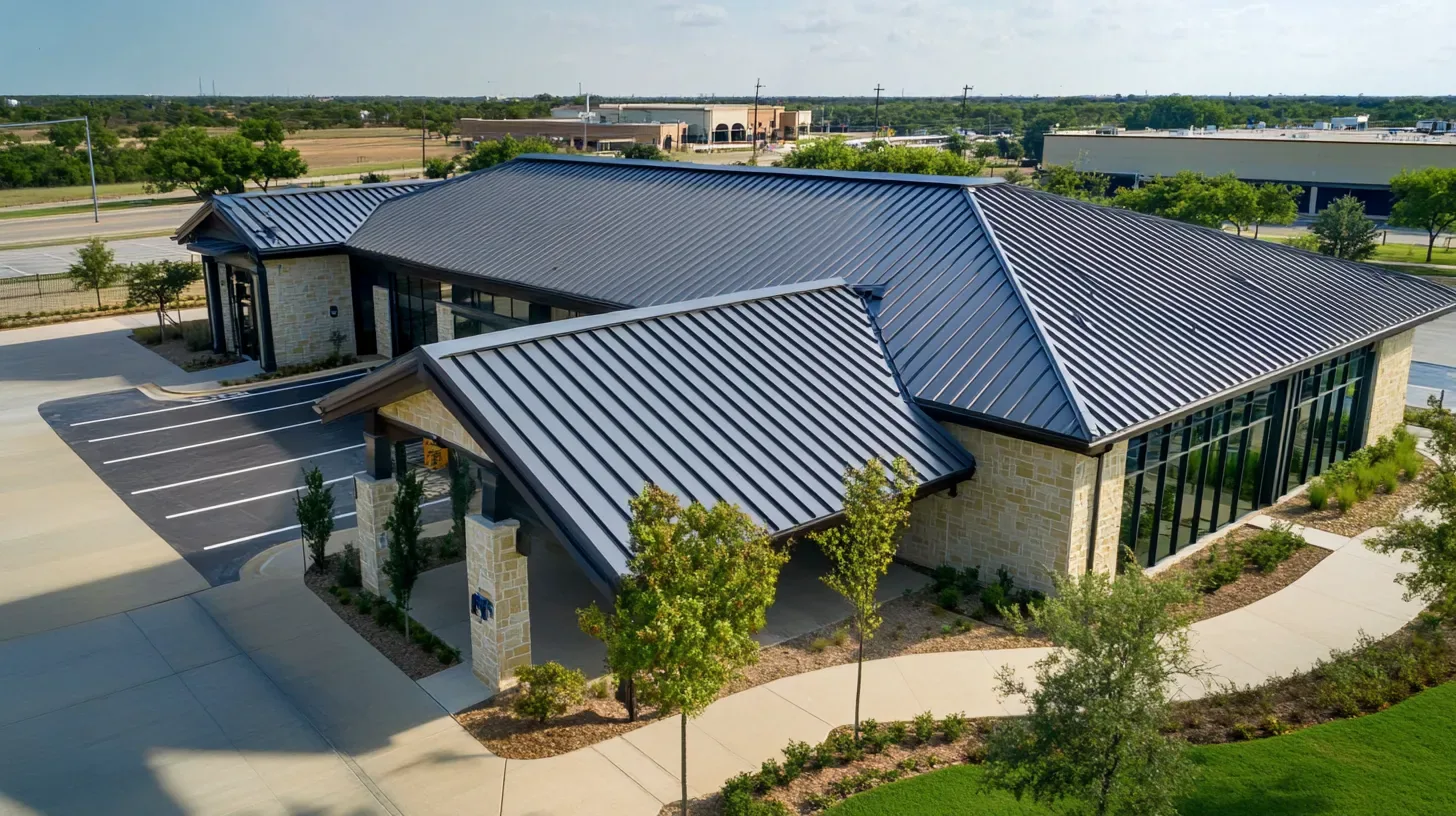
A standing seam roof can look uniform from the ground while a few clips, panel ends, or transitions determine the repair. We inspect the panel profile, seam engagement, attachment, perimeter, penetrations, and signs of movement before pricing work. The owner needs to know whether the issue is a local flashing detail, a panel attachment concern, or a broader system condition. For Killeen properties, the roof record should connect those findings with the building use and access plan, not assume the same scope across every metal roof.
What Is the Panel and Attachment System?
Standing seam panels connect through raised seams, with concealed clips or other attachment suited to the specified system. Panel width, metal thickness, clip type, movement allowance, substrate, and edge condition affect the design. We review project documents and field observations to identify the profile and likely attachment. An unsupported assumption about the clip or panel gauge can send a repair toward the wrong fastener or detail. Where records are missing, selected investigation may be needed before a permanent scope is set.
Thermal movement is expected, so a seam must accommodate expansion without pulling at the eave, ridge, or penetration. We examine panel ends, clips where accessible, closure strips, and sealant at transitions. A metal roof retrofit option can be compared when the existing assembly has exposed fasteners or widespread coating failure; membrane replacement offers a different approach where the building’s drainage and deck support it.
Where Do Leaks Develop on a Metal Roof?
Water entry may begin at a panel end, ridge, valley, curb, wall transition, or opening cut through a standing seam. We inspect seams for separation or distortion, then trace the drainage path and look for water staining below the likely detail. A bead of sealant over a moving seam is not a durable repair plan by itself. The work order should name the transition, the compatible detail, and any panel removal needed to reach sound material.
Penetrations deserve a separate look because a flashing that blocks panel movement can stress its connection. We check curb geometry, boot condition, counterflashing, and the panels beside the opening. At drains and eaves, we look for debris, damaged closures, and water backing up at a transition. A penetration flashing scope can define a curb or pipe repair, while a metal roof repair visit can document the panel and seam boundary before patch work.
What Does Killeen Context Change?
Killeen’s 1991 to 2020 normal mean temperature is 66.6°F, with a mean daily maximum of 78.1°F. Those annual figures do not predict heat on a particular panel during a site visit. We check the metal and detail materials in field conditions before deciding whether a repair, sealant, or coating can be applied safely. That observation belongs in the work record with the repair location. Photograph the panel detail from the same access point on later visits.US 190 access projects connect toward Stan Schlueter Loop through Bacon Ranch Road and Cunningham Road. The Bacon Ranch and Little Nolan corridor can orient travel for a standing-seam inspection, but the owner still confirms the building’s loading entrance and roof access. We document those constraints before lifting a panel or opening a seam.
How Are Clips, Edges, and Closures Checked?
Concealed clips can be difficult to assess without opening a panel, so the inspection distinguishes visible symptoms from confirmed attachment findings. We check for seam distortion, fastener back-out at exposed trim, loose edge metal, missing closures, and movement marks. If the scope requires pull testing or panel removal, we identify the location and patch procedure first. The owner should receive a clear statement of what was verified and what remains an assumption.
Perimeter details take wind exposure, panel geometry, substrate, and the specified edge assembly into account. An edge that has lifted may require a review of the adjacent panels and securement, not merely replacement of a trim piece. We map the affected run and photograph its transitions. A perimeter metal inspection can separate edge scope from a field-panel repair, and a condition walk can record the remaining roof sections for comparison.
Should the Owner Repair, Restore, or Replace?
A localized seam or flashing issue can support repair when adjacent panels and attachment remain sound. Broader corrosion, repeated leakage at multiple transitions, loose panel ends, or failed coating may justify a larger restoration or replacement comparison. The proposal should list panel work, trim, penetrations, substrate repairs, coatings, and access as separate items. If concealed conditions could change the decision, note the investigation or test that would resolve them before committing the full budget.
Coating may extend service where the metal is suitable, seams and fasteners can be prepared, and corrosion has not compromised the assembly. It will not correct failed clips, unstable panels, or a detail that continues to move. A silicone restoration scope can be considered only after adhesion and preparation are addressed. For replacement, a phased roof plan should define access, tenant protection, and the sequence for keeping the building weather-tight.
What Belongs in the Metal Roof Register?
Keep the profile and panel information, repair locations, photographs, test openings, coating data, and any limitations on clip inspection. Note which areas were reached and which require another access method. A later roof walk can then check the same seam or edge rather than revisit a broad concern without a location. For several buildings, the register should distinguish standing seam from exposed-fastener panels and identify each roof section separately.
Work travel in Killeen may use US 190/Business 190, SH 195, or FM 3470/Stan Schlueter Loop, but routing does not establish a property’s loading area or roof hatch. The facility contact confirms those points before mobilization. A maintenance check can re-evaluate seams and drainage, and a roof condition report can keep findings tied to the capital plan. That record gives the owner a usable baseline if panel movement, corrosion, or water entry is reported later.
Commercial Roofing Questions
Can a standing seam panel be patched at the leak?
A repair may be local when the seam, surrounding panel, and attachment are sound and the entry point is confirmed. We inspect the drainage path and nearby transitions before choosing a detail. If movement or corrosion extends beyond the leak, the scope should show the larger boundary.
How do you inspect clips hidden under the panels?
Visible panel movement can indicate where further investigation is useful, but it does not confirm every concealed clip. We document the symptoms and identify any panel opening or test required. The report states which attachment areas were directly examined and which remain unverified.
Does a standing seam roof need coating?
A coating is only one possible restoration tool. We first review corrosion, seam condition, panel movement, fasteners, and adhesion. A product should not be used to conceal a failed attachment or unresolved leak. The scope compares preparation and repair with replacement where both are viable.
What details drive a metal roof replacement estimate?
Panel profile, substrate, clip system, insulation, edge conditions, penetrations, tear-off, and staging all affect the scope. We list how each item is handled and which concealed conditions need testing. The owner can then compare proposals by assembly and work boundary, not panel name alone.
Can roofing work happen while the building is operating?
We coordinate roof access, lift placement, noise, deliveries, and protected areas with the facility contact. The work can be phased by roof section when the sequence allows it. Daily weather protection and any equipment interruption belong in the written plan.
Trace the Panel Detail Before Repair
Send the roof plan, panel information, leak locations, photographs, and any prior repair record. We can inspect the seams, edges, and penetrations, then return a defined repair or replacement scope.