
Carlisle SynTec Commercial Roofing in Killeen, TX
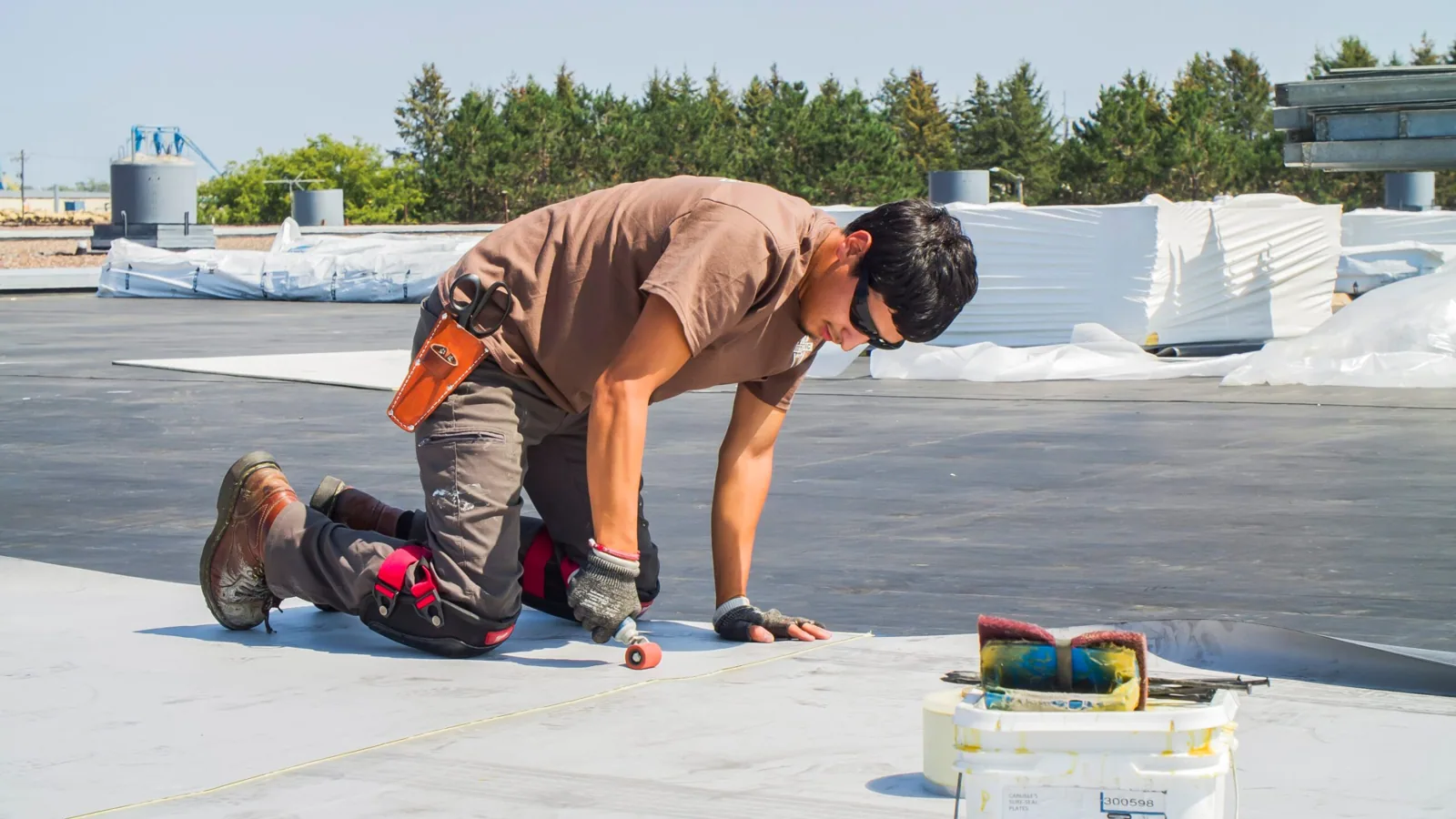
Sure-Weld TPO gives an owner a named membrane system to evaluate, not a shortcut around roof investigation. Carlisle describes it as a reinforced, heat-weldable single-ply membrane for new construction and reroofing. In Killeen, TX, our first question is whether the roof below can support the proposed assembly. We inspect field seams, perimeter securement, drains, penetrations, insulation and deck conditions, then record what is repairable and what needs replacement. The TPO roof assessment ties any proposed Sure-Weld assembly to those findings. If the existing membrane remains dry and the substrate is stable, a recover may be considered. If moisture or weak attachment is widespread, placing another sheet over it simply conceals an active problem.
What should a seam inspection establish?
TPO seams depend on heat and pressure applied across a clean overlap. Dust, surface contamination, temperature changes and inconsistent travel speed can affect a weld, so a crew should establish its settings with test seams and check them as conditions shift. We examine seam intersections, terminations and repair patches because these often expose how the system has aged. Heat-welded repair can be appropriate when the membrane remains compatible and the damaged area is bounded; a broader failure may need more. We compare Carlisle's TPO membrane system with Versico TPO only after checking how the assembly, detail set and roof geometry fit the property. A manufacturer name by itself says nothing about the deck beneath an existing roof.
What does the deck and fastening pattern show?
Attachment choice links membrane behavior to deck type and wind design. Mechanical fastening transfers loads through plates and fasteners; adhered assemblies distribute attachment through a bonding layer; induction-welded approaches depend on compatible coated plates and equipment. The deck, insulation, edge zones and roof height all matter. We inventory those conditions and identify where exploratory openings are needed before a proposal locks in an assembly. Perimeter details deserve particular attention because edge metal, parapet height and corner zones shape the fastening plan. The wind-damage roof repair review can isolate uplift damage from general membrane wear. For a replacement, we coordinate fastening patterns and edge work with the system details instead of assuming a field condition extends unchanged to every boundary.
How do attachment choices work with the full assembly?
The roof's geometry sets how much of the labor happens at small details rather than open field. Curbs, pipes, drains, skylights, parapets and changes in plane call for durable transitions. We photograph each condition, note any standing seam or metal edge connection and group similar work so owners can compare quantities. Existing penetrations may be moved or abandoned during a project; those openings need permanent closure rather than a temporary patch left under new sheet. Owners can pair a membrane review with curb and equipment support work when HVAC changes are planned. That avoids cutting a fresh roof for work that could have been coordinated earlier and helps keep maintenance staff, tenants and mechanical trades aligned on access and sequencing.
How should membrane details cross roof transitions?
A second roof layer is not automatically less disruptive or lower cost. Added height can affect drains, scuppers, door thresholds, counterflashing and equipment supports. The existing assembly must also be dry enough and secure enough to serve as a base. We use infrared indications, moisture readings and selective cuts where warranted, then describe what each test confirms. A roof recover or overlay review should distinguish known conditions from areas that still need opening. If demolition is required, we plan temporary dry-in and disposal alongside the final membrane work. An owner gets a credible comparison only when both options include perimeter metal, flashing transitions, drainage correction and protection for occupied interior areas, rather than presenting just square footage and sheet costs.
A seam plan should also account for phased work. If the building remains open, we divide the roof into zones that can be dried in and inspected without exposing too much area at once. That sequence can affect material staging, hoisting and the location of temporary tie-ins. We mark the transition where each day's installation ends, then check that the closure protects the assembly before crews leave. Those controls matter to the owner because water protection and tenant continuity are part of the roof work, not add-ons after the membrane is selected.
When does a recover make sense?
Midsummer in Killeen averages above 84 degrees in July and August, so crews plan inspections and seam work around roof-surface conditions. That is local climate context, not a condition rating for any particular roof. In warm weather, timing of work, surface temperature and seam preparation become part of quality control. Along the planned Stan Schlueter Loop corridor, buildings can differ in exposure, roof shape and operational schedule; we verify each property on its own terms. A written plan sets delivery, hoisting, work zones, temporary water protection and inspection points. If the tenant uses loading or service areas during the day, we coordinate a sequence that keeps access safe while avoiding open roof areas over active spaces when possible. West Trimmier, East Trimmier, W.S. Young Drive and Chaparral Road rank among Killeen’s first four high-priority roadway projects. We plan roof deliveries and lift access around the specific property, not a corridor-wide assumption.
After installation, maintenance staff need to know where penetrations changed, which drains were reset and where future trade access should occur. We provide photographs and service notes for those locations, then identify the next inspection interval based on project closeout and observed conditions. A roof that has received a new membrane can still be damaged by equipment work, blocked outlets or uncoordinated foot traffic. The record makes later repair more precise and helps the property manager distinguish new issues from conditions documented before the project. Where access is restricted, we identify the area and return with the facility contact so the final record is complete before pricing is finalized. The marked review area also helps staff coordinate any needed escort or equipment shutdown.
How do heat and work windows affect installation?
Carlisle's Sure-Weld TPO is one system option; the decision should stay connected to current roof evidence, project constraints and the full assembly. Our report identifies urgent leaks, repairable field conditions, wet insulation and details needing more investigation. We can price an isolated repair, a recover that passes the assembly checks, or a replacement with explicit tear-off and transition work. Owners should be able to see what is included, what evidence supports the recommendation and where a design professional or code review needs to confirm requirements. That record makes later maintenance more useful because the next inspection can compare new findings with known seams, repairs, drainage changes and equipment locations. For a second comparison, we can lay out Versico attachment options beside GAF single-ply systems using the same measured roof conditions.
Commercial Roofing Questions
How is Sure-Weld different from a generic TPO description?
Carlisle identifies Sure-Weld as a reinforced, heat-weldable TPO membrane for new roofing and reroofing. We still assess the deck, insulation, attachment and detail conditions before putting it into a project scope.
What makes a TPO seam inspection useful?
It can catch welds with poor fusion, inconsistent width or damage at intersections and terminations. We inspect representative areas and correct the work before more membrane covers the details.
When do you recommend opening the existing roof?
We use selective openings when moisture readings or visible distress leave the assembly uncertain. A core or cut helps identify layers and substrate conditions that an exterior-only review cannot settle.
Can Carlisle TPO be used on every low-slope roof?
No single membrane fits every existing assembly. Deck type, wind design, chemical exposure, drainage, roof geometry and project constraints all need review before selecting a system.
How do you avoid disruption during reroofing?
We map access, material lifts, temporary protection and work zones with the building manager. The sequence is adjusted to occupied operations and weather exposure so the work area stays controlled.
Review seam and assembly conditions
Arrange a roof inspection in Killeen to document the existing system, verify recover feasibility and price the perimeter, penetration and drainage work with the membrane field.