
GAF Commercial Roofing in Killeen, TX
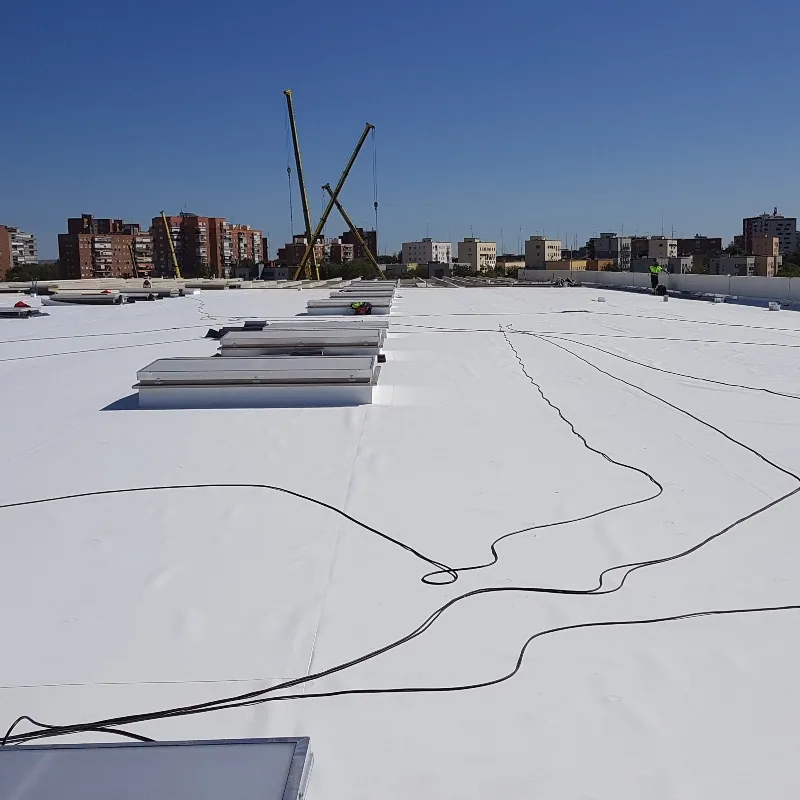
On a low-slope roof, the material on top is only one part of the decision. Deck condition, insulation, drainage, perimeter attachment and the number of penetrations determine whether a repair, recover or replacement is workable. In Killeen, TX, a hot roof can make exposed seams and flashing details harder to assess from the ground, so our inspection starts with the assembly and the places water can enter. GAF makes smooth and fleece-back EverGuard TPO, PVC and PVC KEE membranes in several thicknesses. We compare those product families with the roof that is actually there, rather than treating a brand name as a diagnosis. A practical commercial roof inspection records wet areas, open laps, fastener movement and edge conditions before an owner chooses a scope.
What should guide a membrane choice on an existing roof?
A membrane can be sound while the insulation below it is wet or the deck needs repair. We check for trapped moisture, soft cover board, corrosion, displaced fasteners and past patch layers, then distinguish a localized defect from a pattern across the roof. That distinction matters because a new sheet over an unstable substrate carries the same unresolved condition forward. A moisture survey can help map suspect areas for selective openings, while core cuts confirm what lies beneath. The report separates observed damage from the assumptions that still need testing. That gives an owner a basis to compare repair and replacement scopes without treating every darkened patch or interior stain as proof of a full-system failure.
How do you distinguish a surface from the full roof system?
EverGuard's smooth and fleece-back offerings cover TPO, PVC and PVC KEE, but those names do not remove the need to set assembly criteria. Thermoplastic seams are heat welded, so field conditions, cleanliness, temperature control and operator technique matter. A sample weld and destructive seam check can show whether the setup is right before production continues. We inspect overlap width, probe the completed welds and detail a plan for pipes, curbs, drains and wall transitions. Owners comparing TPO roofing with PVC roofing should also consider rooftop discharge, grease or chemical exposure, traffic routes and whether the deck can support the selected attachment. The best comparison is an assembly with its edge and penetration details included, not a membrane color alone.
When is heat welding appropriate?
A replacement estimate becomes more useful when it describes what stays and what comes off. We identify the existing membrane, insulation layers, deck type where visible, drainage geometry and areas that need exploratory openings. Then we state whether the proposed work is a tear-off, recover or targeted repair and what evidence supports that choice. If recover remains possible, we check substrate condition and assembly limitations before carrying the option into pricing. The roof recover and overlay review also weighs added height at doors, drains, curbs and perimeter metal. A low initial number can shift when these transitions require rebuilding, so clear quantities and allowances help prevent a budget that omits the difficult areas most likely to interrupt the job.
Which transitions need resolution before sheet selection?
Killeen's long hot season places repeated thermal stress on membrane, flashings and exposed metal. An average year in Killeen has 18.3 days whose high meets or exceeds 100°F; product instructions and site readings still control installation. Heat does not prove a product has failed, but it makes inspection timing, surface conditions and careful documentation useful. Around the Rancier Avenue corridor, commercial buildings with different roof vintages can require different scopes even when their footprints look similar. We record the actual slope, drain paths, curb conditions and repairs found during the site visit. This keeps a system comparison connected to each roof rather than applying one standard assembly across a portfolio simply because the buildings share an owner or appear close together.
For a property with repeat leaks, we compare the repair map with prior work orders and roof drawings, if available. A repair that keeps returning at the same curb can point to movement, a failed termination or water traveling from a higher point. We document the path we can observe and separate it from areas that need a test opening. That prevents a simple-looking surface patch from becoming the full recommendation when evidence suggests a larger assembly issue. For planned work, the scope identifies temporary protection, demolition boundaries and how the new membrane ties into existing walls and equipment.
How should replacement scope follow observed condition?
Water management deserves a separate review from membrane selection. We trace where water leaves the field, check drains and scuppers for obstruction or separation, and look for low areas that retain water after ordinary drainage should have occurred. At parapets and equipment curbs, movement can open a small path that sends water across insulation before it appears inside. The work plan should show how these conditions will be handled before the new membrane is placed. Owners can compare that scope with drain and scupper repairs when the field is serviceable but discharge details need attention. If the building has active interior operations, we map access and staging with the manager so tear-off, material lifts and temporary protection do not create avoidable disruption. Downtown Killeen combines older commercial buildings with active storefronts and offices, so roof access and replacement sequencing should be assessed property by property. For roof work there, we record the actual wall, edge and access conditions at each property before setting a replacement sequence.
Maintenance begins with the details most likely to interrupt water flow or membrane continuity. We check drains for debris, look at sealant and metal transitions, and record areas where service traffic crosses the roof. After work, the inspection record gives the facility team a location reference instead of a general note that the roof was repaired. If a larger capital decision remains, comparing age, observed moisture and repeat repair locations helps prioritize buildings without assuming they need the same system. We also note roof areas inaccessible during the first visit and schedule them separately rather than treating an incomplete view as a clean result. Before work begins, the owner receives a clear boundary for each open question.
How can roof work be phased around an occupied building?
The owner should leave the review with a record that supports a next decision. We attach roof-area observations, photographs, moisture findings, repair locations and proposed work by assembly. When several buildings are involved, the roof asset management program can sort urgent water entry from capital work that can be scheduled. A written scope also identifies details that need design input, code review or confirmation after openings. In Killeen, an owner may be balancing maintenance across a single property or several operating sites; either way, the next step should be a priced scope with assumptions stated in plain terms. We can inspect and repair the existing roof, plan a recover where conditions allow, or prepare a replacement sequence that accounts for the building's hours and access needs. A parallel scope can include Carlisle SynTec membrane assemblies and Johns Manville TPO details, which gives the owner two additional system configurations to review.
Commercial Roofing Questions
What should be settled before comparing EverGuard product families?
Start with the existing assembly, deck condition, drainage and the exposures around rooftop equipment. We inspect those items first, then compare membrane type and attachment method against the building rather than choosing from color or thickness alone.
Can a new single-ply membrane go over the current roof?
A recover is considered only after we verify the existing layers, substrate stability, moisture and added height at drains and edges. If those conditions do not support another layer, the scope needs removal and replacement instead.
How do you check field-welded seams?
We review the membrane preparation, equipment settings and weather conditions, make a test weld when appropriate, and probe completed seams. The record identifies any correction before the crew covers adjacent details.
Does a white roof solve a hot-building problem?
A reflective surface may be one part of a roof decision, but insulation, air leakage, HVAC operation and the full assembly also affect indoor conditions. We document the roof and discuss the limits of what membrane color can establish.
What will an owner receive after inspection?
A written condition record with photographs, repair locations, moisture findings and a recommended scope. If testing or design review remains necessary, we mark that work separately so budget decisions are based on stated assumptions.
Compare the assembly, not only the label
Schedule a commercial roof inspection in Killeen. We will document the existing system, identify the work that controls the scope and prepare repair, recover or replacement options for the building.