
Commercial Roof Asset Management in Killeen, TX
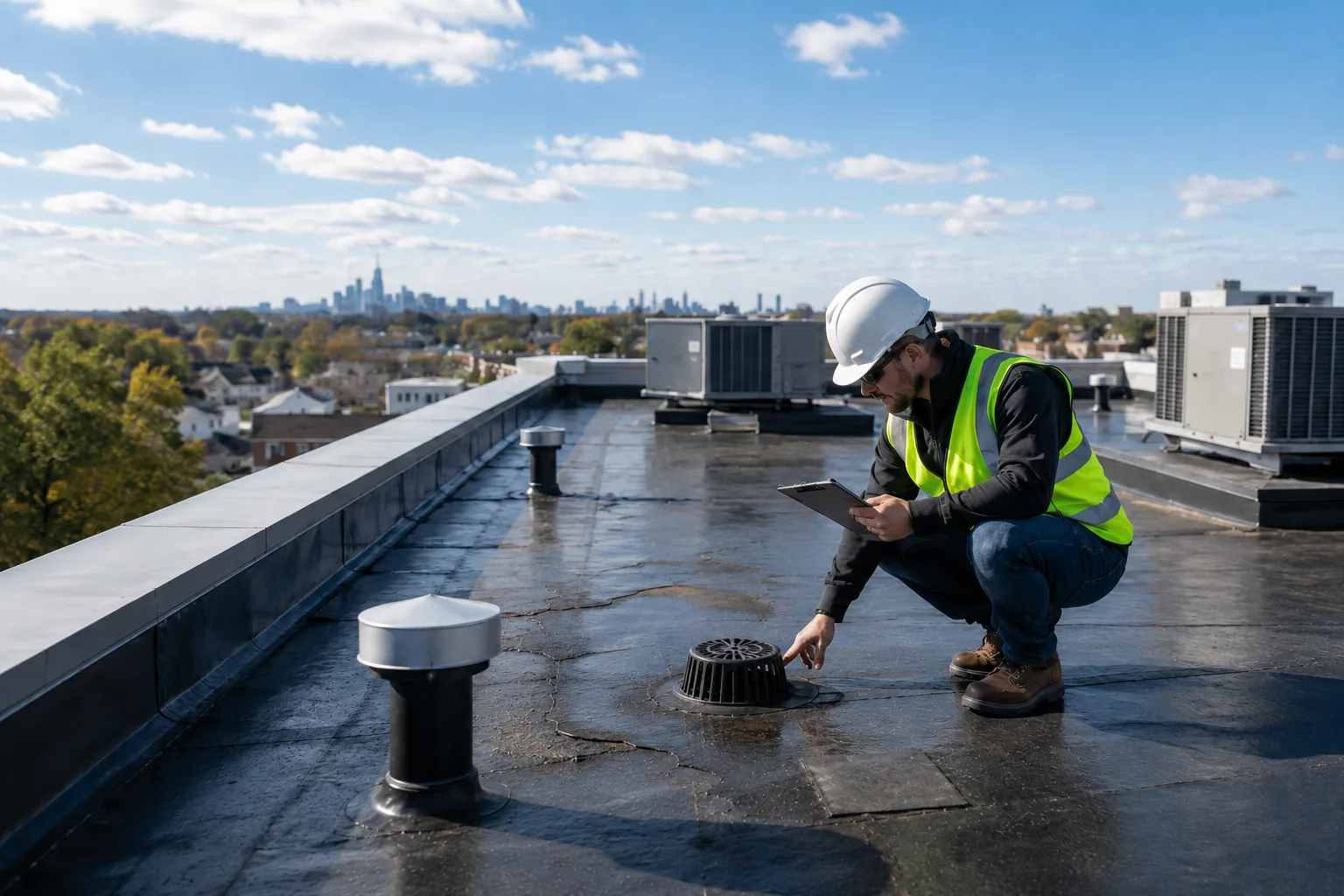
A roof register earns its place when a manager can use it to answer a work-order question and a budget question from the same record. We begin with each building, the roof sections that can be inspected, the assembly when it is known, and the limits on access. In Killeen, 3,247 jobs fall in finance, insurance, and real estate, while 2,791 are in education and healthcare. Those are different operating settings, but both benefit from separating an observed roof condition from a planning assumption. The register is the working map, not a replacement decision by itself.
What belongs in the roof register?
Give every property a durable name, then give each roof area a second identifier that can be found on a plan. Record the surface type if verified, approximate section boundaries, drainage features, wall transitions, edge conditions, curbs, penetrations, and known repairs. A photograph needs a date and a location reference; an image without a roof zone can be difficult to use when the next leak appears. We note who supplied the record and which areas could not be reached, so a manager can tell the difference between a missing observation and a clean finding.
Start the condition report for each building with the question it must answer. Is the immediate task a leak repair, a safety concern, a moisture investigation, or a capital review? That distinction keeps the register useful rather than turning it into a shelf of unconnected files. For properties with several roof levels, map access points and safe transitions. If a section is excluded from inspection, label it and state the next step needed to resolve the gap.
How do condition and urgency stay distinct?
Use separate fields for observed condition, operational impact, and urgency. An open seam or displaced edge can support a defined repair scope. A ceiling stain is a symptom that should be compared with roof details, not entered as a confirmed opening at the same spot. Where moisture may be below the surface, identify a test location before classifying the assembly. In a Killeen portfolio, those differences matter when summer heat changes the timing available for exposed work or a tenant needs an occupied-area plan. The record should say what we saw and what remains unresolved.
Keep emergency protection separate from permanent correction. A temporary dry-in may reduce immediate exposure while an owner evaluates a larger repair; it does not close the condition item. Link each action to a roof section, assigned contact, completion note, and follow-up inspection. A commercial roof inspection can document accessible conditions, while a moisture survey can help narrow where further testing belongs. Neither should be entered as proof of concealed conditions without the evidence needed for that conclusion.
Which items should move first?
Priorities should reflect exposure, consequence, and the next decision date. A leak over inventory or an occupied room may need immediate protection. A recurring drain issue may call for a focused scope before the next heavy rain. A repair history that keeps returning to one roof section can justify comparing the remaining serviceable area with a broader replacement cycle. Put the reason beside the priority, then name who can approve the action. A ranked list without an owner, roof location, or decision date simply moves the uncertainty to another meeting.
For a property near Rancier Avenue or the West Trimmier and East Trimmier corridors, vehicle access and material staging still depend on that building's actual gate and loading pattern. These roads figure among Killeen's first four high-priority thoroughfare projects, useful context for portfolio access planning but not a substitute for a site visit. Record the planned work window and the contact who can confirm it. A capital plan can then distinguish a repair that protects operations now from a larger project that belongs in a later budget window.
How does a multi-building view help?
Portfolio reporting should let an asset manager compare like with like without pretending every roof has the same assembly or exposure. Group by system, age when documented, condition, repair frequency, and open investigation. Keep one record per building, with shared fields that make a dashboard possible and notes that preserve each property's differences. If the owner operates both an office and a warehouse, a common roof register can show what is due without flattening the access needs of either use. A warehouse roof review may include inventory and dock constraints; an office scope may focus on tenant notice and equipment access.
Where roof work affects other trades, keep responsibility visible. Note who handles unit shutdown and reset, who protects stored materials, and who accepts the area after the crew leaves. This does not expand the roofing scope into mechanical or electrical work. It identifies the boundary that must be coordinated before pricing. For equipment details, a curb and support review can document flashing interfaces and the party responsible for each system. Store approvals with the section record so the next manager can see how a schedule or scope changed.
When should the register be refreshed?
Refresh the register after a repair, replacement, recovery, coating, major leak, or newly completed inspection. Update the location map when roof sections change or equipment is added. If a maintenance visit finds a blocked drain or a loose edge, attach the work note to that location rather than leaving it in a separate email thread. A consistent record also helps verify that a recommendation was completed and whether the same issue returned. The owner can compare the current service record with prior photos before authorizing a broader scope.
Keep the next review date tied to a reason: seasonal drainage work, a warranty requirement, a planned tenant change, or a capital discussion. Killeen's named arterials include FM 3470/Stan Schlueter Loop, SH 201, SH 195, US 190/Business 190, and Rancier Avenue/FM 439. Those routes shape regional travel, but the register should still include the property's own access instructions and contact. A Rancier Avenue roof plan begins with the actual roof and operating boundary, not an assumption drawn from the map.
What should a manager be able to decide?
A useful register supports a short list of decisions: authorize a defined repair, request a moisture test, reserve a budget window, compare recovery with replacement, or close a verified item. Each recommendation should identify its scope boundary, expected interruption, exclusions, and any condition that could change the work after opening. If more than one option is viable, show them against the same roof area and assumptions. That gives ownership a fair comparison without implying a fixed outcome before concealed conditions are known.
We can build the roof register from an inspection, existing plans, work orders, and maintenance records, then flag gaps that need a walk or test. A due-diligence roof survey can serve a transaction review; a warranty record can track obligations and service history after work. For broader property groups, a multi-site program keeps consistent fields while preserving building-level findings. The next action stays attached to the roof section that needs it.
Commercial Roofing Questions
Can a roof register replace a physical inspection?
No. A register organizes existing records and findings, but it cannot confirm a concealed condition or an area that was not safely accessible. We identify where a roof walk or test is needed before changing the status of that item.
What information should a property manager send first?
A roof plan, repair history, leak locations, access rules, and equipment list give us a useful starting point. We mark which details are verified, then note what needs field confirmation.
How should an urgent leak appear in the portfolio?
Give it a roof section, affected interior area, date, temporary protection, and a person who can approve the next step. Keep the permanent repair open until the completed scope and follow-up condition are recorded.
Can the same fields work for different building types?
Shared fields can support comparison, while building-specific notes preserve access, occupancy, equipment, and drainage differences. We keep the record comparable without treating a warehouse, office, and school as the same roof.
When should ownership review the register?
Review it before a budget cycle, after a significant repair, and when a recurring condition changes the replacement timing. A current photo and completed-work note help separate a resolved item from one that still needs investigation.
Put the roof record to work
Send the building list, roof plans, repair history, and current access rules. We can document accessible conditions, mark open questions, and return a roof register with scoped next steps for the budget window.