
Commercial Roof Warranty Management in Killeen, TX
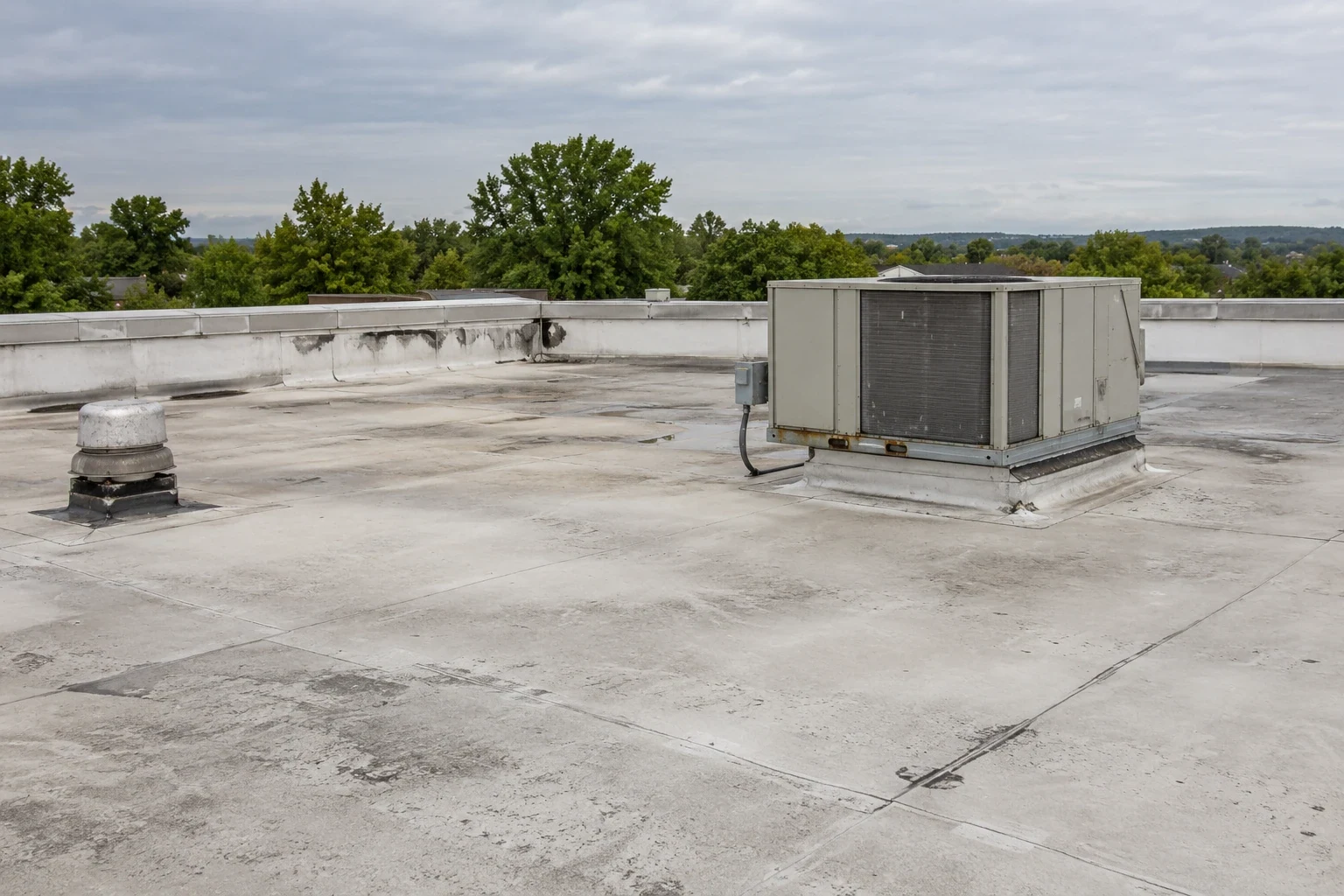
A warranty file is useful when a facility manager can tell which roof area it covers, what work was approved, and which record must be kept before a repair begins. We start with the actual warranty documents, building plan, system details when confirmed, and service history. Killeen's 1991 to 2020 annual precipitation normal is 34.75 inches, a local reason to keep drainage observations and follow-up records current. It does not establish a warranty defect or promise a claim outcome. A usable record separates the written obligation from the condition we observe today.
What should the warranty record identify?
Keep the issued document, covered building, roof section, system, effective date, listed owner, and any exclusions together. Record the manufacturer's or provider's stated notice process without summarizing it from memory. If a roof has multiple additions or systems, map the covered area instead of assuming one document applies across the full footprint. Track who holds the current copy and how a transfer or ownership change must be handled. A roof asset register can point each section to its controlling record without replacing the warranty itself.
When an issue appears, note the date, interior location, weather reported by the owner, temporary action, and roof detail observed. Keep photographs in sequence and label each one with a section. An open seam, puncture, ponding area, or failed curb detail should be recorded as an observation before anyone concludes it falls within a written term. A condition report can state what we reached and what remains uncertain, giving the owner a sound basis for the next notice or inspection request.
How can routine work protect the record?
Preserve invoices, inspection notes, repair locations, approved materials, and completion photos. If maintenance includes clearing a drain or sealing a detail, record who performed the task, what area was accessed, and whether a follow-up observation is due. Do not describe a general roof visit as proof that every concealed condition was checked. Where a warranty requires notice or approval before work, ownership should follow its written terms before authorizing a permanent repair. We can document the roof condition and proposed scope, but the document holder controls the required notification.
Killeen's rainfall baseline makes drainage records useful, particularly when a site has recurring ponding or overflow concerns. A maintenance visit can note accessible drains, scuppers, edge details, and open repairs. When a condition needs permanent correction, a repair scope should identify materials and boundaries for review against the governing terms. The date the work is completed, not just the estimate date, belongs in the service record.
What belongs in a repair or claim packet?
Build the packet from the warranty document, roof plan, dated photos, inspection findings, repair history, and a description of the reported symptom. Keep the owner's account of an event separate from conditions observed during our visit. A contractor's scope can explain the proposed work and any concealed-condition allowance; it cannot decide coverage. If emergency protection is necessary, document the immediate action and retain the permanent repair question until the area can be evaluated. The record should show who approved each step and when the next update is due.
For a property in Downtown Killeen, the district's north and south limits follow Rancier Avenue/FM 439 and Veterans Memorial Boulevard/Business 190. Those boundaries can help identify the service area, but the individual roof record still needs the building's own access point and plan. A Downtown Killeen roof inspection can map findings to a specific section. Where an event is reported, a claim documentation scope can organize observed damage and repair work without predicting an insurer's decision.
What if a planned scope changes?
Pause the paper trail when opening the roof reveals a different assembly, wet insulation, damaged deck, or a condition outside the priced boundary. Photograph the area before covering it, mark the location, explain why the original scope no longer fits, and obtain the owner's approval for a change. If a notice or approval requirement applies, follow the document's process before proceeding with permanent work. Keep the original proposal and revised authorization together so an auditor can see what changed and why.
In Killeen, the amended 2024 edition of the International Building Code took effect on January 1, 2026. A repair or alteration may require a project-specific permit review; that question depends on the work scope and city requirements, not on the existence of a warranty. We can identify the roof work and provide the scope details needed for the owner to confirm applicability. If the project becomes a broader replacement, compare the proposed replacement plan with the document terms and retain its submittals and closeout in the same property record.
How should several properties be tracked?
Use one line per building and one record per covered roof area. Track document holder, expiration or review date when stated, approved repairs, open notices, and the next maintenance action. A portfolio view can sort upcoming obligations while keeping each site's document and photos attached. Avoid a single status such as current when some sections have different systems or terms. A property near Rancier Avenue and another toward the Stan Schlueter Loop may share an owner, but their access, repair history, and covered areas remain separate.
A multi-site roof program can standardize the fields used for reporting and retain site-specific records. For timing decisions, a capital plan can distinguish a warranty follow-up from a replacement budget request. When an owner needs a transaction file, a due-diligence survey can document what was accessible and which warranty papers were supplied. Each tool has a separate job; the underlying terms still come from the issued document.
What should ownership receive after work?
Close the job with the approved scope, materials and system information available, dated completion photographs, any inspection or testing result, and a list of follow-up items. Identify the roof area repaired and any part of the original concern left open. Keep product data and submittals with the work record when required, but do not call them a warranty unless the issuer has provided one. If a new document is issued, note its coverage and any required registration or notice process as written.
We can prepare a roof condition record, perform approved repairs, and organize the project closeout for the owner to compare with the warranty file. The next review date should reflect the written terms and the observed roof condition. A roof inspection can revisit an open question, while a TPO system review can describe the assembly where that material is confirmed. Good tracking makes the next decision easier to locate, not automatic.
Commercial Roofing Questions
Does a repair automatically preserve a roof warranty?
No. The controlling document states its own terms and any approval or notice steps. We identify the proposed roofing work and can provide a record for the owner to review before authorizing permanent correction.
What should I do when a leak appears in a covered area?
Record the room, date, photos, and temporary protection, then check the document's notice process. We can inspect accessible roof details and prepare findings while the owner manages required notice and approvals.
Can a contractor decide whether the issuer will cover a repair?
We can document the condition, prepare a scope, and explain observed work. Coverage remains governed by the issued terms and the responsible issuer's review, so our report does not promise approval.
What records belong in the portfolio after a repair?
Keep the approved scope, change orders, material details, completion photos, invoice, and any required inspection or notice. Link the record to the roof section so future work can be reviewed against the correct document.
How should different roof systems be handled under one owner?
Track each building and covered area separately, even when one report summarizes the portfolio. We preserve the specific system, access limits, document terms, and open actions for every roof section.
Keep the warranty file tied to the roof
Share the issued documents, roof plan, repair history, and current condition question. We can map accessible findings and return a scoped service record for the owner to review against its written terms.