
Commercial Roofing in Belton Business Park, Belton, TX
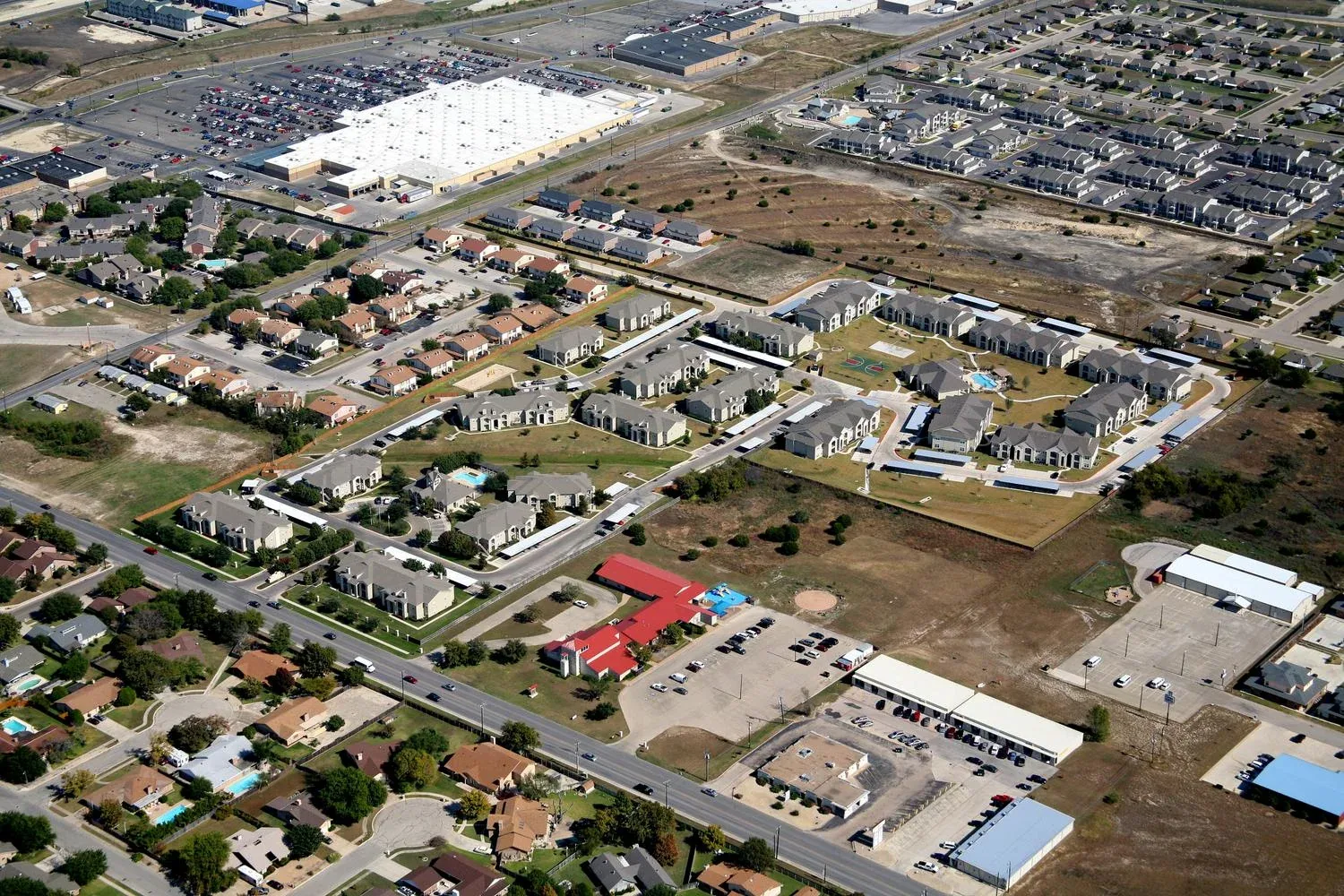
Belton Business Park is a broad service location within the central Loop 121 and US 190 planning area, not a single facility with one known roof. The BEDC Business Park occupies that central area and was developed after a citizen vote and council initiative in 1990. That history describes the business park's formation; it does not establish the use, roof material, or condition of any present-day property. We confirm the parcel and facility contact, then record the assembly, roof sections, drains, edges, and access limits before building a scope. A commercial roof inspection begins with the roof in front of us.
Building and site planting plans in the park receive city and BEDC review under design standards and park covenants. Those requirements may matter to site planning, but they do not replace a roof inspection or determine what work a particular owner can approve. We identify the measured repair boundary, note any access or approval item, and separate known conditions from questions that need a test. A roof condition report can keep photographs, test results, and limitations in the asset file.
Which property is the work order for?
In a business park, the service request needs a site name, owner or manager, roof access point, and the building section under review. The location label alone cannot tell us whether a facility is open, being fitted out, or sharing a drive with another operation. We confirm the approved gate, loading route, roof hatch, tenant hours, and any trade work that changes access. The estimate then names the property and roof zone instead of attaching assumptions to every parcel inside the park.
The BEDC Business Park sits in Belton's central Loop 121 and US 190 planning area. That location reference can help with dispatch and coordination, while a current work route must come from the site's contact. If a lift or material drop changes parking or pedestrian movement, we identify the boundary and expected hours before mobilizing. The Belton service area helps route the call; it does not authorize entry or use of common space. A Copperas Cove corridor visit follows its own property access plan.
What belongs on the roof map?
We note whether the assembly is membrane, metal, built-up, or another system and identify visible layers, seams, penetrations, curbs, parapets, and drainage. Each finding receives a roof-zone reference and photograph. Where old patches overlap, we record their edges and condition instead of covering them before understanding the underlying surface. If the deck cannot be seen, the report says so. A test opening is useful when it can settle a question about moisture, attachment, or removal quantity.
Drainage deserves its own sketch. We trace the slope to bowls, scuppers, overflows, and edges, then check whether debris or a low area is affecting the path. A drain issue and a failed field seam require different repair materials, and an interior stain does not identify which one is responsible. A drainage review can sit beside a seam or flashing item when the roof map shows distinct work. If water may have traveled beneath the membrane, we identify a targeted moisture survey or test location before expanding removal.
How do design standards fit a roof decision?
Building and site planting plans in the park go through city and BEDC review under its design standards and covenants. For roofing, the facility contact can identify whether an exterior change needs an approval review before material is ordered. We can describe edge metal, rooftop equipment screening, parapet transitions, and work staging in a scope, but we do not infer that a specific project has been reviewed or approved. The owner remains responsible for confirming any applicable site process before work begins.
That coordination should happen while the roof options are still open. If a repair changes an edge condition or a replacement alters insulation height, the drawings may need a detail that resolves drainage, flashing, and adjacent construction. We identify what the roof work touches and leave the approval step visible in the schedule. An replacement scope should state its limits and interfaces, while a smaller repair can be priced separately when it does not rely on wider modifications. Keep approvals and roof conditions in separate parts of the record.
When is a section repair the better comparison?
A section repair may fit when the opening is located, the surrounding material remains sound, and the substrate supports a compatible detail. We show preparation, patch length or area, flashing, materials, and any surface that must be removed. If a test reveals wet insulation or failed deck, we mark the added boundary and request direction before extending the work. Repeated defects at separate penetrations, seams, or roof edges may call for a section-level comparison rather than several independent patches.
Adding a layer is considered only when the existing assembly is dry, firmly attached, and leaves enough clearance to rebuild drains, curbs, and parapet transitions. Replacement may be easier to compare when several sections have failed or the existing layers cannot be reliably retained. We identify removal, disposal, deck repair, access, protection, and timing as separate cost drivers. A leak repair can resolve a defined opening; a capital plan can carry a broader replacement cycle item when evidence supports it.
How does the record support the next approval?
Closeout should identify the property, roof section, repair detail, materials, dated photos, test location, and any area that remains inaccessible. A temporary dry-in is listed separately from permanent repair. If a crew opened insulation or deck, we note the confirmed limit and the tie-in used to close the work. The owner can then compare a later moisture indication or repair request with the previous boundary rather than assuming all roofs in the business park are alike.
For a multi-property manager, separate roof records make the capital review more useful. One building may need a test, another a repair, and a third only a scheduled observation. A portfolio summary can sort those choices by urgency without combining quantities, tenant constraints, or approval paths from different sites. We can group those actions by budget window while retaining each site's assembly and access notes. A maintenance visit can verify drains and repaired transitions after the next suitable interval. Request a roof walk when the asset team needs a scope that ties park-level coordination to a measured condition on the individual roof.
Commercial Roofing Questions
Does the business park's design review tell us whether a roof needs replacement?
No. Plan review and roof condition are separate decisions. We inspect the assembly, map its defects, and identify any test or approval that could change the scope.
Can the service location include every building in the park?
The location describes an area we serve, not a single shared roof. Each property needs its own contact, access approval, roof map, findings, and work boundary.
What if roof replacement changes a parapet or drain height?
We show the interface in the scope and identify the detail that must maintain drainage and weather protection. The owner can confirm any design or site review before ordering materials.
How do you handle a roof with old repairs?
We map their edges and test or remove a sample only when it helps define the condition underneath. The report separates a prior patch from the new work so the asset file stays clear.
What should be approved before removal expands?
We identify the test result, revised removal boundary, added material, and schedule effect. The owner can authorize that change or request another test before the assembly is covered.
Review a property-specific roof scope
Request a Belton Business Park roof walk with mapped findings, access needs, and repair or renewal options tied to the building.