
Metal Roof Retrofit in Killeen, TX
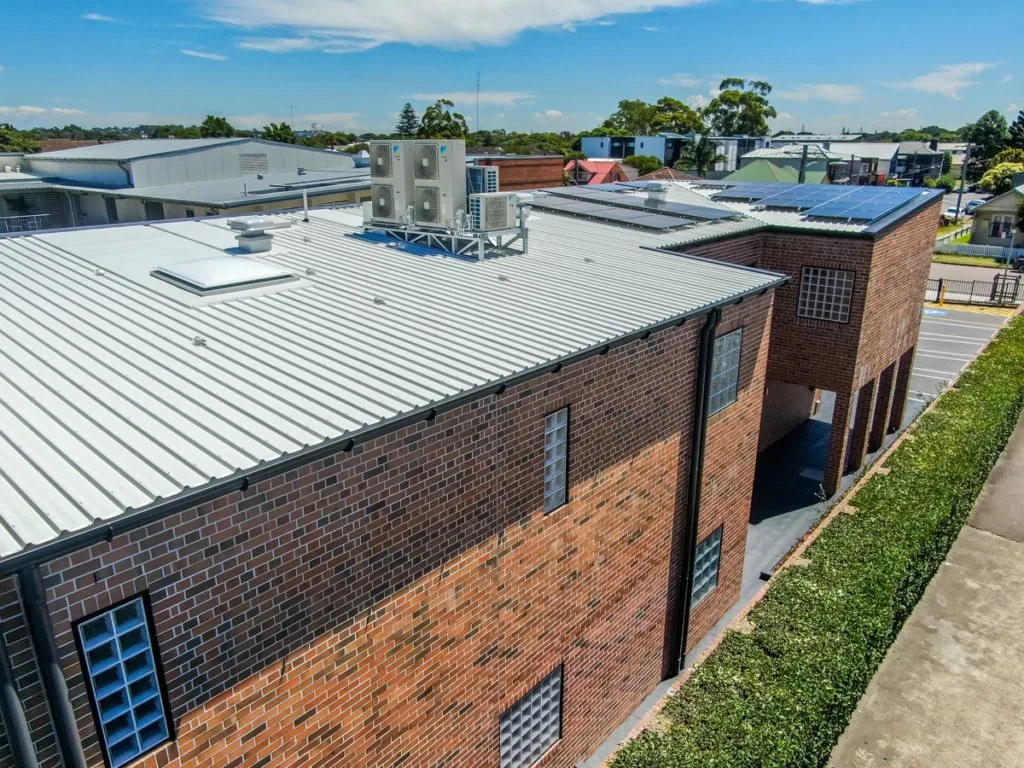
An exposed-fastener metal roof can often be inspected without assuming every panel needs replacement. We map loose or backed-out screws, failed washers, open laps, corrosion, damaged closures, and previous sealant work. The key question is whether the existing panels, attachment, and substrate remain sound enough for restoration. In Killeen, roof access and heat affect the work window, but the repair choice comes from the observed assembly and the owner’s service record.
What Is Failing at the Fastener Line?
Fasteners may loosen as panels move, while washers harden or compress and leave a path for water. We inspect representative rows, panel ends, laps, and edge conditions, then record whether the problem is isolated or repeated. Replacing screws without checking the purlin or substrate can leave the new fastener without sound purchase. Where attachment condition is uncertain, the scope identifies the test or opening that would confirm it. We avoid treating a broad sealant application as a repair boundary.
Panel overlap and closure strips also need attention. A failed lap can admit water even after a fastener is replaced, and a missing closure may allow wind-driven rain or debris to reach the assembly. We document the metal condition, exposed corrosion, and any prior patch that affects preparation. A standing seam comparison can show how a concealed-clip system differs from the existing exposed-fastener roof; a repair assessment can define local fastener and lap work.
Can the Panels Be Restored?
Restoration starts with panel condition. We look for corrosion at cut edges and laps, metal loss, deformation, damaged coatings, and areas where water remains. A coating cannot rebuild section loss or correct a failed connection. The inspection notes whether rust is superficial, whether the panel is perforated, and whether the affected area can be prepared to the product requirements. If a test patch is appropriate, adhesion and preparation are documented before the larger work is priced.
Panel movement remains part of the decision. Sealant or coating must not lock a moving joint in a way the system cannot accommodate. At penetrations, curbs, and ridges, we check flashing and closure details separately from the field panels. A silicone coating review can consider a compatible restoration system, while flashing replacement can address an isolated opening without hiding panel deterioration.
How Does Killeen Weather Affect the Work Window?
Rancier Corridor Redevelopment is an approved Killeen TIRZ #2 project. That district reference helps place a metal-roof inspection in the city, but it does not establish construction status at a private property or tell us what panel system is installed. Project listings connect US 190 with Bacon Ranch Road and Cunningham Road on the approach to Stan Schlueter Loop. Those regional links do not tell a delivery driver which gate or turning area a property can use. At the Rancier Avenue corridor, as elsewhere, we confirm the entrance, staging point, and safe route to the roof with the site contact.For restoration, the Diligence Notes should remain tied to metal evidence: fastener rows, panel laps, closures, and corrosion. We mark each condition on the building’s roof map. The local corridor is context for scheduling, while the panel profile and attachment determine repair scope.
What Belongs in a Retrofit Scope?
A scope should state whether the work replaces fasteners, repairs laps, treats corrosion, renews closures, restores coating, or removes panels. It should also identify cleaning, rust preparation, masking, test patches, detail reinforcement, and any area excluded because of a failed substrate. We photograph the prepared surface and finished detail so the owner can see what received treatment. A bid that says only “seal metal roof” leaves the material and boundary unclear.
Drainage and perimeter conditions can change restoration value. We check gutters, downspouts, eaves, ridge details, and transitions where a new coating might otherwise cover loose material. If the deck or purlins need structural review, that work is identified separately. A roof walk can capture the existing condition, and a condition map can list test locations, exclusions, and repair priorities by roof section.
When Does Replacement Make More Sense?
Replacement should be compared when panels are perforated, attachment is unreliable across the roof, corrosion is advanced, or recurring leaks have spread to several details. A targeted retrofit may still fit a sound area while a failed section moves to replacement. We show the owner both boundaries and the investigation needed to resolve concealed conditions. Replacement estimates should include new panels, substrate and insulation assumptions, flashing, edge metal, penetrations, staging, and daily weather protection.
Occupancy can require a phased sequence. We coordinate noisy work, equipment shutdowns, loading, pedestrian protection, and any temporary covering with the facility lead. For an occupied metal roof, the property contact confirms the entrance, material staging, and any area that must stay open during work. A phased reroof plan can keep the work area and operating areas distinct, while replacement planning can set the section sequence.
How Should Restored Panels Be Tracked?
Retain the panel profile, fastener type, coating data, preparation method, repair locations, and photos of the ridge, eaves, laps, and penetrations. Record any area that was not accessible or failed the restoration criteria. A future inspection can then compare the same fastener rows and coating edges. Note whether the fastener replacement was limited to a test area or carried across a full panel run. That distinction helps the asset manager judge whether recurrence reflects a local repair boundary or a wider attachment issue. If a panel is removed, keep its location and closure detail with the closeout photographs. For a portfolio, note each building separately; an exposed-fastener assembly should not be grouped with a standing seam roof just because both use metal panels.
For a property in the Rancier corridor, the site contact confirms the entrance and roof access; the district name does not stand in for a property map. The roof’s own section map remains the work reference. A maintenance check can revisit fasteners and drainage after restoration, and warranty records can show what inspections or documentation remain due. That record supports a fair decision between another repair cycle and replacement. A later inspection should also compare the repaired fastener row with adjacent panels, because a single replaced screw does not establish the condition of the entire roof field.
Commercial Roofing Questions
Can backed-out screws be replaced without recoating the entire roof?
A limited fastener repair may fit when the panels, substrate, and surrounding coating remain sound. We inspect a representative area, confirm attachment, and mark repeated failure zones. If corrosion or loose connections extend across the roof, the scope should compare broader restoration with replacement.
Does a coating stop leaks at every exposed-fastener panel?
A coating is not a substitute for replacing failed fasteners, correcting laps, or repairing perforated metal. We identify those defects and prepare only areas that meet the product requirements. The proposal records what is repaired before coating and what remains outside its boundary.
How do you decide whether rust is too advanced?
We inspect for section loss, perforation, edge corrosion, and connection condition. If the remaining metal cannot support the specified repair, coating is not the right scope. The report identifies the affected panel and whether a test or structural review is needed.
Can retrofit work be staged around tenants?
We coordinate access, noise, deliveries, equipment, and the daily weather-tight boundary with the facility contact. A roof may be divided into work zones where the panel condition and crew sequence allow it. The plan should state when a section is closed and safe to return to normal operations.
What should I compare in two metal-roof restoration proposals?
Compare fastener replacement, lap and closure repairs, corrosion preparation, coating coverage, test areas, penetrations, edge work, and exclusions. We identify the product and preparation requirement for each treated zone. The owner can then compare the actual work rather than a general promise to restore the roof.
Mark the Metal Work Boundary
Share panel information, roof photos, prior repair records, and access limits. We can inspect the fastener lines and transitions, then return a defined retrofit or replacement comparison.