
Johns Manville Commercial Roofing in Killeen, TX
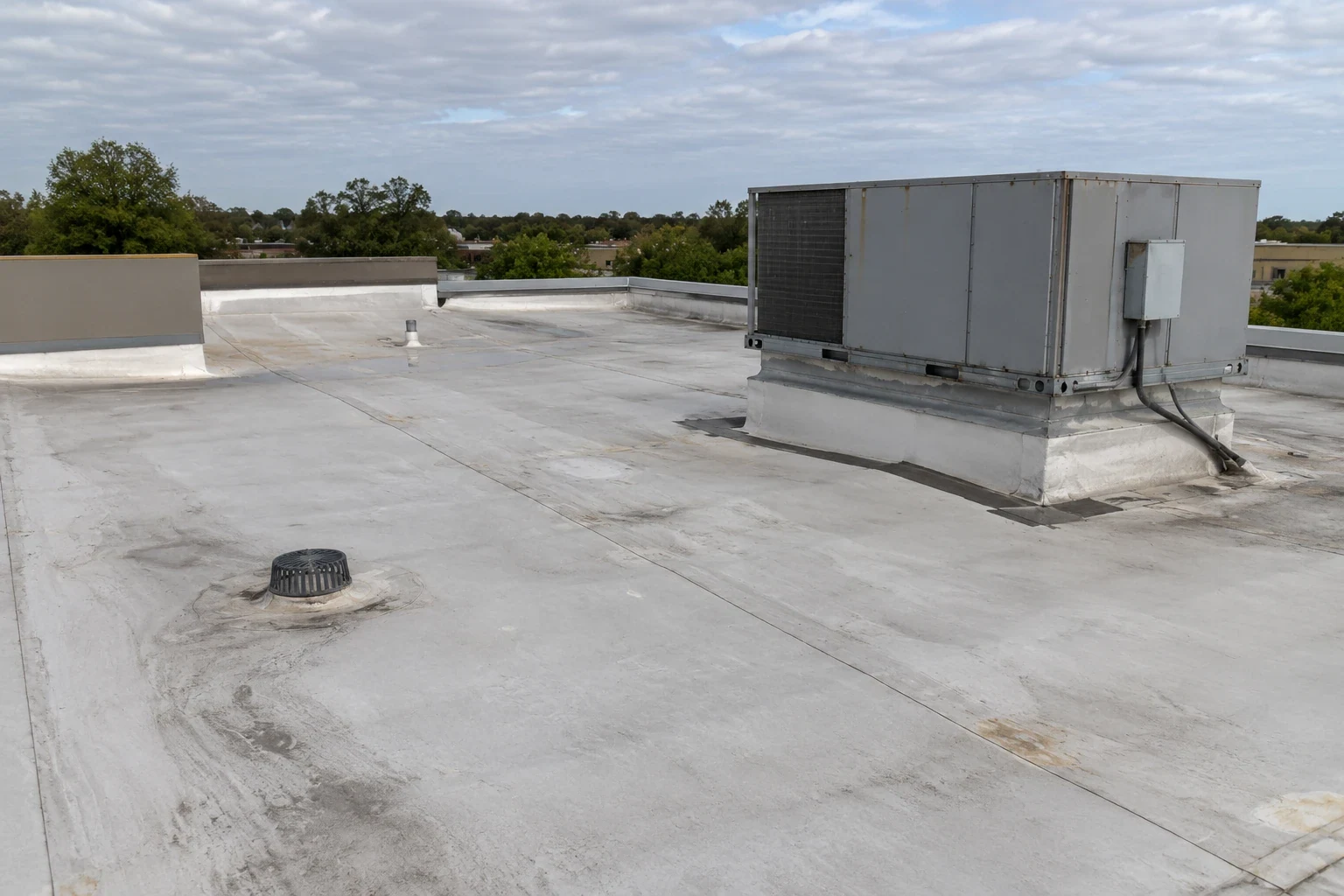
Polyester reinforcement gives a membrane an internal structure that matters when a roof is cut, repaired or pulled by wind. Johns Manville says its TPO membranes use polyester fabric and an ultraviolet-resistant formulation. In Killeen, TX, the useful question is how a specified JM sheet will meet the building's deck, insulation and perimeter conditions. We inspect existing seams and penetrations, record moisture and identify areas where the membrane is still bonded or secured. A commercial roof inspection also captures drainage and equipment conditions that affect installation. Product selection follows that record, because the membrane alone cannot correct wet insulation, loose edge metal or movement at a curb.
How does reinforcement affect membrane selection?
The layers beneath a sheet can change the outcome of a repair. We identify whether the roof includes recover boards, multiple membrane layers, older coatings or insulation that has been disturbed by past leaks. If a property has experienced repeated interior water, the location of the ceiling stain is only a starting point; water can travel below the surface. We map suspect zones using visual review and infrared moisture survey work, then recommend openings where the readings need confirmation. That distinction helps an owner keep sound areas in place while assigning replacement work to verified wet or damaged sections. It also provides a baseline to compare during the next inspection instead of relying on a maintenance note that says only “patched.”
Which existing layers will receive the new system?
JM's reinforced TPO remains a thermoplastic roof covering, so seam quality depends on an appropriate welded overlap. Heat, travel speed, membrane cleanliness and pressure all affect the finished joint. During project planning, we identify seam locations around drains, curbs, walls and rooftop equipment and avoid placing critical field joins where repeated service traffic will cross them when the layout permits. Field welds can be tested and probed so a defect is corrected before it becomes buried under another detail. Owners may compare a Johns Manville TPO assembly with GAF single-ply membranes, but the comparison should include attachment, insulation compatibility and access for future repair, not just sheet thickness or color.
How should field welds tie into one continuous surface?
Insulation and cover board need attention before the membrane decision is final. We check for compression, wet areas, loose board edges and changes in thickness that could hold water. Where a replacement changes the roof level, drains and wall transitions have to be reset to the new elevation. Penetration flashing, equipment curbs and edge metal are often where a project takes more coordination than the open field suggests. We use cover-board replacement planning to separate known assembly needs from allowances for concealed conditions. If insulation must remain, its attachment and moisture status are part of the decision; if it comes out, temporary roof protection and disposal have to align with tenant schedules, deliveries and mechanical access.
Why should insulation and flashing share one scope review?
An owner reviewing a JM system should see a written record of what was found, what was tested and what remains uncertain. We photograph seams, base flashings, edge metal, drains, curbs, patches and any areas of concern, then group the recommended work by urgency. That is more useful than a generic replacement label because it shows whether a repair can stabilize a small area or whether moisture crosses several roof sections. We can prepare roof condition reports and outline a maintenance plan that tracks repaired areas. When capital planning spans properties, consistent photos and Diligence Notes let managers compare work without assuming every building has the same membrane or failure history.
A membrane choice also affects how future repairs will be identified. We note the product family and visible details in the closeout file, but we avoid assuming every repair patch on an older roof used the same material. When a maintenance call arrives, the first task is to identify the surface and check the interface between the patch and field membrane. A compatible repair must bond or weld to clean, sound material. If a prior coating or repair compound covers the area, we record that condition and decide whether a test area or removal is needed before permanent work proceeds.
How should repair records shape the next roof decision?
Downtown Killeen combines a historic core with commercial buildings and active businesses, so each roof layout and access route needs a property-specific review. Those uses can mean varied roof layouts and occupied spaces, but the actual assemblies must be confirmed at each address. Killeen's hot summers can affect exposed membrane service conditions, but only the property's records and inspection can establish age or condition. We consider the local heat cycle when setting inspection windows, evaluating brittle or lifted flashings and planning temporary protection. For operators near the downtown core, service around the district should coordinate roof access with deliveries and business hours while keeping the project scope focused on observed roof needs. Knight’s Way/FM 2410 and Veterans Memorial Boulevard are commercial priority areas in Harker Heights. A roof survey still needs to verify the building’s membrane, deck and access needs before material or schedule decisions are made.
Facility teams benefit from a roof map that shows drains, curbs, ladders, access routes and repair history. That map lets maintenance staff direct inspections to known trouble spots after heavy rain or mechanical work, without treating the roof as a blank surface. Our maintenance visits can include clearing outlets, checking flashings and documenting new penetrations. For an owner planning several years of capital work, those notes help distinguish a repair that can hold from a roof section approaching a broader replacement decision. Each observation is tied to a roof zone, so a follow-up crew can find the same seam or transition without interpreting a broad narrative description. That precision supports repair tracking when several service visits occur over time.
What should the inspection verify at the roof itself?
JM offers a broad low-slope product range, but our recommendation stays with conditions found on site. If the existing system has isolated damage, we may document a targeted repair. If wet insulation, widespread seam failure or unstable attachment is present, the scope may shift toward removal and replacement. A commercial roof replacement plan states the tear-off area, assembly, edge work and transition details so an owner can assess cost drivers and schedule. When active water entry is reported, the owner should confirm service availability and access, document any temporary protection, and schedule a follow-up to identify the underlying failure. A comparable review can include GAF membrane assemblies and Holcim Elevate TPO configurations when the project team wants a consistent field-to-edge comparison.
Commercial Roofing Questions
What does polyester reinforcement change in a TPO membrane?
It is part of the membrane construction and affects its physical behavior. We review the selected product data alongside attachment, seams and substrate conditions instead of treating reinforcement as a substitute for a complete assembly review.
How do you distinguish a leak repair from a larger failure?
We trace the water path, inspect surrounding seams and flashings, check the substrate and document moisture. A single opening can be repaired locally; recurring moisture across multiple layers can justify a broader scope.
Does infrared testing identify the exact repair area?
It identifies thermal patterns that may indicate moisture, but suspect readings need interpretation and sometimes selective openings. We record the method and findings so the owner can see what has been confirmed.
Will the new membrane correct drainage?
Only if drainage work is part of the scope. We review drain height, slope, low areas and scuppers, then list corrections separately from membrane installation so the finished roof carries water to its outlets.
What should the closeout record include?
Photographs, repair locations, test results, assembly details and maintenance observations. Those records help the next inspection determine whether conditions changed and where follow-up should focus.
Put the membrane in context
Request an inspection in Killeen. We will document the roof layers and failure points, then prepare a JM TPO repair, recover or replacement scope tied to the building conditions.