
Commercial Roof Insulation in Killeen, TX
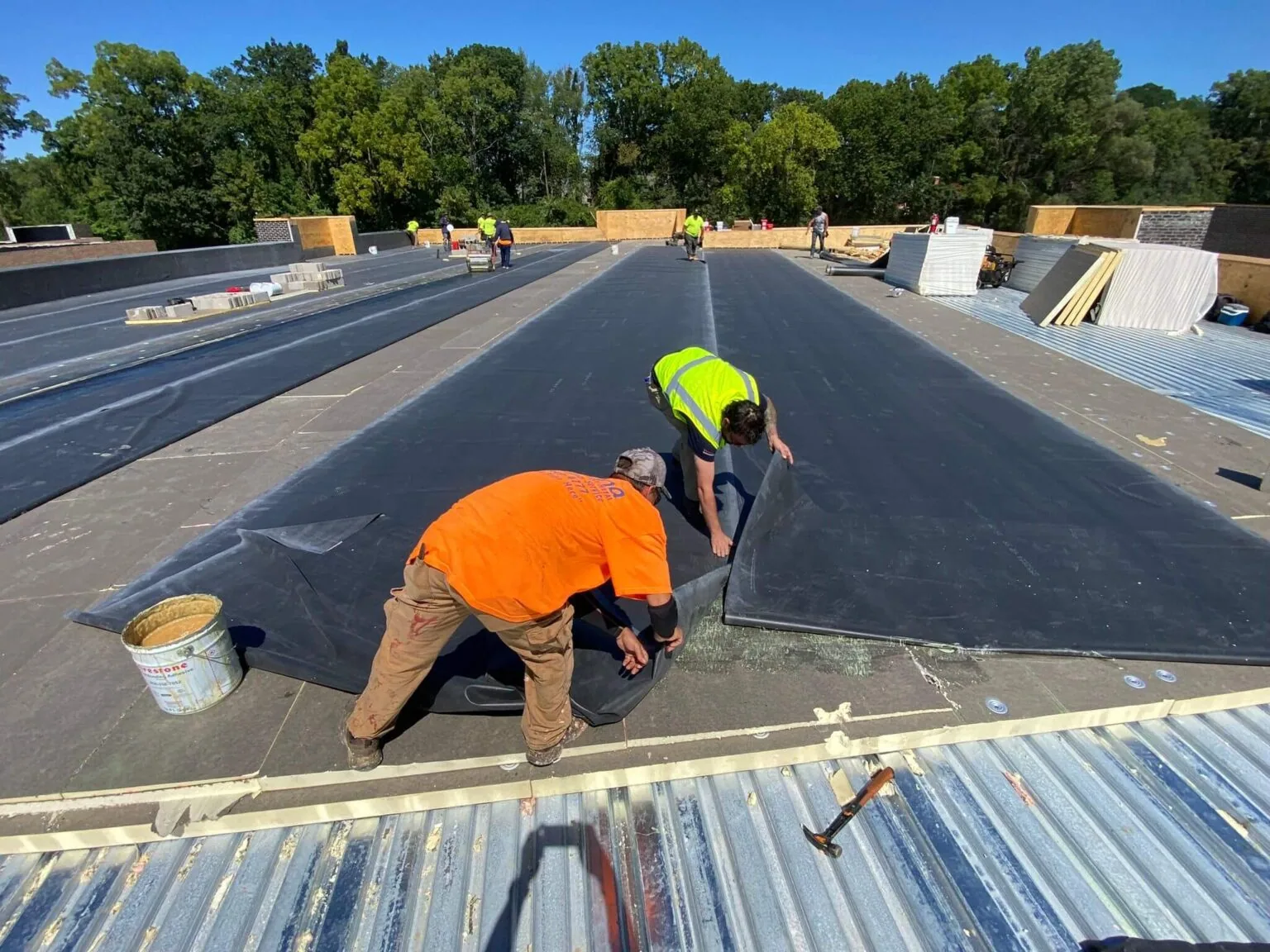
Insulation belongs in a roof scope only after the deck, moisture, and drainage are checked. We identify the existing layers, note where they are wet or compressed, and measure how a new assembly will meet drains, curbs, and edges. Killeen's hot summer conditions make the roof section and insulation plan worth reviewing during replacement work. They do not identify what is inside a specific assembly. The field record sets the boundary before material is ordered.
What Is the Deck Supporting?
We inspect exposed deck areas for corrosion, movement, rot, broken fasteners, or deflection before adding insulation or cover board. Test cuts or cores help confirm the layer count and whether existing insulation can remain. A soft or wet area is mapped separately so removal quantities are not guessed from a ceiling stain. The replacement estimate identifies the deck assumptions and any opening needed to confirm them before the crew covers the section.
Killeen averages 18.3 days each year with a maximum temperature of at least 100°F. That measure makes insulation and substrate condition worth reviewing during a replacement plan, while roof selection still follows the assembly, use, and project requirements. We compare the existing build-up with the new membrane and attachment method, then note any thickness transition at the edge. A roof inspection can document the visible layers, while an infrared survey can help focus test locations when moisture is suspected.
Which Material Can Stay?
Insulation with trapped moisture, crushed facer, or poor adhesion may not provide a stable base for the new roof. We mark the area that needs removal and verify the substrate at the opening. Dry, well-attached material may be retained when the assembly and project requirements allow it. The scope keeps retained and replaced areas distinct, with a test location and quantity basis that the owner can review before tear-off expands.
Cover board creates a firm, protective surface above insulation and can support the selected membrane attachment. We check its thickness, joints, fastener pattern, and fit around curbs or penetrations. A board that bridges an uneven transition or moves under foot can compromise the membrane seam above it. The proposal identifies the board and attachment approach and shows where additional deck work may change the cost. A replacement plan can keep insulation, cover board, and membrane in one measured sequence.
Layer transitions deserve their own note. A thicker build-up at a drain or edge can alter flashing height, while a thinner section may change thermal continuity or the direction of water. We measure those points before demolition and show the finished elevation on the roof plan. Where a change affects doors, rooftop equipment, or metal, those details are coordinated before the new board is placed.
How Will the New Layers Move Water?
Added insulation changes finished height, which can affect drain bowls, scuppers, door thresholds, equipment curbs, and metal edges. We check those transitions before setting a thickness. Where a roof has a low area, tapered boards may direct flow toward an outlet, but only after the deck and drain path are measured. We identify crickets and saddles on the roof plan so the installer can preserve them through the field and detail work.
Killeen plans an east-west connection linking SH 201 with Bridgewood Drive. For a roof near Clear Creek Road and SH 201, that route is useful local orientation; it does not set the roof slope. We measure the building plane and outlet. If drain height or flashing needs adjustment, a drainage detail scope can be itemized with the insulation work.
How Will the Assembly Stay in Place?
Deck type, fastener pullout, insulation facer, cover board, and membrane all affect attachment. We verify the substrate and describe the fastener or adhesive approach for each roof section. A change in deck condition may require a different pattern or a repair before installation. We keep that assumption visible in the estimate so a concealed deck condition does not become an unpriced field decision after tear-off.
At curbs, skylights, and pipe penetrations, insulation height can change the flashing turn-up and termination. We detail those points before installation and coordinate any unit or line that another trade must move. The penetration flashing plan can account for the final roof height, while TPO assembly selection depends on compatible board and attachment. The building's operating hours and equipment restrictions set when each section can be opened, dried in, and closed.
Before material is released, we compare the proposed attachment with the exposed deck and the selected roof assembly. The scope notes fastener lengths or adhesive requirements that depend on actual substrate, along with any pull tests or field checks needed. We also identify perimeter zones and transitions that need a different detail from the roof field. That review makes installation quantities easier to reconcile if the deck changes after removal.
What Belongs in the Insulation Record?
We photograph the deck before cover, identify insulation and cover board layers, and record any test location or excluded section. Closeout shows board joints, attachment, drain transitions, and curb heights before the membrane conceals them. If an area differed from the approved assumption, the record identifies the change and the authorization. These details give an asset manager a usable baseline for later repairs or a replacement cycle.
Killeen recorded 278 occupancy certificates from April 2025 to March 2026 for new or expanding commercial uses. The total does not describe a particular roof; the listed uses do help us ask about work hours and interior protection before a phased installation. The site lead confirms the roof hatch and staging near Downtown Killeen or another property. A condition report can keep the field evidence with the roof register, and Downtown Killeen properties can plan access around their own operating hours. Request an insulation review with plans, repair records, and known leak areas.
We also leave the owner a marked plan that distinguishes retained boards, replaced insulation, and locations that need inspection after the membrane is installed. Where a future curb move or equipment change could affect the roof, that detail stays in the service record so the next trade does not cut through an unmarked assembly.
Commercial Roofing Questions
Can new insulation go over wet material?
We do not cover a suspect area without checking it. A core or cut can confirm moisture and layer condition. We map what must be removed and what may remain, then price the boundary before the new insulation is installed.
What does cover board add to the roof assembly?
Cover board provides a firm layer above insulation and protects the substrate beneath the membrane. We select it with the system, attachment method, deck, and roof use in mind, then check joints and fasteners before covering it.
How does tapered insulation change drainage?
Tapered boards can direct water toward a drain or scupper when the roof plane and outlet are measured. We map the low areas, curb transitions, and finished height first so the new slope does not create another pocket or block an overflow.
Will the existing deck change the fastener plan?
Yes. Deck type, condition, and pullout affect attachment. We verify what is exposed and note the assumption for concealed areas. If the deck differs from the plan after opening, we document it and review a revised attachment scope before proceeding.
Can insulation work be phased around operating hours?
We divide the roof into areas that can be removed and made weather-tight during the shift. The site lead helps set equipment restrictions, interior protection, and staging access. Each completed section is recorded before the next area is opened.
Map the Roof Build-Up
Send roof plans, known leak areas, repair history, and deck or insulation details. We will inspect the layers, map moisture and drainage questions, and price an assembly with clear assumptions for review before material is ordered.