
Heat and UV Roof Damage Repair in Killeen, TX
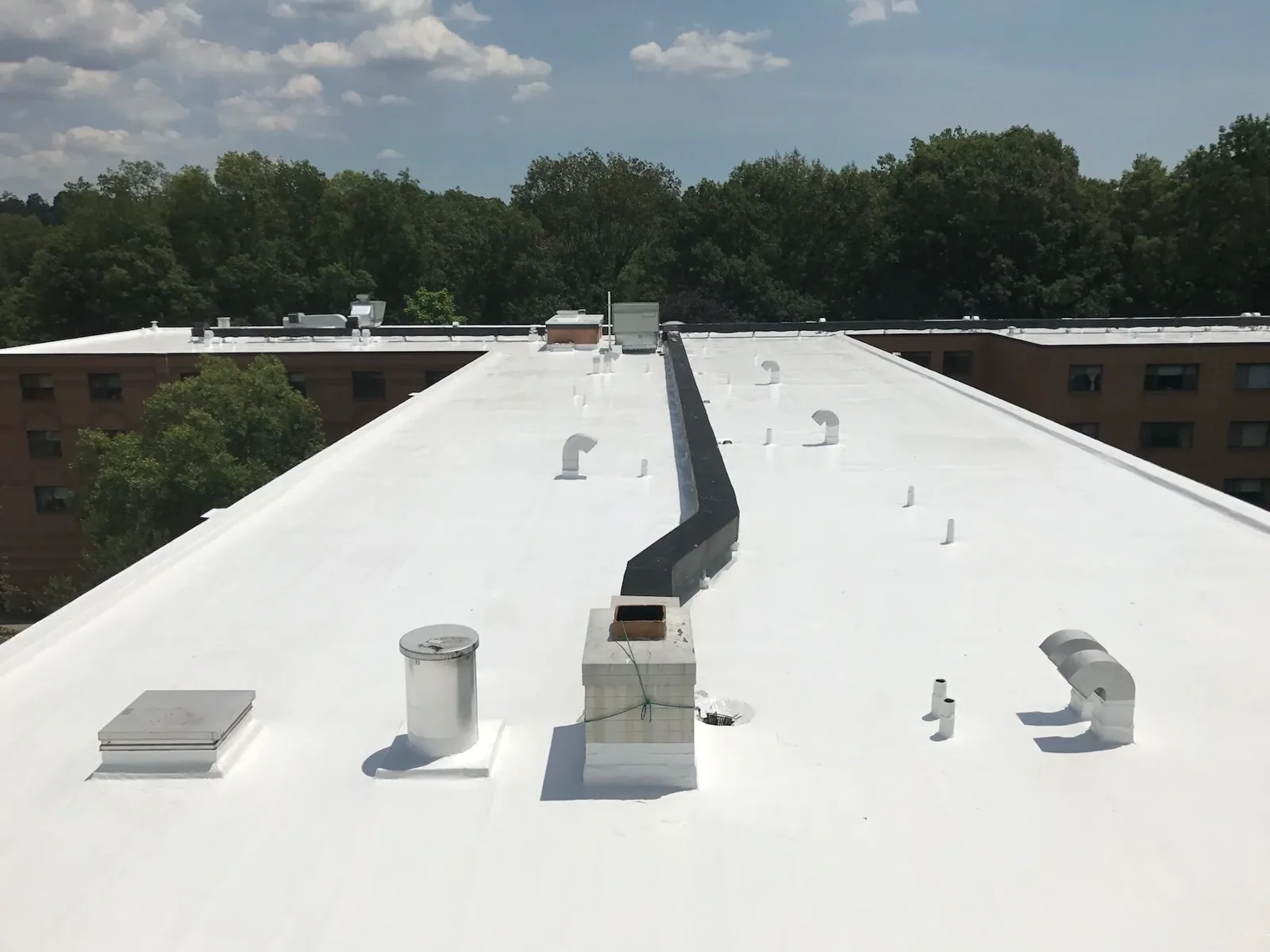
Heat wear is a roof-section decision, not a calendar diagnosis. Killeen averages 18.3 days a year with highs of at least 100°F. For Killeen, the July mean is 84.0°F; the August mean is 84.6°F. Those patterns guide work planning, not a conclusion about one roof surface. Those figures help frame exposure; they do not tell us what any particular membrane has endured. We walk the assembly, photograph surface change, check seams and terminations, and separate visible deterioration from assumptions about age or cause. A commercial roof inspection gives the asset team a map to work.
The roof decision follows the evidence. A surface may look faded while remaining sound, or show cracking and loss of flexibility at a detail that now admits water. We identify the material, the affected area, moisture indicators, prior patches, drainage and edge conditions before choosing among a localized repair, a coating where suitable, or a larger renewal scope. Killeen's documented 2003 hail and tornado event is useful hazard context, not proof of heat damage or storm damage at today's property. The report keeps those questions separate.
What does heat change first?
Repeated high surface temperatures can accelerate aging in exposed membranes, coatings and sealants. On the walk, we look for checking, splits, brittle edges, exposed reinforcement, shrinkage at laps, loose termination metal and sealant that no longer bridges a moving joint. A change in color alone is not a failure. We record where the surface changed and whether the underlying sheet, seam or flashing still provides a continuous water-shedding layer. If the building has different roof sections or prior repairs, each gets its own entry in the roof register.
Ultraviolet exposure affects the exposed face, but the repair boundary depends on assembly condition. We check whether a membrane is chalking, whether granules or surfacing remain in place, and whether a coated surface has pinholes, splits or open transitions. A probe or adhesion test is useful only when the result changes the scope. We note any test location and its limits rather than treating one small opening as a verdict for the entire roof. This is where a condition report with photos and a marked plan helps compare roof sections fairly.
How do we separate heat wear from a leak?
A ceiling mark is a symptom; the roof map must locate the path. We trace slope toward the drain, inspect penetrations and curb corners above the affected space, and compare moisture readings with visible membrane conditions. Water can travel beneath a sheet before appearing inside, while surface checking may exist without an active entry. When indications extend beyond the visible defect, we recommend a targeted moisture survey or test cut and show where the result would narrow the repair area. A wind-related review can be useful when a reported event and a newly opened detail overlap.
Drainage deserves its own check because standing water can keep wetting a weakened seam or exposed edge. We inspect bowls, strainers, overflow paths, sumps and nearby laps, then record debris or a low spot without assuming that the drain caused the leak. Rancier Avenue and US 190 are named Killeen thoroughfares. Confirm the actual delivery route and gate with the property contact before setting a work window. Those are useful access references for a commercial roof walk, while the property's loading, gate and tenant arrangements still determine the work window. A Rancier Avenue corridor roof walk can be scheduled around the actual building's operation.
When can a repair or coating hold?
A localized repair can make sense when the surrounding membrane remains flexible and bonded, the substrate is sound, and the defect has a clear boundary. The scope names the compatible patch or flashing detail, preparation, tie-in and area covered. If an older patch has lifted, we remove enough material to find sound edges rather than stacking another layer over a weak bond. Where Killeen's heat limits safe surface work, we plan around the conditions on the day and keep exposed areas protected until the permanent detail is complete. Seam repair is appropriate only after the lap condition and system are identified.
Coating work starts with surface testing, moisture findings, penetrations, drainage and the condition of each existing layer. We identify where preparation must reach sound material and whether another layer is appropriate for that assembly. A coating will not dry wet insulation, strengthen a deteriorated deck or secure a loose perimeter. The scope lists cleaning, repairs, reinforced transitions and excluded conditions before the owner compares this option with a patch or removal. For a roof that passes those checks, roof coating restoration can be priced beside localized repair and replacement against the same marked roof plan.
What changes when the building stays open?
Heat-related repair often involves open roof areas, material staging and work near rooftop equipment. We coordinate lift placement, protected entries, receiving windows, noise and any mechanical shutdown with the facility lead before mobilizing. Veterans Memorial Boulevard and Business 190 are major Killeen routes. They help orient travel planning, while the property's gate, loading rules, and approach still need site confirmation. A Veterans Memorial Boulevard and Business 190 area visit still begins with the building's loading plan and roof access.
For an occupied office, clinic, school or retail property, we divide the scope into roof sections and identify which areas can be isolated at a time. Interior protection is set before removing material above active rooms. If wet insulation is present, we show the limits of removal and the tie-in needed to keep surrounding sections weather-tight. Temporary protection is labeled separately from permanent repair. An occupied-building work sequence helps the asset manager compare interruption, access and closeout needs before selecting a budget window.
How should the owner set the next budget?
The decision record should separate immediate exposure from the replacement cycle. We group findings by roof section, noting whether the issue is a localized split, repeated seam weakness, broad surface embrittlement, saturated insulation, drainage correction or an attachment concern. Each option lists preparation, removal, materials, access, protection and follow-up. If a test remains open, we state the question it would resolve. That gives the owner a repair boundary and a second option to compare without inflating the scope from a single observation.
Heat and ultraviolet aging do not arrive evenly across a portfolio. A shaded equipment bay, repaired section and exposed field can show different conditions even on one building. We compare them with dated service records where available, but do not infer when a change began if no prior photograph exists. A replacement scope belongs in the comparison when failures recur across the assembly or a durable tie-in cannot be established. The capital plan can then distinguish work to protect the interior now from renewal that can be scheduled before the next budget window.
Commercial Roofing Questions
Do high temperatures prove the roof needs replacement?
No. The weather record describes Killeen, not a particular roof. We inspect the membrane, seams, substrate and drainage, then compare a defined repair with broader renewal only when the observed condition supports it.
Can a faded membrane still be serviceable?
Color change alone does not answer that. We check flexibility, surface wear, seams, patches and flashing, then identify any test needed to confirm whether the assembly remains watertight.
What does ultraviolet wear look like on a commercial roof?
The signs depend on the material. We document checking, exposed reinforcement, brittle sealant, surface loss or open laps and connect each finding to a roof section instead of treating all discoloration as failure.
When is coating preferable to replacement?
We compare it when inspection shows the substrate can stay, moisture concerns are resolved, and preparation can reach sound surfaces. If any of those conditions fail, the estimate should price repair or removal instead.
Can work happen without closing the building?
We plan access, delivery, lift placement and interior protection with the facility lead. The work may be divided by section, with temporary weather protection kept distinct from the permanent repair.
Set a repair boundary for heat and UV wear
Request a Killeen roof walk, a photo record by section, and scoped options that compare immediate protection with repair or renewal.