
Aircraft Hangar Roofing in Killeen, TX
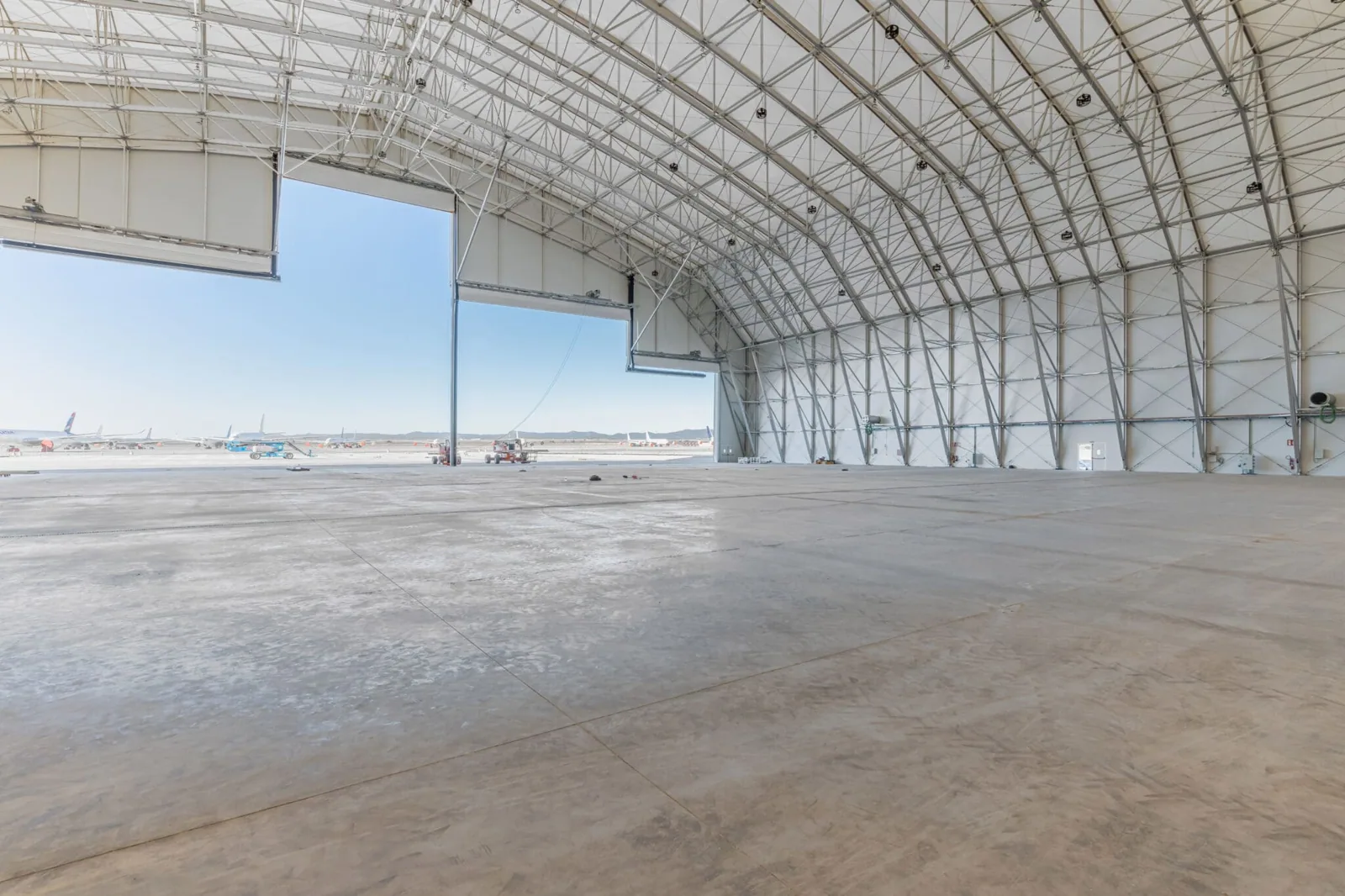
A hangar roof has to keep a broad clear-span interior protected while large doors, aircraft movement, and maintenance work continue below. We begin with the assembly, reported condition, access method, and operating limits that affect the repair boundary. For a hangar owner, the roof plan and on-site inspection determine whether the concern is a panel detail, membrane transition, door interface, or larger assembly issue. The facility contact sets any operational movement limits; we document the assigned building without inferring conditions from other properties or regional activity.
We coordinate roof access with the facility contact and keep any temporary opening separate from permanent work. A condition inspection can map observations by bay and roof section; a drone survey can help document broad surfaces where safe, direct access is limited.
What should be checked at a clear-span roof?
The primary frame, deck, insulation, membrane or metal panels, and perimeter details work as one assembly. We inspect panel seams, fasteners, clips where accessible, ridge and eave conditions, penetrations, drains, and transitions at adjoining buildings. On low-slope areas, ponding, open laps, and failed flashing may be more important than a broad surface view. On a metal roof, movement and attachment need to be considered before a sealant repair is selected. The report identifies what was directly observed and what would require a closer opening or structural review.
A hangar door can create a long perimeter interface where wall flashing, track supports, and roof drainage meet. We note the door position during inspection, signs of water travel near the opening, and any edge condition that changes when the door is operated. If there is a warehouse section or industrial work area attached to the hangar, we map it as a separate roof section rather than assume one system covers every bay.
How should access and operations shape the work window?
A lift, fall-protection line, suspended platform, or direct roof hatch may be needed to reach the repair. We identify the approved access path, where tools and material can be staged, and whether aircraft or maintenance equipment needs to move. The owner sets the no-entry zone and confirms any fire, fuel, or electrical controls that affect roof work. We state what equipment or interior protection is included and which responsibilities remain with the facility or another contractor.
Large roof sections need a weather plan for every shift. The scope should show how a cutback is closed, which bay remains protected, and what condition prompts the crew to stop. If aircraft movement cannot pause, the work can be sequenced by area only where the roof detail allows a secure daily closure. A phased work plan can coordinate staff communication and access; the project manager still approves each operational window.
What Killeen context belongs in the roof file?
A high of 100°F or more occurs on 18.3 days in an average Killeen year; hangar visits also need safe door-operation coordination. For hangar work, we check the day’s surface and air conditions against product requirements before preparing a panel, membrane, or adhesive detail. Use that long-term heat pattern for seasonal scheduling, then record the conditions actually present at the hangar roof.
Clear Creek Road is SH 201, and the Bunny Trail/SH 201 signal project may affect travel timing near the airport-side corridors. These are broad corridor references, not instructions to a specific airfield. For a commercial roof visit near the Clear Creek Road corridor, we confirm vehicle access, delivery approach, and equipment staging with the property contact. A Killeen service-area visit should record the actual gate and roof access point before mobilization.
How do we separate an opening from a broader roof problem?
We compare the interior report with the roof plan, then inspect nearby seams, fasteners, curb details, door transitions, and drainage. Water can move along framing or deck ribs before it becomes visible, so the stain does not by itself identify the entry point. We mark the likely path, note the evidence that supports it, and identify any test or opening needed before a permanent repair is priced. A localized breach with sound material nearby may support a targeted repair; multiple defects or wet insulation call for a wider comparison.
Storm records are relevant to inspection planning, not automatic damage conclusions. A Killeen storm on March 25, 2003 brought 1.75-inch hail and an F0 tornado; an inspection still needs present roof evidence before assigning damage. We document current evidence such as displaced trim, punctures, impact marks, or interior water, rather than attribute a condition to an old event. A storm-condition inspection can distinguish visible findings from assumptions, and a repair scope can separate emergency covering from permanent work.
When should an owner compare repair and replacement?
A repair can fit when the opening is located, the surrounding assembly is stable, and access permits a compatible detail. Repeated failures at seams, widespread corrosion, loose attachment, or wet insulation may shift the decision toward section replacement. Recovery or coating is considered only after substrate, adhesion, moisture, drainage, edge, and load questions are checked. We show the area included, the tests performed, inaccessible zones, and conditions that could change the recommendation after work begins.
The proposal should identify removal, deck allowance, insulation, attachment, panel or membrane, perimeter metal, door flashing, staging, and weather protection. If engineering or structural evaluation is needed, we mark that dependency instead of folding an unverified assumption into a roofing price. A standing-seam option can be compared with an existing metal assembly; a replacement scope can establish phase limits and closeout evidence for the owner.
What should the maintenance record preserve?
Keep the roof plan, bay labels, panel or membrane information, dated photographs, test openings, repair boundaries, and any restrictions on future access together. Note whether a hangar door was open or closed when a detail was observed and what temporary weather protection remained after the shift. If another trade disturbs the roof, add the location and repair material to the service record. A later inspection can then compare the same seam, edge, or transition without assuming that an old observation still describes the current condition.
We can inspect accessible surfaces, mark unresolved findings, and return a defined repair or replacement option. Provide the roof drawings, door and equipment schedule, access procedure, prior repair history, and preferred work window. The useful decision is the one tied to a known roof section and an approved work area, with operational constraints and any remaining inspection limits stated plainly.
Commercial Roofing Questions
Can a hangar stay operational during roof work?
A phased sequence may be possible when the owner can define an area, access window, and weather-tight daily closure. We show the bay restrictions, equipment staging, and stop conditions before mobilization.
Does a drone survey replace direct inspection?
It can help map broad visible conditions, but it does not confirm every seam attachment, concealed moisture area, or underside detail. We identify where direct access or testing is needed for the repair decision.
How should the hangar door interface be inspected?
We review the roof edge, wall transition, door track area, drainage, and interior signs at more than one door position when access permits. The report records the observed conditions and the boundary of any repair.
What information belongs in a hangar replacement bid?
List the roof area, assembly, door and perimeter details, access equipment, staging, weather closure, deck assumptions, and any engineering dependency. We separate confirmed quantities from allowances for concealed conditions.
Does local storm history establish hangar damage?
No. We inspect the present roof and record visible impact, displacement, water entry, or attachment findings. An event record gives context but does not establish damage at a specific building.
Review the hangar roof assembly
Provide roof drawings, door details, prior repair records, access procedures, and the operating window. We can inspect the roof sections and return a repair or replacement scope with staging and weather closure defined.