
Commercial Roofing for Hospitality Groups in Killeen, TX
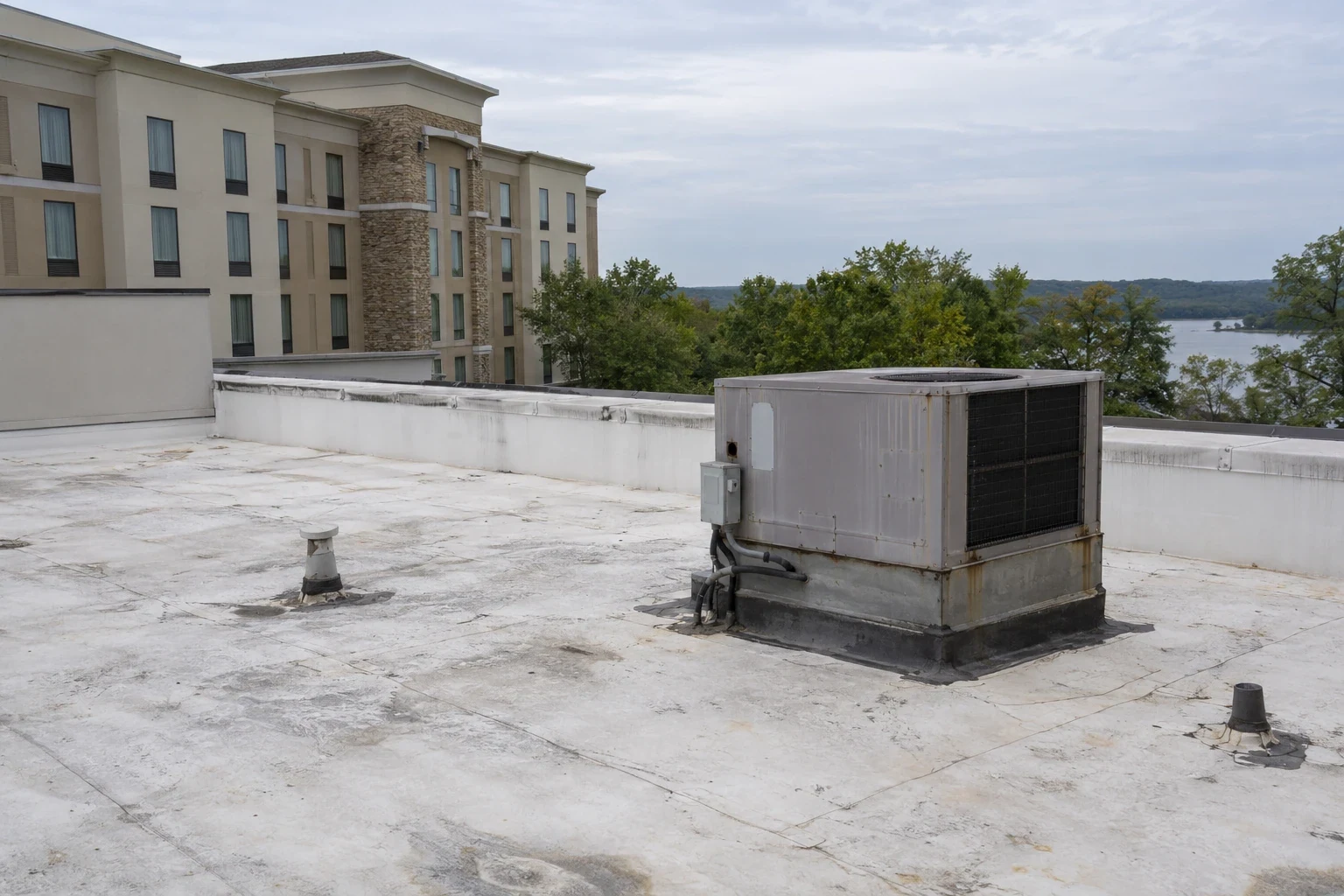
A guest complaint about water needs a roof finding, not a guess from the room below. We map the reported area to the roof section, inspect nearby seams, penetrations, drains, and transitions, then state what is observed and what still needs a test opening. For a hotel operator, the scope also has to account for room availability, service entrances, kitchen or laundry operations, rooftop equipment, and the hours when noisy work can occur.
Arts, entertainment, and accommodation businesses account for 5,094 local jobs; hotel and venue work still needs site-specific access and guest planning. That is local business context, not a count of hotels or roofs. We use the actual property record for the assembly and condition. A commercial roof inspection can map findings before the owner chooses a repair boundary or a capital option.
Which areas need to stay available to guests?
Start with the rooms and routes that operations cannot casually take out of service. A lift beside an entrance, a material cart through a lobby, or a repair above a quiet floor can affect more than the roof crew's work zone. The hotel contact identifies check-in peaks, housekeeping paths, deliveries, accessible entrances, service corridors, and any room or function area that must remain usable. We place roof access and staging on a plan the operator can review before mobilization.
If the work touches a rooftop unit, exhaust, kitchen line, or laundry area, define who can isolate it and when. Roofing crews should not decide that a guest floor can remain occupied beneath an opening. The owner approves that call after reviewing overhead protection, noise, odor, and weather exposure. A phased plan should say how each section is closed before the crew leaves and who verifies that the route below is ready for normal use.
How should a reported room leak be traced?
Record the room or service area, date, time, recent weather, and what the staff saw before temporary drying began. Mark that report on a floor plan, then relate it to the roof plan above. Water can travel along a deck, joist, conduit, or previous patch, so a ceiling stain is not a measured roof opening. Inspect the likely water path and adjacent details, including a curb or wall transition that may sit away from the interior symptom.
When several calls occur in one wing, compare them by roof section and timing. A repeated report may point to one shared detail, while separate rooms may have different paths. We document the test used and its limits. If moisture mapping or a test cut is needed, agree on the opening location and restoration responsibility first. A condition report should preserve the photo, location, finding, and next decision so the property team can follow the investigation.
What local exposure belongs in the maintenance record?
For hospitality sites, Killeen's typical annual count includes 18.3 triple-digit days; set the crew window from the forecast and property schedule. That heat informs access and work windows, not a roof-condition conclusion. That record makes application limits, surface temperature, crew safety, and sealant or membrane condition useful items to check during hot periods. It does not predict the temperature on a project date or prove that a particular hotel roof has heat damage. We record the actual condition and follow the selected material's instructions.
Killeen receives an average of 34.75 inches of rain per year, so guest entrances and service areas need a clear runoff plan. For a hospitality property, the practical check is whether drains, scuppers, overflow paths, and canopy transitions move water away from guest entrances and service areas. Downtown Killeen service area and the US 190 corridor are broad local areas, but neither identifies a property's loading route or roof layout. Confirm the access plan with the property contact; a map label does not replace gate, parking, and service-hour instructions.
When is a repair enough for the current cycle?
A local flashing or seam repair can be appropriate when the surrounding assembly is dry enough, attached, and able to accept a compatible detail. Recurring reports in separate areas, widespread wet insulation, or deterioration across multiple roof sections call for a broader comparison. We tie each recommendation to a map and evidence, then separate confirmed quantities from allowances for concealed conditions. The owner should know whether the proposed work addresses one leak path or renews a larger section.
Before pricing an overlay, measure remaining height at drains, curbs, and edges, then check moisture, deck capacity, attachment, drainage, and the proposed build-up. If those conditions rule out recovery, compare removal and replacement against the same roof-section boundary. A targeted repair and a replacement option should use the same boundary, access plan, and temporary dry-in assumptions. That lets the operator compare disruption and capital timing instead of comparing unlike totals.
How can hospitality work fit a budget window?
Separate urgent protection from the permanent project. A temporary cover or controlled interior response can reduce immediate exposure while the owner gathers roof drawings, leak history, warranty records, and prior proposals. It should have an inspection date and a clear permanent follow-up, not become an undocumented repair. For a planned project, request options by roof section, state what areas remain in operation, and identify which equipment work belongs to another trade.
The locally amended 2024 International Building Code took effect on January 1, 2026. For this roof, the design professional and local authority determine which provisions and permits attach to the proposed work. A changed curb, drain, insulation build-up, or perimeter detail can alter that review and the sequence. The owner can track each decision in a portfolio capital review while keeping the hotel's access limits and assembly notes specific to that building.
What should the operator receive at handoff?
Closeout should identify the sections worked, materials installed, details repaired, tests completed, conditions left open, and any area outside the contract. Keep dated photographs, product submittals, daily closure notes, change approvals, and warranty documents with the roof plan. For a hotel, also record service access, drain locations, restrictions on future rooftop work, and who should receive a new leak report. That record helps the next manager distinguish a new condition from the work just completed.
When a project involves several operating uses, keep their schedules separate. A retail and restaurant roof record may use a similar handoff discipline, while a hotel file must still reflect guest routes, room availability, and its own equipment dependencies. In Killeen service area and nearby Harker Heights, confirm jurisdiction and access for each property rather than extending one location's assumptions to another. Provide the roof map and operating constraints and we can return a scoped condition review the owner can use in the next budget discussion.
Commercial Roofing Questions
How do you investigate a leak reported from a guest room?
We map the room report to the roof plan, inspect nearby seams and penetrations, and document where the water path remains uncertain. A test opening is proposed when it would change the repair boundary.
Can roof work proceed above occupied hotel rooms?
The property operator decides whether a room can remain in service after reviewing the task, overhead controls, noise, odor, and temporary weather protection. We define the proposed work zone and closure plan for that review.
What should a hotel provide before a roof survey?
Room or area reports, roof plans, prior repairs, equipment locations, access rules, and restricted hours make the walk more useful. We note missing records and identify what can still be observed safely.
How should an owner compare repair and replacement proposals?
Use common section boundaries and list removal, insulation, flashing, drains, curb work, temporary protection, and excluded trades. Then compare the evidence and operating disruption behind each option.
Who coordinates rooftop equipment shutdowns?
The hotel assigns the authorized mechanical or electrical contact. Our scope identifies the equipment dependency, requested timing, and roofing work that can begin once the owner confirms isolation.
Put the roof finding beside the operating plan
Share the roof plan, leak locations, guest and service access limits, equipment schedule, and prior repair records. We can document conditions and compare a repair or capital scope the property team can review.